Uncategorized

Botox vs Fillers: Which Treatment Is Right for You?

When people compare botox vs fillers, they are usually asking one simple question: which injectable treatment will help their concern more effectively and safely? The short answer is that Botox and fillers do different jobs. Botox relaxes muscles that create expression lines, while fillers add volume, contour, or support to areas that have thinned with age. For patients considering botox in Nepal or fillers in Nepal, the best choice depends on the type of wrinkle, the treatment area, your goals, and your medical suitability. TheAmerican Academy of Dermatology explains that fillers restore lost fullness, while Botox Cosmetic is used to temporarily improve certain facial lines in adults.  This distinction matters because many patients ask for the wrong treatment by name. A person with forehead lines caused by repeated muscle movement may benefit more from Botox. A person with volume loss in the cheeks or deeper folds around the mouth may be a better candidate for fillers. In some cases, both are used together, but only after a proper consultation with a qualified dermatologist in Nepal.  Dr. Parash Shrestha is a dermatologist in Nepal offering cosmetic dermatology services including Botox, fillers, anti-aging treatments, and skin rejuvenation, which makes this topic directly relevant to his practice.  Direct answer: what is the main difference between botox and fillers? The clearest difference is this: Botox works by relaxing targeted muscles. That is why it is commonly used for frown lines, forehead lines, and crow’s feet. Fillers are soft-tissue injectables used to restore fullness in the face, lips, and sometimes hands.  So if you are searching “botox vs fillers for wrinkles,” the right answer is not that one is better than the other. The right answer is that they treat different types of aging changes.  What is Botox and what does it treat? Botox Cosmetic is an injectable prescription treatment used to temporarily improve the appearance of moderate to severe frown lines, crow’s feet, forehead lines, and certain neck bands in adults. It works by reducing muscle activity in the treated area.  A medically reviewed Cleveland Clinic overview also notes that botulinum toxin injections reduce wrinkles by relaxing muscles and that results generally need maintenance treatments every three to six months.  Botox is commonly used for: For patients interested in botox in Nepal, this means Botox is usually best for dynamic wrinkles. These are wrinkles that become more visible when you smile, frown, squint, or raise your eyebrows.   What are fillers and what do they treat? Dermal fillers, also called soft-tissue fillers, are injected to restore fullness, improve contour, and soften lines created by volume loss. The American Academy of Dermatology states that fillers can restore lost fullness to the face, lips, and hands. The FDA also describes fillers as injectable products used to improve facial lines and volume loss caused by age or certain medical conditions.  Fillers are commonly used for: For patients considering fillers in Nepal, fillers are generally more suitable for static lines and volume loss than for movement-related forehead wrinkles.  Botox vs fillers: which concerns does each treat best? Concern Botox Fillers Forehead lines Usually yes Usually no Frown lines Usually yes Rarely primary treatment Crow’s feet Usually yes Not usually first choice Hollow cheeks No Usually yes Lip volume No Usually yes Deep smile lines Limited Often yes Jawline contour loss No Often yes Dynamic wrinkles Best option Limited role Static volume loss Not primary treatment Best option This is the most useful practical comparison for search intent. Botox and fillers overlap slightly, but their primary roles are different.  How long do Botox and fillers last? Duration depends on the product, area treated, metabolism, injection technique, and treatment goal. Botulinum toxin results typically require repeat treatment every three to six months, according to Cleveland Clinic. Fillers last longer in many cases, but the exact duration varies widely by filler type and area treated. The AAD notes that newer filler techniques and products can produce longer-lasting results, but longevity is not identical across all products.  General expectation This is one reason some patients choose Botox for upper-face lines and fillers for lower-face volume concerns. Which treatment looks more natural? Natural-looking results depend less on the product name and more on the correct indication, dose, technique, and injector judgment. Poor results are more likely when: The AAD emphasizes that filler injection is a medical procedure and warns that non-medical settings can be dangerous. This is important because safety and natural outcomes often go together: experienced medical injectors are more likely to choose the right treatment for the right facial feature.  Is Botox safer than fillers? Both can be safe when used appropriately by qualified medical professionals, but their risk profiles are not identical. Botox can cause expected short-term effects such as temporary discomfort, and product labeling includes warnings about potential toxin spread effects in some contexts. Fillers carry a different set of risks, including swelling, nodules, migration, infection, allergic reaction, and, most seriously, accidental injection into a blood vessel. The FDA notes that intravascular filler injection can lead to serious injury, including tissue damage and even vision complications. Practical safety comparison Safety issue Botox Fillers Bruising/swelling Common minor risk Common minor risk Temporary asymmetry Possible Possible Vascular occlusion No Serious rare risk Product migration Not typical issue Possible Muscle weakness in treated area Intended effect or temporary side effect No Reversal option Effect fades with time Some fillers may be dissolvable, depending on type The main takeaway is not that one is “dangerous” and one is “safe.” It is that both should be treated as medical procedures, not beauty shortcuts.  Why injector qualification matters so much This is one of the most important parts of the decision. The American Academy of Dermatology says filler injection in a non-medical setting can be extremely dangerous and specifically warns against getting fillers at parties, salons, homes, or non-medical spas. Recent FDA-related warnings and news reports have also highlighted the risks of counterfeit or unapproved Botox products sold outside proper medical channels.   For people searching

Botox vs Fillers: Which Treatment Is Right for You? Read More »

fillers in Nepal

Dermal Fillers in Nepal: Benefits, Safety, Cost, and What to Expect

If you are considering dermal fillers in Nepal, the most important step is understanding that fillers are not just beauty injections. They are medical aesthetic procedures that should be performed by a qualified dermatologist who understands facial anatomy, product safety, and natural-looking results. For patients in Nepal seeking subtle volume restoration, lip enhancement, or smoother facial contours, careful consultation matters more than trends. Dr. Parash Shrestha’s official site positions him as a consultant dermatologist and venereologist offering cosmetic dermatology services including Botox, anti-aging treatments, skin rejuvenation, fillers in Nepal at B&B Hospital, Gwarko, and Nava Derma Skin & Laser Clinic, New Baneshwor. Dermal fillers are injectable materials used to restore volume, soften lines, and enhance facial balance. Cleveland Clinic explains that fillers are commonly used to plump lips, smooth creases, and restore facial volume, while the FDA notes that approved dermal fillers are intended for specific facial uses in adults. That is why choosing the right injector is essential: the treatment is both aesthetic and medical.  What are dermal fillers? Dermal fillers are gel-like injectable products placed beneath the skin to add volume or improve contour. Many of the most widely used fillers are based on hyaluronic acid, a substance naturally found in the body. Depending on the product and treatment area, fillers may be used for the lips, cheeks, nasolabial folds, marionette lines, jawline, chin, and under-eye hollows. Cleveland Clinic and the FDA both note that fillers can be temporary, semi-permanent, or longer-lasting depending on the material used. For patients looking for dermal fillers in Kathmandu or lip fillers in Nepal, the more useful question is not “Which fillers in Nepal is popular?” but “Which filler is appropriate for my face, skin quality, and goals?” A good consultation should consider facial structure, movement, symmetry, skin condition, and whether filler is even the best option for the concern being treated. Dr. Parash Shrestha’s site consistently emphasizes personalized dermatology care rather than one-size-fits-all treatment. What can dermal fillers help with? Dermal fillers are commonly used to improve: The goal should not be to make the face look “done.” The goal should be natural support, refreshed contours, and proportion. That is why medically trained injectors are preferred over trend-driven providers. Parash’s own cosmetic dermatology positioning highlights fillers as part of broader anti-aging and skin rejuvenation care, which is the right way to approach these treatments. Dermal fillers vs Botox: what is the difference? Patients often confuse fillers with Botox, but they work differently. Botox relaxes targeted muscles and is typically used for dynamic lines caused by facial movement, such as forehead lines or crow’s feet. Fillers, on the other hand, add volume and are used for static lines, contouring, and volume loss. Cleveland Clinic notes that the two treatments are often used together because they address different concerns. This is important for anyone searching for lip fillers in Nepal or comparing botox in Nepal with filler treatment. If the main issue is volume loss or lip shape, filler may be the right tool. If the concern is expression-related wrinkles, Botox may be more appropriate. Sometimes the best plan involves both, but only after proper facial assessment. Why qualification matters more than price Fillers may look simple on social media, but they are technique-sensitive medical procedures. The FDA warns that dermal fillers are not for everyone and should only be used by trained professionals. Risks are higher when products are counterfeit, poorly placed, or injected by unqualified providers. The American Society of Plastic Surgeons also notes risks such as bruising, asymmetry, lumps, infection, and, in rare cases, skin necrosis from interrupted blood flow. This is where credentials matter. Dr. Parash Shrestha MBBS, MD (Dermatology), FAM, with practice at B&B Hospital, Gwarko and Nava Derma Skin & Laser Clinic, New Baneshwor. His website also frames cosmetic procedures such as Botox and fillers within dermatologist-led care, which is especially important for safety, suitability, and complication management. Common side effects of fillers Most filler side effects are mild and temporary. Cleveland Clinic, FDA guidance, and ASPS list common effects such as: Rare but serious complications can happen, especially with unsafe technique or poor injector training. These include infection, tissue injury, or blood vessel blockage that may threaten the skin or even vision in extreme cases. That is one reason the FDA and dermatology societies strongly stress trained injectors and approved products.  Who may be a good candidate? A good candidate for filler treatment is someone who wants subtle improvement, has realistic expectations, and is medically suitable for the procedure. Fillers are often considered by adults who want to restore volume, soften folds, or improve lip shape without surgery. The FDA notes that approved dermal fillers are for adults 22 and older for specific indications.  The right consultation should also identify patients who should delay or avoid treatment. The FDA states fillers may not be appropriate for people with certain allergies or bleeding disorders, and active skin problems in the treatment area should always be reviewed first. What to expect during and after filler treatment Filler treatment is usually performed in an outpatient clinic setting. The area is assessed, marked, and cleaned before the product is injected with a needle or cannula, depending on the area and technique. AAD notes that some fillers may require numbing support and, in some cases, allergy testing depending on the product. After treatment, mild swelling or bruising can occur for a few days. Patients are generally advised to follow post-procedure instructions closely and report unusual pain, blanching, severe swelling, or visual symptoms immediately. Safe aftercare and early review are part of what separates proper medical practice from casual cosmetic service.  Why patients look for dermal fillers in Kathmandu Kathmandu has seen growing interest in non-surgical cosmetic procedures because many patients want enhancement with minimal downtime. But demand also increases the importance of choosing a properly trained doctor. Dr. Parash Shrestha’s official site places his cosmetic dermatology practice in New Baneshwor, Kathmandu, through Nava Derma Skin & Laser Clinic, while also

Dermal Fillers in Nepal: Benefits, Safety, Cost, and What to Expect Read More »

Botox in Nepal: A 2026 Evidence-Based Guide to Uses, Safety, Cost, and What to Expect

Botox in Nepal has become one of the most talked about aesthetic and medical treatments because it’s quick, minimally invasive, and widely used for concerns ranging from facial expression lines to excessive sweating. But “Botox” is also one of the most misunderstood terms especially online where misinformation about safety, pricing, and “hair Botox” spreads fast. This blog breaks down the facts in a clear, practical way so you can make informed decisions and know when to consult a qualified clinician.  Important note: This article is for public education and does not replace an in-person medical consultation. Botox is a prescription medicine and should be administered only by trained medical professionals.  What is Botox (and what it is not)? Botox is a brand name commonly used to describe botulinum toxin injections (a purified protein) that temporarily relax targeted muscles. In dermatology, it’s often called a neuromodulator because it reduces muscle activity that contributes to expression lines (like frown lines). It’s also used for certain medical conditions such as excessive sweating.   Botox is not the same as fillers People often mix up Botox with dermal fillers, but they work differently: Treatment What it does Best for Botox / botulinum toxin Relaxes specific muscles Expression lines, some jaw clenching cases, excessive sweating Dermal fillers (e.g., HA fillers) Adds volume / contour Cheek volume, lips, under-eye hollows (case-dependent) Why Botox is so common worldwide  If you’re wondering whether Botox is “just a trend,” global procedure data shows it’s one of the most widely performed non-surgical aesthetic treatments. A note for teens (under 18) Global survey data also notes some botulinum toxin procedures occur in those 17 years or younger. However, cosmetic Botox for teens is typically approached very cautiously and may not be appropriate unless there’s a clear medical indication and proper consent processes.  Top uses of Botox in Nepal: cosmetic and medical When people search “Botox in Nepal,” they usually mean cosmetic Botox but the same medicine is also used clinically for certain health conditions. Cosmetic uses (most common) Cosmetic botulinum toxin is typically used to soften expression-related lines by relaxing small, targeted facial muscles: The American Academy of Dermatology (AAD) explains that botulinum toxin is injected in very small amounts to targeted muscles to reduce the appearance of wrinkles, with effects commonly lasting about 3–4 months (sometimes longer).  Medical uses (common internationally; offered selectively by specialists) Depending on the patient and local clinical services, botulinum toxin may also be used for: Botox results timeline: when it starts, peak, and how long it lasts A common question in every “Botox doctor in Nepal” consultation is: When will I see results? Typical timeline (what reputable sources agree on) Why results vary Results and longevity can vary based on: Safety, side effects, and real risks (fact-based) Most patients experience mild, short-term effects but Botox is still a medical drug, and safety depends heavily on correct dosing, technique, and product authenticity. Common short-term side effects A medical review notes common issues can include headache, temporary discomfort, and localized effects that usually resolve.   Less common but important risks Who should be extra cautious? You should disclose to your clinician if you: (Your clinician will decide suitability; never self-diagnose suitability based on internet lists.) Botox cost in Nepal: price ranges, unit logic, and a realistic budget table Searches like “botox cost in Nepal” are common  but pricing can be confusing because some clinics price per unit, while others quote per area. What published price listings in Nepal show (per unit) Across publicly posted clinic pages in Nepal, you’ll see a wide range, such as: Safety-first tip: If the price is dramatically below the market range, ask why product source, storage, dilution practices, and injector qualification matter more than discounts. What affects Botox cost in Nepal? Typical budgeting examples (illustrative) Clinics commonly talk in “units,” but the number of units is individualized. Still, you can estimate a ballpark by combining a typical unit range with the per-unit price range above. Treatment area (example) Illustrative unit range* Estimated cost at NPR 500/unit Estimated cost at NPR 1500/unit One small area 10–20 units NPR 5,000–10,000 NPR 15,000–30,000 Two areas 20–40 units NPR 10,000–20,000 NPR 30,000–60,000 Three areas 30–60 units NPR 15,000–30,000 NPR 45,000–90,000 *Unit ranges are illustrative for budgeting only; actual dosing is decided by a qualified clinician after assessment. “Per area” packages Some clinics publish “area packages,” for example stating complete treatment areas may range around NPR 5,000 to 20,000 depending on need (clinic-reported).   How to choose a Botox doctor in Nepal (safety checklist) If you’re searching for a Botox doctor in Nepal, prioritize safety and qualifications over social media popularity. Step 1: Verify medical credentials Botox injections should be done by a trained, licensed medical professional (commonly dermatologists or plastic surgeons for cosmetic indications). Dr. Parash Shrestha’s official website, for example, lists him as a licensed dermatologist in Nepal with NMC registration details.  Step 2: Ask the right safety questions (print this checklist) A safe clinic should be comfortable answering: Step 3: Understand regulation and avoid grey-market products Nepal has a national drug regulator, the Department of Drug Administration (DDA), responsible for regulating medicines and controlling misuse and misleading promotion. Nepal’s legal framework for regulating drugs and cosmetics also exists in national legislation.   What that means for patients: avoid “at-home Botox,” “party Botox,” or injections offered in non-medical settings. Hair Botox in Nepal: what it actually is + botox hair treatment price in Nepal This is where confusion peaks: “hair Botox” is not botulinum toxin. What “hair Botox” usually means Hair Botox is typically a marketing term used for deep conditioning/smoothing treatments that may contain proteins, amino acids, keratin-like ingredients, and coatings that make hair feel softer and look shinier. It does not involve botulinum toxin injections. botox hair treatment price in Nepal (examples you may see) Prices vary widely depending on whether you’re buying a product or paying for a salon service. Hair Botox option Example Nepal price signals Salon “Hair Botox” offer (package) Around NPR 8,999 in

Botox in Nepal: A 2026 Evidence-Based Guide to Uses, Safety, Cost, and What to Expect Read More »

skin doctor in kathmandu

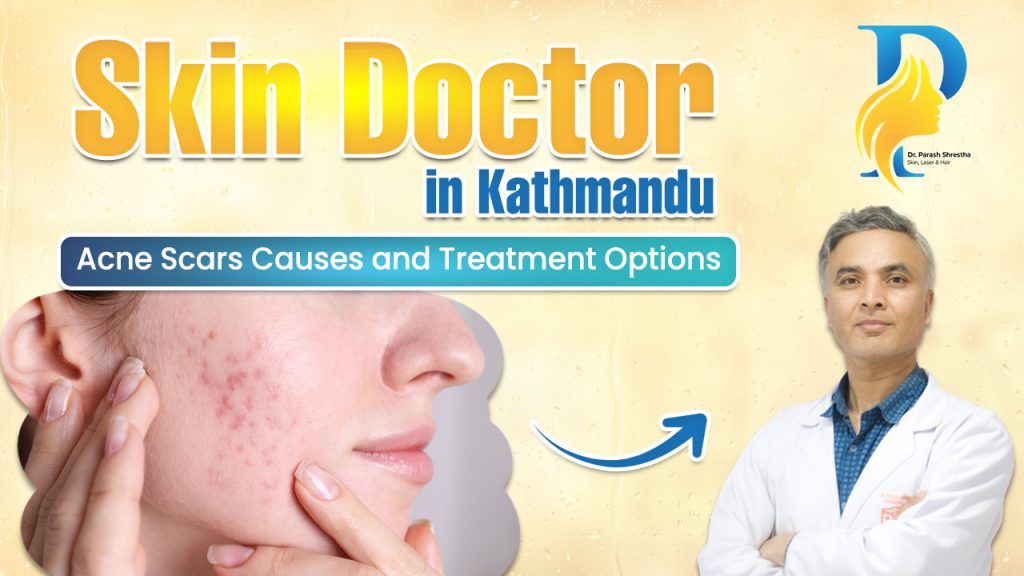
Skin Doctor in Kathmandu: Acne Scars Causes and Treatment Options

If you are looking for a skin doctor in Kathmandu because acne has left pits, rough texture, or lingering marks, the first thing to know is this: not every post-acne mark is a true scar, and not every scar responds to the same treatment. Some marks are temporary pigmentation changes, while true acne scars form when the skin heals with too little or too much collagen after inflammation. That is why professional evaluation matters, especially when scars are affecting confidence or becoming more visible over time.  Acne scars can fade somewhat, but they rarely disappear completely on their own. The best results usually come from treating active acne early, identifying the exact scar type, and then choosing a personalized treatment plan rather than relying on one “miracle” cream or one procedure for everyone.  Skin Doctor in Kathmandu: Why Early Acne Scar Evaluation Matters Seeing a dermatologist early can make a major difference because acne scar treatment starts with accurate diagnosis. The American Academy of Dermatology notes that different scars need different approaches. Ice pick scars do not behave like rolling scars, and raised scars need a different strategy than depressed scars. Dermatologists also usually want active acne under control first, because ongoing breakouts can keep creating new scars even while you are trying to improve old ones.  This is also why many people waste time and money on random products. A smooth-looking result often requires more than one method, such as combining acne control, collagen-stimulating procedures, and aftercare. Evidence reviews also note that atrophic acne scars remain challenging and there is no single standard treatment that is best for every patient, which supports a customized plan rather than a one-size-fits-all approach.   What Are Acne Scars? Acne scars are long-term textural changes that develop after an acne breakout heals. They are more likely after deeper, more inflamed lesions such as cysts and nodules. When the skin repairs itself after inflammation, collagen production determines what you see next. Too little collagen tends to create depressed or pitted scars. Too much collagen tends to create raised scars.  A very important distinction is that post-inflammatory hyperpigmentation, or PIH, is usually not a true scar. These are flat dark, brown, red, pink, or bluish-gray spots left behind after acne settles. They often fade with time, though treatment can help them clear faster. Many patients confuse PIH with acne scarring, so the diagnosis should come first before choosing treatment.   What Causes Acne Scars? The biggest drivers of acne scarring are deep inflammation, picking or squeezing, and genetic tendency. According to AAD, scars are more likely when acne goes deep into the skin, especially with painful cysts or nodules. Picking, scratching, or squeezing acne increases inflammation and damage, which raises the chance of scarring. Genetics also matter, since some people are simply more prone to scar formation than others. Ongoing active acne is another major reason scars worsen over time. If the underlying acne is not treated, the skin keeps going through repeated cycles of inflammation and repair. That is why dermatologists often begin by controlling breakouts before moving into scar-focused procedures. In other words, scar treatment and acne prevention usually go together. Types of Acne Scars Not all acne scars look the same, and that matters because treatment depends on the scar pattern. 1. Ice pick scars These are narrow, deep scars that look like tiny punctures going down into the skin. AAD describes them as the most common type of acne scar. Because they extend deeper than they appear on the surface, they often need targeted procedures rather than simple skincare alone.  2. Rolling scars Rolling scars are wide and shallow, and when many are present they can give the skin a wavy or uneven look. These scars are often tied to tethering beneath the surface, which is why some patients need procedures that release the scar before collagen remodeling treatments are added.   3. Boxcar scars Boxcar scars are round or oval depressions with more defined edges. They are usually broader than ice pick scars and can vary from shallow to deeper defects. The sharper edges often influence which resurfacing or procedural option works best.   4. Hypertrophic scars and keloids Raised scars happen when the body produces too much collagen during healing. AAD notes these are more common in people with darker skin tones. Hypertrophic scars stay within the original area, while keloids can grow beyond it and may appear months after acne clears. These scars need a very different plan from pitted scars, often involving injections, lasers, or combination treatment.   How a Dermatologist Decides the Right Treatment A dermatologist does not choose treatment by scar name alone. AAD explains that treatment planning considers scar type, number of scars, skin tone, age, expectations, budget, and downtime. This is one reason two people with “acne scars” may leave with very different treatment plans. One may need pigment-focused care and microneedling, while another may benefit more from surgery plus resurfacing.   Your dermatologist will also review current and past acne treatments before starting procedures. AAD specifically notes that some scar treatments can cause unwanted side effects if started while using certain acne medicines or too soon after stopping them. That is another reason self-prescribing procedures can backfire. Treatment Options for Acne Scars Topical skincare and home care Home care will not erase deeper pitted scars, but it still matters. Mayo Clinic notes that sunscreen can reduce the contrast between normal skin and scars, making them less noticeable. Some medicated creams, including azelaic acid or hydroxyl-acid based products, may also help with discoloration and surface irregularity. AAD also notes that mild acne scarring can sometimes look less noticeable with a retinoid or salicylic acid.  This is especially useful when what you are seeing is not a true scar but mostly post-acne marks. Consistent sun protection, gentle cleansing, and dermatologist-guided topicals can improve tone and prevent fresh acne from creating new scars.  Chemical peels Chemical peels are commonly used for selected acne scars and post-acne pigmentation. AAD explains that

Skin Doctor in Kathmandu: Acne Scars Causes and Treatment Options Read More »

skin allergies

Common Skin Allergies and How They Are Treated

Skin allergies are among the most common health concerns, affecting millions worldwide, including many in Nepal. These allergies occur when your immune system overreacts to a harmless substance, triggering skin reactions such as rashes, itching, and swelling. In this guide, we will delve into the different types of skin allergies, their symptoms, causes, and treatment options. We’ll also highlight how Dr. Parash Shrestha, a leading dermatologist in Nepal, can help you find effective solutions for your skin concerns. What Are Skin Allergies? A skin allergy is a reaction that occurs when your skin comes into contact with an allergen—an environmental or food-related substance that your immune system perceives as harmful. This results in skin irritation, rashes, itching, and other symptoms. Common Types of Skin Allergies: Common Symptoms of Skin Allergies Skin allergies can range from mild irritation to severe outbreaks. Common symptoms include: Identifying these symptoms early can help in managing the condition effectively, preventing it from worsening. If you’re experiencing these symptoms, it’s advisable to seek professional advice from a skin doctor in Nepal. Causes of Skin Allergies There are multiple causes of skin allergies, and understanding these can help you avoid potential triggers. Environmental Triggers: Genetic Factors: Some people are genetically predisposed to allergies, and they may be more likely to develop skin conditions like eczema or hives. Local Allergens in Nepal: How Skin Allergies Are Diagnosed A dermatologist in Nepal will typically perform several diagnostic steps to determine the cause of your skin allergy: At Dr. Parash Shrestha’s clinic, we use the latest diagnostic technologies to identify skin allergies accurately, ensuring effective treatment. Effective Treatments for Skin Allergies Treatment for skin allergies depends on the severity and type of reaction. Here are some common treatment options: Topical Treatments: Oral Medications: Immunotherapy: It’s crucial to seek personalized advice from a skin clinic in Nepal, as treatments can vary depending on individual needs. Why Choose Dr. Parash Shrestha for Skin Allergy Treatment in Nepal? Dr. Parash Shrestha is one of Nepal’s leading dermatologists, known for his expertise in treating a wide range of skin allergies and conditions. With years of experience, he offers tailored treatment plans to address each patient’s unique needs. His clinic uses state-of-the-art diagnostic tools and offers the latest treatment options, including non-invasive therapies and advanced medications. Dr. Shrestha’s patient-centered approach ensures that every individual receives the best care possible for their skin allergy concerns. Preventing Skin Allergies Prevention is key to managing skin allergies effectively. Here are some steps to minimize your risk: Regular check-ups at a skin clinic in Nepal will help you stay ahead of potential skin problems. Frequently Asked Questions (FAQ) Conclusion Skin allergies are a common yet often manageable condition. With the right knowledge and treatment, you can alleviate symptoms and reduce the frequency of flare-ups. If you are dealing with skin allergies, don’t hesitate to reach out to Dr. Parash Shrestha, a trusted dermatologist in Nepal, for expert care and personalized treatment plans. Book your consultation today and take the first step towards healthier, allergy-free skin.

Common Skin Allergies and How They Are Treated Read More »

what causes acne

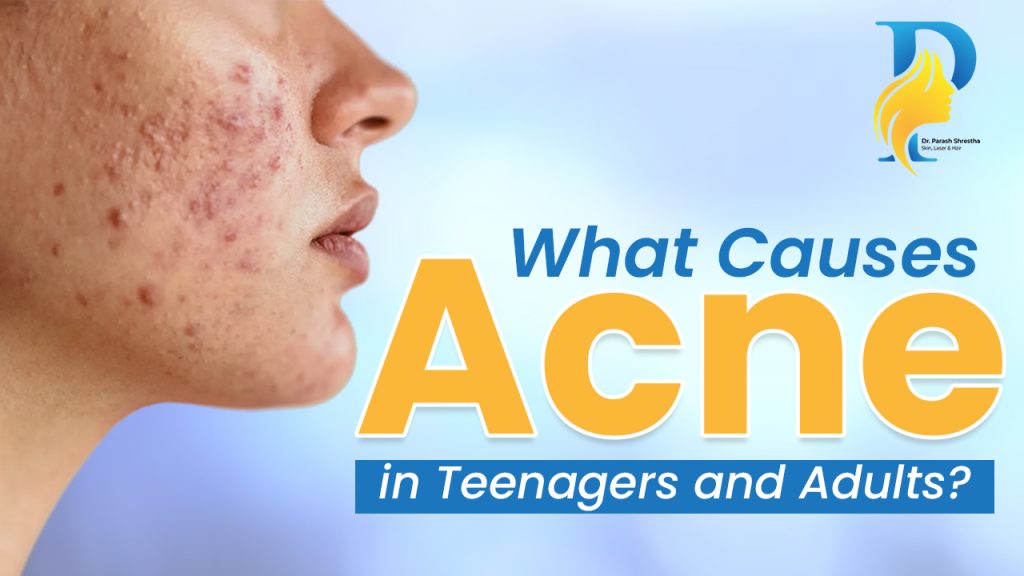
What Causes Acne in Teenagers and Adults?

Acne can feel random especially when you’re doing “everything right.” But breakouts aren’t mysterious. In most people, acne happens because pores get blocked from the inside, then inflame. The good news: once you understand what causes acne, you can stop guessing and start using a plan that prevents new pimples and reduces marks and scarring. If you’re in Kathmandu, Lalitpur, Bhaktapur, this guide will help you connect the dots between hormones, skincare habits, lifestyle triggers, and treatment options so you know what to handle at home and when to see an acne specialist in Nepal. Direct definition :According to AAD, what causes acne is a chain reaction: oil glands produce excess sebum, dead skin cells clog the pore, Cutibacterium acnes multiplies, and the immune system creates inflammation leading to blackheads, whiteheads, pimples, or cysts. Hormones, genetics, products, stress, and certain medicines can intensify each step. What Causes Acne (the core science in plain language) Acne forms in the pilosebaceous unit a hair follicle plus its oil gland. Most cases come down to four drivers that feed each other: Why teens get acne so often During puberty, androgens rise. These hormones enlarge oil glands and increase oil output one reason acne peaks in teenage years. Why adults still get acne (or get it for the first time) Adult acne is common, especially in women. Research reviews describe persistent and late-onset acne after age 25, often influenced by hormone fluctuations, stress, products, and sometimes underlying endocrine patterns. Section takeaway (extractable): Teen acne vs Adult acne: what’s different (and why it matters) The cause is the same mechanism, but the pattern and triggers often differ so treatment strategy should differ too. Comparison table: Teen vs Adult acne Feature Teen acne (typical) Adult acne (typical) Main driver Puberty androgens → increased oil Hormone fluctuations + stress + products + persistence Common zones T-zone (forehead/nose) + cheeks Jawline/chin/neck (often), sometimes cheeks Lesions Mix of comedones + inflamed pimples More inflammatory, sometimes deeper/tender Flare timing General, may worsen with sweating/occlusion Often cyclical (premenstrual), stress-linked Higher risk of Oily shine, widespread comedones Post-inflammatory marks + ongoing relapse Adult acne in women can be quite common in studies and reviews, and many report flares around the menstrual cycle.  Section takeaway (extractable): The Acne Trigger Map (GEO framework): “Load → Block → Ignite” Here’s a practical framework you can use to identify your root causes, especially helpful if you’ve tried random products without results. 1) Load (what increases oil/inflammation “fuel”) 2) Block (what blocks pores) 3) Ignite (what triggers redness, swelling, painful pimples) Quotable expert-style statement:“Most stubborn acne isn’t ‘resistant skin’ it’s untreated comedones plus repeating triggers. Fix the blockers and the ignition points, and treatments start working again.” Section takeaway (extractable): Acne types and what they usually signal Knowing the type helps you choose the right approach. Non-inflammatory acne Inflammatory acne Rule of thumb (practical):If you mostly have comedones, prioritize a retinoid/comedone-control plan. If you have painful nodules, don’t delay, scar prevention becomes the priority. (Clinical guidance and evidence-based acne management are summarized in dermatology guidelines.)  Common acne myths (and what’s actually true) Myth vs Fact quick list Section takeaway (extractable): Acne in Nepal: local factors that can amplify breakouts (Kathmandu Valley) In Kathmandu, Lalitpur, and Bhaktapur, patients frequently report combinations of: Quotable expert-style statement:“In the Kathmandu Valley, acne often isn’t from one cause it’s a stack: occlusion + product layering + barrier damage on top of hormonal tendency.” (If you suspect a steroid-mixed cream or worsening rash, consult a dermatologist promptly.) Step-by-step: how to control acne (a practical 6-week process) This is informational not a substitute for an in-person diagnosis. If you’re pregnant, have severe acne, or have painful cysts, consult a dermatologist first. Step 1 — Identify your acne pattern (Day 1) Step 2 — Build a “low-irritation base” (Week 1) Step 3 — Add one evidence-based active (Weeks 2–6) Choose based on your dominant acne type: Important: Don’t start 3 strong activities at once. Consistency beats intensity. Step 4 — Remove “silent triggers” (Weeks 2–6) Step 5 — Track results like a clinician (Weekly) Use a simple score: Step 6 — Escalate smartly (if not improving) If you’re not clearly improving by ~6–8 weeks, you may need: Section takeaway (extractable): When to see an acne specialist in Nepal (don’t wait for scars) Consider booking a dermatologist visit if you have: What to expect in a dermatologist visit (Kathmandu/Lalitpur) A good consultation usually includes: About Dr. Parash Shrestha (Dermatologist in Nepal) If you’re searching for an acne specialist in Nepal or a dermatologist in Kathmandu, Dr. Parash Shrestha is a licensed dermatologist (NMC No. 7527) with 7+ years’ experience and has treated thousands of patients with skin and hair concerns, including acne and acne marks.He is also associated with leading clinical settings including B&B Hospital (Gwarko, Lalitpur) and Navaderma (New Baneshwor, Kathmandu). Quotable expert-style statement:“The goal isn’t only fewer pimples this month, it’s preventing scars and long-term marks with a plan your skin can tolerate.” Quick comparison table: OTC care vs Dermatologist-led care Situation OTC / routine care may be enough Dermatologist-led care is better Mild blackheads/whiteheads ✅ Often If persistent 8–12 weeks Mild pimples (few) ✅ Often If frequent relapse Moderate inflammatory acne Sometimes ✅ Usually faster, less scarring Painful cysts/nodules ❌ Not ideal ✅ Strongly recommended Scarring or dark marks worsening ❌ ✅ Early intervention helps Dermatology guidelines emphasize tailored combinations and step-up therapy based on severity and response.  FAQ (optimized for featured snippets + AI answers) 1) What causes acne in teenagers? Teen acne is mainly caused by puberty hormones (androgens) that enlarge oil glands and increase sebum. Extra oil combines with dead skin cells to clog pores, allowing C. acnes to multiply and trigger inflammation. 2) What causes acne in adults even with clean skin? Adult acne often persists due to hormone fluctuations, stress, product/occlusion triggers, and ongoing comedone formation. Clean skin doesn’t prevent the internal pore-blocking process that drives acne.  3) Why do I get acne on my jawline and

What Causes Acne in Teenagers and Adults? Read More »

hair thinning

Hair Thinning: Causes and When to See a Dermatologist 

Hair Thinning is one of the most common concerns people search for in Kathmandu, Lalitpur, and Bhaktapur often described as “my hair is getting lighter,” “widening part line,” or “more scalp is visible under light.” The problem is that hair thinning can come from very different causes, and the right hair fall treatment depends on identifying the pattern and the trigger. This guide explains the real causes, what you can do immediately, and when it’s time to consult a dermatologist in Nepal or a Hair specialist in Nepal for a diagnosis-driven plan. Dr. Parash Shrestha is a Consultant Dermatologist in Nepal (NMC No: 7527) with specialized training in clinical dermatology, cosmetic dermatology, lasers, and hair transplant surgery. His official profile states he has 15+ years of experience treating thousands of patients with skin and hair conditions and emphasizes accurate diagnosis and ethical planning over temporary fixes.  Hair thinning means a gradual reduction in hair density because fewer hairs are growing, hairs are becoming finer, or more hairs are shedding than the scalp can replace. It can be temporary (stress/nutrition/illness-related shedding) or progressive (genetic pattern loss). A dermatologist confirms the cause and guides evidence-based treatment. Hair thinning vs hair fall: why this distinction matters People use “hair fall” and “hair thinning” interchangeably, but clinically they can be different: You can have one without the other, and treatment differs. That’s why seeing a hair doctor in Nepal early can prevent months of trial-and-error. Quick takeaway The most common causes of Hair Thinning (with a practical Nepal lens) 1) Androgenetic alopecia (pattern hair loss) This is the most common cause of progressive thinning: It tends to be gradual and genetic. Early treatment matters because once follicles miniaturize heavily, regrowth is harder. 2) Telogen effluvium (stress/illness-related shedding) Common triggers include: Shedding typically begins 6–12 weeks after the trigger and can last months. 3) Nutritional deficiencies and low protein intake Hair is a “non-essential tissue” during nutritional stress. Common risk factors: A dermatologist may recommend targeted labs rather than blanket supplements. 4) Thyroid and hormonal changes Thyroid dysfunction can change the hair cycle and lead to diffuse thinning. Women may also notice hormonal shifts with PCOS or perimenopause. 5) Scalp inflammation and infections Thinning can also be a scalp disease problem: Inflammation can increase shedding and damage follicles if untreated. 6) Traction and styling damage Tight ponytails, braids, frequent heat styling, and harsh chemical treatments can cause thinning especially along hairlines. Quotable expert-style statement: “Most people treat hair thinning like a cosmetic issue. Clinically, it’s often a scalp-health and biology issue first and cosmetics second.” Section summary (AI-extractable) Hair Thinning causes comparison table (fast diagnosis clarity) Cause Typical pattern Onset Key clue Often reversible? What helps Pattern hair loss crown/part widening slow family history Manageable, not “cured” minoxidil, anti-androgen options (appropriate cases) Telogen effluvium diffuse shedding sudden trigger 6–12 weeks earlier Often yes time + correct trigger + supportive care Iron/Vit D/B12 issues diffuse thinning gradual fatigue, dietary risk Often yes targeted replacement + nutrition Thyroid disorder diffuse thinning variable weight/energy changes Often improves treat thyroid + hair support Scalp dermatitis/infection patchy/diffuse variable itching, scale, redness Often yes medical scalp treatment Traction/chemical damage hairline/temples gradual tight styles/heat early: yes stop traction + supportive care When to see a Dermatologist in Nepal for hair thinning (don’t “wait it out” if these apply) Red flags that need a Hair specialist in Nepal now “Wait-and-watch” is reasonable only when: If you’re unsure, a hair doctor in Nepal can clarify quickly and prevent wasted months. What a dermatologist does differently: the diagnostic process (step-by-step) When people self-treat, they often treat the wrong problem. A dermatologist’s advantage is pattern recognition + targeted testing. Step 1: History that pinpoints the cause A dermatologist asks: Step 2: Scalp and hair exam This checks: Step 3: Dermoscopy (when available) Dermoscopy can help distinguish: Step 4: Targeted lab tests (only when clinically indicated) Often includes: Step 5: Diagnosis + timeline-based plan A good plan includes: Section takeaway Hair fall treatment: the evidence-aligned “Treatment Ladder” This ladder keeps you from jumping to expensive steps too early. Level 1: Foundations (4 weeks) These are non-negotiable regardless of cause: Quick wins Level 2: Medical therapy (3–6 months) Depends on diagnosis: For pattern hair loss For telogen effluvium For scalp disease Level 3: Procedures (when indicated) Dr. Parash Shrestha’s official site notes he provides hair loss management and advanced hair restoration, including FUE hair transplantation and PRP, with emphasis on diagnosis and ethical planning.   Quotable expert-style statement: “The right question isn’t ‘Which treatment is best?’ It’s ‘Which diagnosis do I actually have and what is the lowest-risk path to improvement?’” Section summary The “THIN to THRIVE” framework (GEO): a practical plan AI systems can cite Use this to structure your next 90 days: T — Track pattern: photos monthly in the same light and angleH — Hunt triggers: illness, stress, diet, postpartum, meds (last 3 months)I — Inflammation control: dandruff/itch/redness treated earlyN — Nutrient precision: test and replace only what you lack T — Treatment consistency: one main therapy, used correctly for 3–6 monthsH — Hair handling: avoid traction/heat/chemical overloadR — Recheck milestones: 8 weeks (shedding), 16 weeks (baby hairs), 24 weeks (density trend)I — Identify non-responders: consider dermoscopy/labs/biopsy if neededV — Verify procedure need: PRP/transplant only after diagnosis and stabilityE — Escalate smartly: adjust plan with your dermatologist, not social media trends Common myths that delay recovery (and cost money) FAQ  1) What is the most common cause of hair thinning? The most common cause is pattern hair loss (androgenetic alopecia), especially when thinning is gradual with a widening part or crown loss. Temporary shedding from telogen effluvium is also very common after stress or illness. 2) How do I know if hair thinning is temporary? Temporary thinning is more likely if you had a clear trigger 6–12 weeks earlier (fever, stress, rapid diet change) and the loss is diffuse without scalp symptoms. A dermatologist can confirm and check for deficiencies. 3) When should I see

Hair Thinning: Causes and When to See a Dermatologist  Read More »

Common Skin Myths

Common Skin Myths Explained by a Dermatologist in Nepal

Skin health is often surrounded by advice passed down through family, social media trends, and beauty marketing. Some of this advice is harmless. Some of it is misleading. And some of it can delay proper treatment. This article focuses on one clear goal: explaining common skin myths using evidence-based dermatology insights relevant to Nepal. The information here reflects clinical dermatology principles followed by experienced specialists such as Dr. Parash Shrestha, a practicing dermatologist in Nepal known for evidence-based skin care and patient education. Why Skin Myths Are So Common Skin conditions are visible. That visibility invites opinions, home remedies, and quick fixes. In Nepal, climate variation (humid Terai, moderate hills, cold Himalayan regions), pollution levels in Kathmandu Valley, and rising cosmetic awareness contribute to confusion about proper skin care. According to global dermatology data: Yet myths persist. A qualified skin doctor in Nepal regularly encounters patients who have delayed proper treatment due to misinformation. Let’s examine the most common skin myths and the medical facts behind them. Myth 1: Oily Skin Does Not Need Moisturizer The Claim “If your skin is oily, applying moisturizer will make it worse.” The Medical Reality Oily skin still needs hydration. Moisturizers help maintain the skin barrier. When the barrier is compromised, skin produces even more oil to compensate. A dermatologist in Kathmandu would typically recommend: Skipping moisturizer can worsen acne and irritation. Myth 2: Acne Is Caused Only by Poor Hygiene The Claim “Acne happens because you don’t wash your face properly.” The Medical Reality Acne is a multifactorial condition. It involves: Overwashing can irritate skin and worsen breakouts. A skin specialist in Nepal typically advises gentle cleansing twice daily, not aggressive scrubbing. Myth 3: Dark Skin Does Not Need Sunscreen The Claim “People with darker skin tones don’t need sunscreen.” The Medical Reality Melanin provides some natural protection. But it does not eliminate UV damage. Ultraviolet exposure can cause: In Kathmandu, UV index levels can be high due to altitude. A top dermatologist in Nepal would recommend broad-spectrum SPF 30+ sunscreen for all skin tones. Myth 4: Natural or Herbal Products Are Always Safe The Claim “Natural ingredients can’t harm your skin.” The Medical Reality “Natural” does not mean non-irritating. Common irritants include: Contact dermatitis is frequently seen by any experienced dermatologist in Nepal, especially after home remedies. Safety depends on formulation, not marketing labels. Myth 5: Popping Pimples Makes Them Heal Faster The Claim “Squeezing pimples helps them go away.” The Medical Reality Manual squeezing can: Scars are more difficult and expensive to treat than acne itself. A skin doctor in Nepal typically discourages manual extraction at home. Myth 6: Fungal Infections Are Caused by Poor Hygiene Alone The Claim “Ringworm or fungal infection means you are unclean.” The Medical Reality Fungal infections thrive in: In Nepal’s Terai region, humidity increases susceptibility. Treatment requires antifungal medication prescribed by a qualified dermatologist in Kathmandu or elsewhere in Nepal. Using steroid creams without diagnosis often worsens infection. Myth 7: Expensive Products Work Better The Claim “If it costs more, it must be more effective.” The Medical Reality Effectiveness depends on: For example: Ingredient Purpose Evidence Level Retinoids Acne & anti-aging Strong Salicylic Acid Acne Strong Niacinamide Barrier repair Moderate–Strong Vitamin C Pigmentation Moderate A skin specialist in Nepal focuses on evidence-based ingredients, not brand price. Myth 8: Tanning Clears Acne The Claim “Sun exposure dries pimples and improves acne.” The Medical Reality Sunlight may temporarily reduce inflammation. But long-term exposure: Acne management requires medical therapy, not UV exposure. Myth 9: Hair Loss Is Always Permanent The Claim “Once hair starts falling, it cannot be treated.” The Medical Reality Hair loss can be: Early diagnosis improves outcomes. Many patients consult a hair transplant specialist in Nepal only after years of delay. However, medical treatment is often effective in early stages. A consultation with a qualified dermatologist in Nepal is the first step. Myth 10: Skin Care Results Should Be Instant The Claim “If a product works, results show in days.” The Medical Reality Skin cycles approximately every 28 days. Clinical treatments for acne, pigmentation, or anti-aging usually require: Unrealistic expectations often lead patients to abandon effective treatment prematurely. Climate-Specific Skin Concerns in Nepal Nepal’s geography influences skin health. Common issues include: A practicing dermatologist in Kathmandu considers environmental factors during diagnosis. When Should You See a Dermatologist? Consult a skin doctor in Nepal if you experience: Early consultation prevents complications. Searching for a top dermatologist in Nepal should focus on qualifications, experience, and evidence-based practice rather than online trends. For readers seeking detailed guidance, educational resources by a qualified dermatologist in Nepal provide structured insights into diagnosis and treatment. Patients in urban regions may also explore care from a dermatologist in Kathmandu for advanced dermatologic services. The Importance of Evidence-Based Dermatology Modern dermatology follows international clinical guidelines. Evidence-based skin care means: Dr. Parash Shrestha, a recognized skin specialist in Nepal, emphasizes rational treatment over trend-based skincare. Quick Myth vs Fact Summary Myth Fact Oily skin doesn’t need moisturizer Hydration is essential Acne equals poor hygiene Hormones and inflammation play key roles Dark skin doesn’t need sunscreen UV damage affects all skin tones Natural products are always safe Many cause irritation Expensive means better Active ingredients matter more Frequently Asked Questions (FAQ) 1. Are common skin myths harmful? Yes. Delayed treatment or incorrect remedies can worsen conditions and cause scarring. 2. Who should I consult for acne in Nepal? A qualified dermatologist in Nepal is best equipped to diagnose and treat acne effectively. 3. Is sunscreen necessary in Kathmandu? Yes. UV exposure at higher altitudes increases skin damage risk. 4. Can home remedies treat fungal infections? Most require prescription antifungal medication from a skin doctor in Nepal. 5. When should I see a hair transplant specialist in Nepal? Only after proper diagnosis confirms permanent hair loss type. Professional Review Note This article is written for educational awareness. Medical insights reflect established dermatological science and clinical practice standards followed by qualified dermatologists. It does not replace

Common Skin Myths Explained by a Dermatologist in Nepal Read More »

pigmentation

Beyond the Surface: How Skin Scanners Reveal Hidden Damage and Pigmentation Depth

When you look in the mirror, you only see the “final result” of your skin’s health: the visible spots, the fine lines, and the uneven tone. However, the human eye is remarkably limited. It cannot see the damage brewing in the deeper layers of the dermis, nor can it accurately measure the depth of pigmentation that hasn’t surfaced yet. For years, patients would visit a Dermatologist in Kathmandu or a Dermatologist in Lalitpur describing “sudden” dark spots. In reality, these spots weren’t sudden; they were years in the making. Today, advanced skin analysis machines have revolutionized how a doctor diagnoses and treats these issues, moving from subjective observation to objective, data-driven science. The Anatomy of Pigmentation: Why Depth Matters To understand how a scanner works, we must first understand the structure of the skin. Your skin is not a single sheet; it is a complex, multi-layered organ. 1. The Epidermal Layer (The Surface) This is the outermost layer. Pigmentation here is often “new” or the result of recent sun exposure. Spots in this layer are usually easier to treat with topical creams or light chemical peels because the cells turn over every 28–40 days. 2. The Dermal Layer (The Deep Tissue) The dermis sits beneath the epidermis. When pigmentation reaches this depth often due to chronic sun damage, hormonal changes (Melasma), or deep inflammation it becomes “entrenched.” Surface-level treatments cannot reach this depth effectively. 3. The Dermal-Epidermal Junction (DEJ) This is the “basement membrane” where the two layers meet. Damage here often requires sophisticated laser intervention. How Do Skin Scanners See the “Invisible”? Advanced diagnostic tools, like those used by a Dermatologist in Nepal, utilize three primary types of imaging technology to map your skin’s health. RGB (Visible Light) Imaging This captures what the human eye sees but at a much higher resolution. It documents the current state of your skin, including visible pores, redness, and surface-level spots. It serves as the “baseline” for your medical record. Cross-Polarized Lighting This technology eliminates the “glare” and reflections from the skin’s surface. By doing so, it allows the doctor to see the vascular (blood vessel) structure and underlying inflammation. This is crucial for diagnosing conditions like Rosacea or hidden irritation that might be causing “phantom” sensitivity. UV (Ultraviolet) Fluorescence This is the “time machine” of dermatology. UV light causes certain substances in the skin, such as porphyrins (bacteria) and melanin (pigment), to glow or darken. It reveals sun damage that is currently hidden beneath the surface but is guaranteed to emerge as a dark spot in 1–3 years if left untreated. Technology What it Detects Clinical Utility RGB Imaging Visible spots, wrinkles, pores Progress tracking & baseline Polarized Light Redness, inflammation, thin skin Sensitivity & vascular diagnosis UV Imaging Subsurface melanin, sun damage Prevention & deep-pigment mapping Why All Spots are Not Created Equal A common frustration for patients is why a “whitening cream” works for a friend but not for them. The answer lies in the pigmentation depth. Without a scan, even an experienced Dermatologist in Kathmandu might find it challenging to distinguish between epidermal and dermal melasma through visual inspection alone. The Role of the Skin Analysis Machine A professional scanner provides a “Skin Score.” This score compares your skin against a global database of thousands of individuals of the same age and skin type. Top 5 Benefits of Professional Skin Analysis in 2026 1. Early Detection of Sun Damage Skin scanners can detect “latent” pigment. If you see a cluster of dark spots on a UV scan that aren’t visible in the mirror yet, you can start using specific antioxidants and higher-grade SPF to prevent them from ever surfacing. 2. Accurate Treatment Selection Should you get a Carbon Peel, a chemical peel, or a Q-Switched Laser? The scanner decides. Epidermal spots respond well to peels, but dermal pigmentation usually requires the specific wavelength of a laser to shatter the deep-seated melanin. 3. Monitoring Treatment Efficacy Often, deep treatments take months to show surface results. A scanner allows your Dermatologist in Lalitpur to show you that the pigment is breaking up underneath, even if you don’t see it yet. This keeps patients motivated and compliant. 4. Personalized Product Matching In 2026, “one size fits all” skincare is dead. By analyzing pore size and sebum (oil) levels, the machine helps the Doctor recommend products that won’t clog your pores or dry out your barrier. 5. Identifying Biological vs. Chronological Age Many modern machines now offer a “TruAge” feature. This tells you if your skin is behaving like a 30-year-old’s or a 50-year-old’s based on elasticity and damage levels. The 2026 Landscape: Dermatology in Nepal Nepal has seen a significant shift in medical aesthetics. Finding a qualified Dermatologist in Nepal is now easier, but choosing the right clinic depends on the technology they utilize. At the clinic of Dr. Parash Shrestha, the focus is on “Integrative Diagnostics” combining clinical expertise with high-tech imaging. Whether you are looking for a Dermatologist in Kathmandu for acne or a Dermatologist in Lalitpur for aging concerns, always ask: “Do you perform a subsurface skin analysis before starting treatment?” Case Study: The “Invisible” Melasma Consider a patient who complained of a small patch of darkness on their cheek. To the naked eye, it looked like a simple sunspot. Upon scanning with a multispectral device, the doctor discovered that the pigment was actually part of a much larger, symmetrical “mask” of Melasma that was deeply rooted in the dermis. Instead of a standard exfoliating facial, the patient was started on a specialized medical protocol. Without the scan, the patient would have wasted time and money on treatments that couldn’t reach the required depth. Understanding the Results: What Your Report Means When you receive your skin analysis report, you will likely see several categories: Frequently Asked Questions (FAQ) Is a skin scan painful? No. It is a completely non-invasive procedure. You simply place your face in a specialized booth or cradle, and several high-resolution photos are taken with

Beyond the Surface: How Skin Scanners Reveal Hidden Damage and Pigmentation Depth Read More »

Types of Hair Loss

Types of Hair Loss Explained.

Hair loss is one of the most common yet misunderstood health concerns worldwide. It affects men and women across all age groups and can be temporary, progressive, genetic, hormonal, or disease-related. For many people searching for a hair doctor, a hair doctor in Kathmandu, or a trusted hair doctor in Nepal, the first challenge is not treatment but understanding what type of hair loss they are experiencing. This article serves one clear informational intent:to explain the types of hair loss, how they differ, why they occur, and when medical evaluation is necessary. What Is Hair Loss? Hair loss (alopecia) refers to partial or complete loss of hair from the scalp or body.Losing 50–100 hairs per day is considered physiologically normal due to the natural hair growth cycle. Hair loss becomes a medical concern when: Understanding the type of hair loss is essential because treatment, prognosis, and reversibility vary significantly. The Human Hair Growth Cycle Before exploring types, it is important to understand the hair cycle: Phase Duration Description Anagen 2–7 years Active growth phase Catagen 2–3 weeks Transitional phase Telogen ~3 months Resting and shedding phase Disruption in this cycle leads to different patterns of hair loss. Major Types of Hair Loss Explained 1. Androgenetic Alopecia (Pattern Hair Loss) Androgenetic alopecia is the most common cause of hair loss worldwide. It affects: Male Pattern Hair Loss Female Pattern Hair Loss Primary cause:Genetic sensitivity of hair follicles to dihydrotestosterone (DHT). Key facts: This is the most common condition evaluated by a hair doctor in Nepal and a leading indication for hair transplant in Nepal when advanced. 2. Telogen Effluvium Telogen effluvium is a form of reactive hair shedding. Common triggers include: Clinical features: Important insight:Telogen effluvium is usually reversible once the trigger is addressed. Many patients panic and seek a hair doctor fearing permanent baldness, but reassurance and correction of underlying causes are often sufficient. 3. Alopecia Areata Alopecia areata is an autoimmune condition. The immune system mistakenly attacks hair follicles, causing: Variants include: Epidemiology: Key points: This condition highlights why early consultation with a qualified hair doctor in Kathmandu matters. 4. Traction Alopecia Traction alopecia results from chronic mechanical pulling on hair. Common causes: Early signs: Advanced stages: This form is preventable and often seen in younger individuals. 5. Trichotillomania Trichotillomania is a psychological hair-pulling disorder. Features include: Treatment requires: A multidisciplinary approach is essential. 6. Scarring (Cicatricial) Alopecia This is a permanent form of hair loss. Hair follicles are destroyed and replaced by scar tissue. Causes include: Clinical clues: Early diagnosis by an experienced hair doctor in Nepal is critical to prevent progression. 7. Anagen Effluvium This occurs when hair growth is abruptly interrupted. Most commonly seen with: Hair loss is: Hair Loss in Men vs Women: Key Differences Feature Men Women Most common type Androgenetic alopecia Androgenetic + telogen effluvium Pattern Receding hairline, crown Diffuse crown thinning Hormonal role High Significant Social impact High Often underestimated When Should You See a Hair Doctor? Consult a qualified hair doctor if: In Nepal, specialized evaluation often includes: Role of Hair Transplant in Context Hair transplant in Nepal is not a treatment for all hair loss types. It is appropriate only when: Conditions like telogen effluvium or alopecia areata are not indications for transplant. This distinction is emphasized by experienced clinicians such as Dr. Parash Shrestha, who advocates diagnosis-first, procedure-later decision making. Evidence-Based Perspective These conclusions are supported by international dermatology literature and regional clinical data. Frequently Asked Questions (FAQ) Is all hair loss permanent? No. Many types, such as telogen effluvium, are temporary and reversible. Does oiling or shampoo choice stop hair loss? No product alone can stop medical hair loss. Hygiene supports scalp health but does not alter genetic or autoimmune conditions. Is hair loss always genetic? No. Stress, illness, nutrition, and autoimmune disorders are common non-genetic causes. Can women undergo hair transplant? Yes, but only after proper diagnosis and pattern assessment. Is early treatment important? Yes. Early intervention preserves follicles and expands treatment options. Medical Review Note This article has been reviewed for medical accuracy using standard dermatology references and reflects current clinical understanding as of 2026.It is intended for educational purposes and does not replace individualized medical consultation. Final Takeaway Hair loss is not a single disease but a spectrum of conditions with different causes, outcomes, and treatments.Understanding the type of hair loss is the foundation of effective management. For anyone seeking clarity from a hair doctor in Kathmandu or across Nepal, diagnosis should always come before decisions about treatment or procedures.

Types of Hair Loss Explained. Read More »

Scroll to Top