
If you are looking for a skin doctor in Kathmandu because acne has left pits, rough texture, or lingering marks, the first thing to know is this: not every post-acne mark is a true scar, and not every scar responds to the same treatment. Some marks are temporary pigmentation changes, while true acne scars form when the skin heals with too little or too much collagen after inflammation. That is why professional evaluation matters, especially when scars are affecting confidence or becoming more visible over time.
Acne scars can fade somewhat, but they rarely disappear completely on their own. The best results usually come from treating active acne early, identifying the exact scar type, and then choosing a personalized treatment plan rather than relying on one “miracle” cream or one procedure for everyone.
Skin Doctor in Kathmandu: Why Early Acne Scar Evaluation Matters
Seeing a dermatologist early can make a major difference because acne scar treatment starts with accurate diagnosis. The American Academy of Dermatology notes that different scars need different approaches. Ice pick scars do not behave like rolling scars, and raised scars need a different strategy than depressed scars. Dermatologists also usually want active acne under control first, because ongoing breakouts can keep creating new scars even while you are trying to improve old ones.
This is also why many people waste time and money on random products. A smooth-looking result often requires more than one method, such as combining acne control, collagen-stimulating procedures, and aftercare. Evidence reviews also note that atrophic acne scars remain challenging and there is no single standard treatment that is best for every patient, which supports a customized plan rather than a one-size-fits-all approach.
What Are Acne Scars?
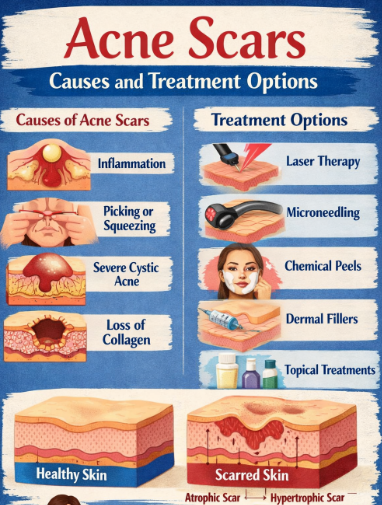
Acne scars are long-term textural changes that develop after an acne breakout heals. They are more likely after deeper, more inflamed lesions such as cysts and nodules. When the skin repairs itself after inflammation, collagen production determines what you see next. Too little collagen tends to create depressed or pitted scars. Too much collagen tends to create raised scars.
A very important distinction is that post-inflammatory hyperpigmentation, or PIH, is usually not a true scar. These are flat dark, brown, red, pink, or bluish-gray spots left behind after acne settles. They often fade with time, though treatment can help them clear faster. Many patients confuse PIH with acne scarring, so the diagnosis should come first before choosing treatment.
What Causes Acne Scars?
The biggest drivers of acne scarring are deep inflammation, picking or squeezing, and genetic tendency. According to AAD, scars are more likely when acne goes deep into the skin, especially with painful cysts or nodules. Picking, scratching, or squeezing acne increases inflammation and damage, which raises the chance of scarring. Genetics also matter, since some people are simply more prone to scar formation than others.
Ongoing active acne is another major reason scars worsen over time. If the underlying acne is not treated, the skin keeps going through repeated cycles of inflammation and repair. That is why dermatologists often begin by controlling breakouts before moving into scar-focused procedures. In other words, scar treatment and acne prevention usually go together.
Types of Acne Scars
Not all acne scars look the same, and that matters because treatment depends on the scar pattern.
1. Ice pick scars
These are narrow, deep scars that look like tiny punctures going down into the skin. AAD describes them as the most common type of acne scar. Because they extend deeper than they appear on the surface, they often need targeted procedures rather than simple skincare alone.
2. Rolling scars
Rolling scars are wide and shallow, and when many are present they can give the skin a wavy or uneven look. These scars are often tied to tethering beneath the surface, which is why some patients need procedures that release the scar before collagen remodeling treatments are added.
3. Boxcar scars
Boxcar scars are round or oval depressions with more defined edges. They are usually broader than ice pick scars and can vary from shallow to deeper defects. The sharper edges often influence which resurfacing or procedural option works best.
4. Hypertrophic scars and keloids
Raised scars happen when the body produces too much collagen during healing. AAD notes these are more common in people with darker skin tones. Hypertrophic scars stay within the original area, while keloids can grow beyond it and may appear months after acne clears. These scars need a very different plan from pitted scars, often involving injections, lasers, or combination treatment.
How a Dermatologist Decides the Right Treatment
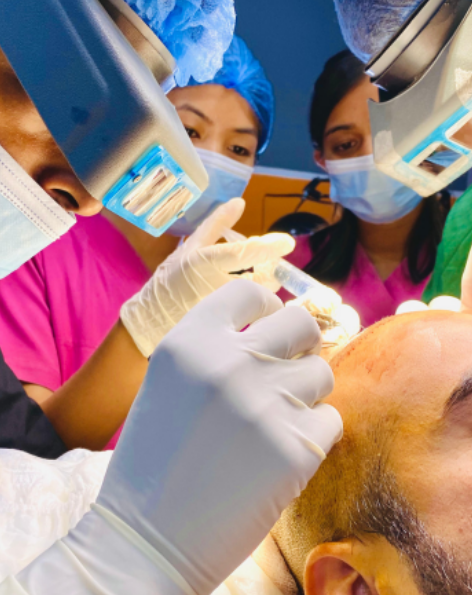
A dermatologist does not choose treatment by scar name alone. AAD explains that treatment planning considers scar type, number of scars, skin tone, age, expectations, budget, and downtime. This is one reason two people with “acne scars” may leave with very different treatment plans. One may need pigment-focused care and microneedling, while another may benefit more from surgery plus resurfacing.
Your dermatologist will also review current and past acne treatments before starting procedures. AAD specifically notes that some scar treatments can cause unwanted side effects if started while using certain acne medicines or too soon after stopping them. That is another reason self-prescribing procedures can backfire.
Treatment Options for Acne Scars
Topical skincare and home care
Home care will not erase deeper pitted scars, but it still matters. Mayo Clinic notes that sunscreen can reduce the contrast between normal skin and scars, making them less noticeable. Some medicated creams, including azelaic acid or hydroxyl-acid based products, may also help with discoloration and surface irregularity. AAD also notes that mild acne scarring can sometimes look less noticeable with a retinoid or salicylic acid.
This is especially useful when what you are seeing is not a true scar but mostly post-acne marks. Consistent sun protection, gentle cleansing, and dermatologist-guided topicals can improve tone and prevent fresh acne from creating new scars.
Chemical peels
Chemical peels are commonly used for selected acne scars and post-acne pigmentation. AAD explains that peels can help the skin produce more collagen and elastin, which can make depressed scars less noticeable. Peels range from mild to strong, and mild or medium peels often require multiple sessions spaced a few weeks apart.
Peels are not all the same. The depth of the peel, the patient’s skin tone, the scar pattern, and the amount of downtime a patient can tolerate all matter. Proper priming and sun protection before and after treatment are important because pigment changes are a real concern when the wrong peel is used or aftercare is poor.
Microneedling
Microneedling is one of the most discussed options for atrophic, or depressed, acne scars. AAD describes it as a procedure in which tiny needles puncture the skin, triggering new collagen and elastin formation. A systematic review also describes microneedling as a minimally invasive technology with demonstrated benefit in atrophic scar treatment.
One major advantage is that AAD states microneedling is safe for all skin tones. That matters in real-world practice because pigmentation problems are a common concern in medium-to-deeper complexions. For many patients, microneedling offers a balance of improvement and recovery time, though multiple sessions are usually needed and results depend on scar type and severity.
Radiofrequency microneedling
Radiofrequency microneedling combines microneedling with radiofrequency energy. AAD notes that both radiofrequency and radiofrequency microneedling help the skin produce collagen and elastin, and that combining the two may make scars less noticeable than either treatment alone. AAD also says radiofrequency-based options are safe for all skin tones.
For many acne-scar patients, this option is appealing because it aims to remodel deeper tissue while keeping the epidermis more controlled than some more aggressive resurfacing procedures. It is not automatically the best choice for every scar, but it is a strong option when textural irregularity is the main complaint.
Laser treatment
Laser treatment is widely used for acne scars. AAD states that laser resurfacing can stimulate collagen and elastin as the skin heals, helping scars become less noticeable. Lasers may also contour surrounding skin to reduce the appearance of irregular texture. Some lasers require more sessions than others, and the “right” laser depends on the scar type, the patient’s skin tone, and downtime tolerance.
For Nepalese patients, this is where an experienced evaluator matters. By extension from current guidance, individualized planning is especially important for many South Asian skin tones because pigment changes can be a concern with some resurfacing approaches. AAD notes microneedling and radiofrequency microneedling are safe for all skin tones, while Mayo Clinic notes that dermabrasion can sometimes cause lasting color changes more often in brown or Black skin. The same principle supports careful laser selection and conservative settings where needed.
Fillers
Some depressed scars improve when lost volume is replaced. Mayo Clinic says soft tissue fillers can plump the skin over indented scars so they are less visible, and AAD notes fillers can also support collagen and elastin production. These treatments can work well for selected depressed scars, especially when the goal is faster visual blending rather than resurfacing alone
The main limitation is that many fillers are temporary. Mayo Clinic notes that repeat treatments are often needed to maintain results, and AAD says different fillers last for different periods, from months to years. That makes fillers useful for the right patient, but not always the first-line answer for everyone.
Scar surgery
AAD notes that dermatologists can perform minor surgery for noticeable acne scars. This may involve removing a scar and closing the area, or lifting a scar from the tissue underneath so the skin rises and looks smoother. In practice, this type of targeted procedure is often reserved for scars that are structurally resistant to more superficial methods.
Scar surgery is often combined with other treatments. AAD specifically notes that a procedure such as laser resurfacing or platelet-rich plasma may be used after acne surgery to improve final results. This again supports the idea that combination treatment is common in real acne scar care.
Dermabrasion
Dermabrasion is a deeper resurfacing procedure that removes the top layer of skin with a specialized device. Mayo Clinic says it can make acne scars less noticeable, and AAD also includes it among procedural options for depressed scars.
However, this is not a casual treatment. Mayo Clinic notes recovery involves redness, swelling, sensitivity, and possible changes in skin color, with those pigment risks occurring more often in brown or Black skin. It is also not suitable for everyone, including some people with active acne, recent isotretinoin use, or a tendency toward keloids.
Steroid injections and treatment for raised scars
Raised acne scars need a different plan from pitted scars. AAD recommends options such as laser treatment, corticosteroid injections, or other prescription treatment for hypertrophic scars. For keloids, AAD notes that using more than one treatment often gives better results, and options can include injections, laser therapy, surgery, or freezing.
This matters because patients with raised scars often keep trying resurfacing techniques meant for depressed scars and see little improvement. Correct classification changes everything.
Which Treatment Is Best?
There is no universal “best” treatment for acne scars. The right answer depends on whether the scar is ice pick, rolling, boxcar, hypertrophic, keloid, or mostly pigmentation rather than true scarring. Evidence reviews and AAD guidance both support individualized, often combination-based treatment plans.
In general, mild discoloration may improve with skincare and sun protection. Depressed scars often respond to collagen-stimulating procedures such as microneedling, radiofrequency microneedling, lasers, fillers, or selected scar surgery. Raised scars usually need injections, laser therapy, or other targeted treatment. The best consultation is not about selling one machine; it is about matching the correct tool to the actual scar.
How Long Does Acne Scar Treatment Take?
Patients often expect one session to fix years of acne damage, but that is rarely realistic. AAD notes that many treatments require multiple sessions, including mild or medium chemical peels and many filler-based plans, and some laser treatments also need repeat visits. Improvement is usually gradual because collagen remodeling takes time.
Results also depend on whether active acne is still happening. If you continue to get inflamed breakouts, especially cystic acne, new scars can keep forming. That is why ongoing acne control is not separate from scar treatment; it is part of the treatment.
How to Prevent Acne Scars from Getting Worse
The simplest way to reduce future scars is to treat acne early and avoid picking. AAD explicitly says squeezing, popping, or scratching acne increases scar risk. Using acne medication instead of trying to manually remove pimples is the safer strategy.
Consistent acne treatment matters too. AAD says the goals of acne treatment include clearing existing acne, preventing new breakouts, and preventing scars. Topical retinoids are also used to keep acne under control, and AAD notes they can help lighten dark spots left after acne clears. Sunscreen is equally important because Mayo Clinic says it can reduce the contrast between scarred and unscarred skin.
When to See a Dermatologist
Many people first search online for a skin doctor in Nepal or a skin specialist in Nepal after over-the-counter products stop working. You should book a consultation sooner rather than later if you have painful cysts, repeated acne flares, pitted texture, raised scars, or marks that are affecting confidence. Deep acne and delayed treatment raise scar risk, so waiting too long is rarely helpful.
You should also seek specialist care if you are unsure whether you have true scars, PIH, active acne, or a mixture of all three. These look similar to patients but are treated differently. A dermatologist can separate them and build a stepwise plan based on your skin and goals.
About Dr. Parash Shrestha
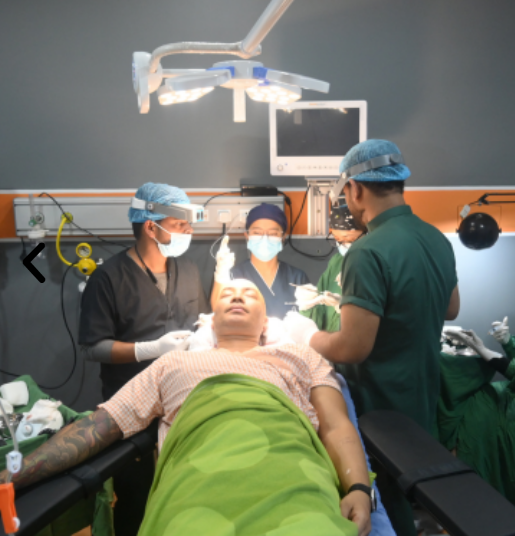
For patients comparing options for acne scar care, Dr. Parash Shrestha’s website describes him as a licensed dermatologist in Nepal, NMC No. 7527, with 15+ years of experience and training in clinical dermatology, cosmetic dermatology, laser treatments, and hair transplant surgery. The site also lists B&B Hospital, Gwarko, Lalitpur, and Nava Derma, New Baneshwor, as practice locations.
If someone is searching for a skin specialist in Kathmandu or a skin specialist doctor in Kathmandu, acne scar treatment should be approached with the same mindset shown in evidence-based dermatology: diagnose the scar correctly, control active acne, select the least risky effective treatment for the patient’s skin tone, and combine methods when needed. Likewise, anyone looking for a skin specialist doctor in Nepal should prioritize medical diagnosis over trend-driven cosmetic shortcuts .
FAQ
Are acne scars permanent?
They can fade, but they rarely go away completely on their own. Dermatologist-guided treatment can make them less noticeable and improve texture significantly.
What causes acne scars the most?
The biggest risk factors are deep inflammatory acne, especially cysts and nodules, picking or squeezing pimples, and genetic tendency to scar.
Are dark spots after acne the same as scars?
Not always. Many flat spots after acne are post-inflammatory hyperpigmentation, which is usually not a true scar and often fades with time, though treatment can speed improvement.
Is microneedling good for acne scars?
It can be very helpful for selected depressed scars. AAD and published reviews describe it as a collagen-stimulating, minimally invasive option, and AAD notes it is safe for all skin tones.
Which acne scar treatment is best for pitted scars?
There is no single best treatment for every pitted scar. Depending on the type and depth, dermatologists may use microneedling, radiofrequency microneedling, laser resurfacing, fillers, scar surgery, or a combination of these.
How do I choose a skin specialist in Kathmandu for acne scars?
Choose someone who can identify the exact scar type, treat active acne as well as scars, discuss skin-tone safety, and explain realistic downtime and session numbers instead of promising instant results. That approach aligns with current dermatology guidance on individualized treatment.
Final Thoughts
Acne scars are not just a cosmetic issue. They are a healing problem, a texture problem, and often a confidence problem. The good news is that modern dermatology offers multiple ways to improve them, from topicals and peels to microneedling, lasers, fillers, and scar-directed procedures. The key is choosing the right treatment for the right scar at the right time.
So if you are looking for a skin doctor in Kathmandu for acne scar treatment, do not judge your skin only by what you see in the mirror. Find out whether you are dealing with pigmentation, pitted scars, raised scars, or ongoing active acne. Once the diagnosis is clear, treatment becomes far more targeted, safer, and more effective.