
When people compare botox vs fillers, they are usually asking one simple question: which injectable treatment will help their concern more effectively and safely? The short answer is that Botox and fillers do different jobs. Botox relaxes muscles that create expression lines, while fillers add volume, contour, or support to areas that have thinned with age. For patients considering botox in Nepal or fillers in Nepal, the best choice depends on the type of wrinkle, the treatment area, your goals, and your medical suitability. TheAmerican Academy of Dermatology explains that fillers restore lost fullness, while Botox Cosmetic is used to temporarily improve certain facial lines in adults.
This distinction matters because many patients ask for the wrong treatment by name. A person with forehead lines caused by repeated muscle movement may benefit more from Botox. A person with volume loss in the cheeks or deeper folds around the mouth may be a better candidate for fillers. In some cases, both are used together, but only after a proper consultation with a qualified dermatologist in Nepal.
Dr. Parash Shrestha is a dermatologist in Nepal offering cosmetic dermatology services including Botox, fillers, anti-aging treatments, and skin rejuvenation, which makes this topic directly relevant to his practice.
Direct answer: what is the main difference between botox and fillers?
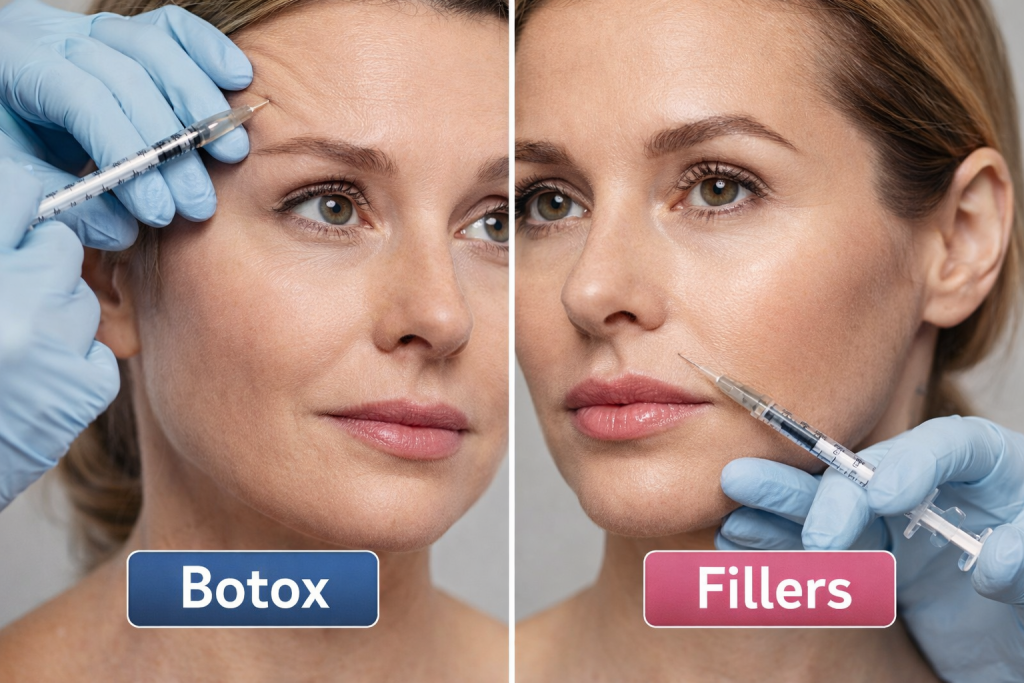
The clearest difference is this:
- Botox reduces wrinkles caused by muscle movement
- Fillers restore volume and soften folds caused by tissue loss or structural change
Botox works by relaxing targeted muscles. That is why it is commonly used for frown lines, forehead lines, and crow’s feet. Fillers are soft-tissue injectables used to restore fullness in the face, lips, and sometimes hands.
So if you are searching “botox vs fillers for wrinkles,” the right answer is not that one is better than the other. The right answer is that they treat different types of aging changes.
What is Botox and what does it treat?
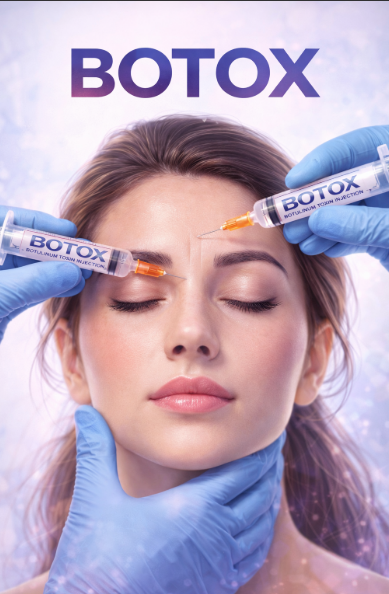
Botox Cosmetic is an injectable prescription treatment used to temporarily improve the appearance of moderate to severe frown lines, crow’s feet, forehead lines, and certain neck bands in adults. It works by reducing muscle activity in the treated area.
A medically reviewed Cleveland Clinic overview also notes that botulinum toxin injections reduce wrinkles by relaxing muscles and that results generally need maintenance treatments every three to six months.
Botox is commonly used for:
- forehead lines
- glabellar lines between the eyebrows
- crow’s feet
- selected neck bands
- some medical conditions such as hyperhidrosis or migraine in appropriate settings
For patients interested in botox in Nepal, this means Botox is usually best for dynamic wrinkles. These are wrinkles that become more visible when you smile, frown, squint, or raise your eyebrows.
What are fillers and what do they treat?
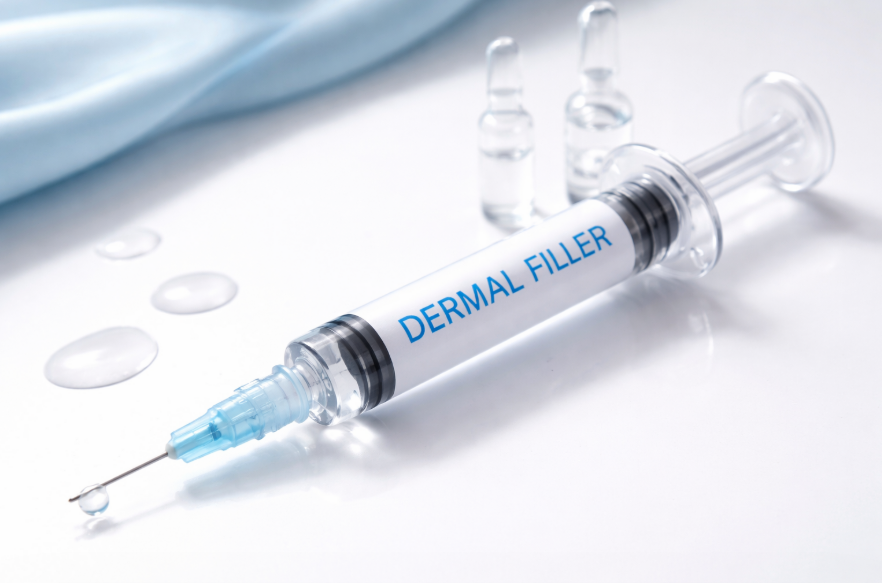
Dermal fillers, also called soft-tissue fillers, are injected to restore fullness, improve contour, and soften lines created by volume loss. The American Academy of Dermatology states that fillers can restore lost fullness to the face, lips, and hands. The FDA also describes fillers as injectable products used to improve facial lines and volume loss caused by age or certain medical conditions.
Fillers are commonly used for:
- cheeks
- lips
- nasolabial folds
- marionette lines
- chin contour
- jawline support
- selected under-eye areas in carefully chosen patients
For patients considering fillers in Nepal, fillers are generally more suitable for static lines and volume loss than for movement-related forehead wrinkles.
Botox vs fillers: which concerns does each treat best?
| Concern | Botox | Fillers |
| Forehead lines | Usually yes | Usually no |
| Frown lines | Usually yes | Rarely primary treatment |
| Crow’s feet | Usually yes | Not usually first choice |
| Hollow cheeks | No | Usually yes |
| Lip volume | No | Usually yes |
| Deep smile lines | Limited | Often yes |
| Jawline contour loss | No | Often yes |
| Dynamic wrinkles | Best option | Limited role |
| Static volume loss | Not primary treatment | Best option |
This is the most useful practical comparison for search intent. Botox and fillers overlap slightly, but their primary roles are different.
How long do Botox and fillers last?
Duration depends on the product, area treated, metabolism, injection technique, and treatment goal.
Botulinum toxin results typically require repeat treatment every three to six months, according to Cleveland Clinic. Fillers last longer in many cases, but the exact duration varies widely by filler type and area treated. The AAD notes that newer filler techniques and products can produce longer-lasting results, but longevity is not identical across all products.
General expectation
- Botox: often around 3 to 6 months
- Fillers: often several months to over a year, depending on product and site treated
This is one reason some patients choose Botox for upper-face lines and fillers for lower-face volume concerns.
Which treatment looks more natural?
Natural-looking results depend less on the product name and more on the correct indication, dose, technique, and injector judgment.
Poor results are more likely when:
- Botox is overused in the wrong pattern
- filler is placed in the wrong plane
- too much product is used
- a patient is treated without a full facial assessment
The AAD emphasizes that filler injection is a medical procedure and warns that non-medical settings can be dangerous. This is important because safety and natural outcomes often go together: experienced medical injectors are more likely to choose the right treatment for the right facial feature.
Is Botox safer than fillers?
Both can be safe when used appropriately by qualified medical professionals, but their risk profiles are not identical.
Botox can cause expected short-term effects such as temporary discomfort, and product labeling includes warnings about potential toxin spread effects in some contexts. Fillers carry a different set of risks, including swelling, nodules, migration, infection, allergic reaction, and, most seriously, accidental injection into a blood vessel. The FDA notes that intravascular filler injection can lead to serious injury, including tissue damage and even vision complications.
Practical safety comparison
| Safety issue | Botox | Fillers |
| Bruising/swelling | Common minor risk | Common minor risk |
| Temporary asymmetry | Possible | Possible |
| Vascular occlusion | No | Serious rare risk |
| Product migration | Not typical issue | Possible |
| Muscle weakness in treated area | Intended effect or temporary side effect | No |
| Reversal option | Effect fades with time | Some fillers may be dissolvable, depending on type |
The main takeaway is not that one is “dangerous” and one is “safe.” It is that both should be treated as medical procedures, not beauty shortcuts.
Why injector qualification matters so much
This is one of the most important parts of the decision.
The American Academy of Dermatology says filler injection in a non-medical setting can be extremely dangerous and specifically warns against getting fillers at parties, salons, homes, or non-medical spas. Recent FDA-related warnings and news reports have also highlighted the risks of counterfeit or unapproved Botox products sold outside proper medical channels.
For people searching botox in Nepal, fillers in Nepal, or dermatologist in Nepal, this means your first decision should not be brand or price. It should be whether the treatment is being performed by a properly qualified medical professional in a clinical setting.
Who is a good candidate for Botox?
Botox may be a good option for adults who:
- have dynamic facial lines caused by repeated expressions
- want a non-surgical, temporary treatment
- understand that maintenance is usually needed
- do not have contraindications identified during consultation
Patients often do well with Botox when the main complaint is “I look angry when I’m not,” “my forehead lines bother me,” or “my crow’s feet show too much when I smile.”
Who is a good candidate for fillers?
Fillers may be more suitable for adults who:
- have volume loss in the cheeks, lips, or lower face
- want to soften deeper folds
- want contour enhancement rather than muscle relaxation
- are medically appropriate after facial assessment
Patients often lean toward fillers when they say “my face looks tired,” “my cheeks look flat,” or “I want subtle lip volume.”
Can Botox and fillers be used together?
Yes, in selected patients.
Many people do not need to choose one forever. A patient may use Botox for expression-related upper-face lines and fillers for cheek or lip volume. Combination treatment should still be individualized, because the correct plan depends on facial anatomy, age, skin quality, and the patient’s tolerance for maintenance and cost.
What should you ask before getting treatment?
Ask these practical questions:
- What exactly is causing my concern: muscle movement or volume loss?
- Am I a better candidate for Botox, fillers, or neither?
- What product is being used and why?
- What results are realistic for my face?
- What side effects should I watch for?
- Who should I contact if I develop severe swelling, pain, or visual symptoms?
These questions help patients move from social-media-driven decisions to medically guided decisions.
Botox vs fillers: which is better for first-time patients?
For first-time patients, the better treatment is usually the one that matches the actual cause of the concern.
Often, Botox is a better first step when:
- the main issue is forehead lines or frown lines
- the patient wants subtle preventive or softening results
- the patient is not looking for volume change
Often, fillers are a better first step when:
- the concern is lip shape or cheek volume
- the problem is facial hollowness rather than movement lines
- the patient wants contour support or restoration of fullness
Common myths about Botox vs fillers
Myth 1: Botox and fillers are basically the same
False. Botox relaxes muscles. Fillers restore volume.
Myth 2: Fillers are only for lips
False. Fillers may be used in cheeks, folds, jawline, and other selected areas.
Myth 3: Botox is permanent
False. Botox is temporary and usually needs maintenance every few months.
Myth 4: Injectable treatments are harmless if done anywhere
False. Both AAD and FDA-linked guidance warn against non-medical settings and unsafe products.
Direct answers:
What is the difference between Botox and fillers?
Botox relaxes muscles that cause expression lines. Fillers add volume and support to soften hollowness or deeper folds.
Which lasts longer, Botox or fillers?
Botox often lasts about 3 to 6 months, while many fillers last longer, depending on the product and treatment area.
Is Botox better for forehead lines?
Yes, Botox is commonly used for forehead lines because these are usually movement-related wrinkles.
Are fillers better for cheeks and lips?
Yes, fillers are commonly used to restore fullness in cheeks and lips.
Are fillers riskier than Botox?
They have different risks. Fillers carry a rare but serious risk of accidental injection into a blood vessel, which makes injector expertise especially important.
FAQ
1. Should I choose Botox or fillers for smile lines?
Smile lines often relate more to volume loss and facial support than muscle overactivity, so fillers are often considered more useful than Botox in that area. A consultation is still necessary.
2. Is Botox painful?
Most patients describe Botox as quick and tolerable, with mild discomfort at the injection site. Individual experience varies.
3. Can fillers be dissolved?
Some fillers, especially certain hyaluronic acid fillers, may be dissolvable, but that depends on the product used and the clinical situation. The FDA notes that removal and complication management vary by product.
4. Can I get Botox and fillers on the same day?
Sometimes yes, but only if a qualified clinician determines that both are appropriate and safe for your treatment plan.
5. How do I know if a clinic is safe?
Choose a licensed medical professional working in a proper clinical setting. Avoid parties, salons, home treatments, or suspiciously cheap products.
6. Who should I see for Botox or fillers in Nepal?
A qualified dermatologist or appropriately trained medical specialist should assess your goals, facial anatomy, and safety profile before treatment. Search results identify Dr. Parash Shrestha is a consultant dermatologist and venereologist in Nepal with cosmetic dermatology services including Botox and fillers.
Conclusion

The best answer to botox vs fillers is not “Botox is better” or “fillers are better.” The best treatment depends on what you are trying to correct.
If the issue is dynamic wrinkles, Botox is often the more logical choice. If the issue is volume loss, contour, or deeper folds, fillers are often more suitable. Some patients benefit from both, but only after an individualized medical assessment. Evidence from the AAD, FDA, and clinical guidance supports this simple principle: the right injector and the right indication matter more than trends or social media popularity. For people exploring botox in Nepal, fillers in Nepal, or a trusted dermatologist in Nepal, the safest next step is consultation, not self-diagnosis. A qualified dermatologist can assess whether your concern comes from muscle movement, volume loss, skin quality, or a combination of factors, and then guide you toward a treatment plan that is realistic and medically appropriate.