
Melasma treatment usually works best as a long-term combination plan rather than a single cream, peel or laser session. Treatment commonly begins with accurate diagnosis and strict protection from ultraviolet and visible light, followed by dermatologist-selected topical medicines. Chemical peels, microneedling, tranexamic acid or laser/light procedures may be considered for selected patients when appropriate.
Melasma is also prone to recurrence. That means improvement and maintenance are more realistic goals than promises of permanent removal. The American Academy of Dermatology (AAD) notes that treatment is individualized according to factors such as skin tone, pigment depth and triggers, and results often take months rather than days.
This guide explains what currently works, what the limitations are, how different treatments compare and what people considering melasma treatment in Kathmandu or elsewhere in Nepal should know before starting.
What Is Melasma?
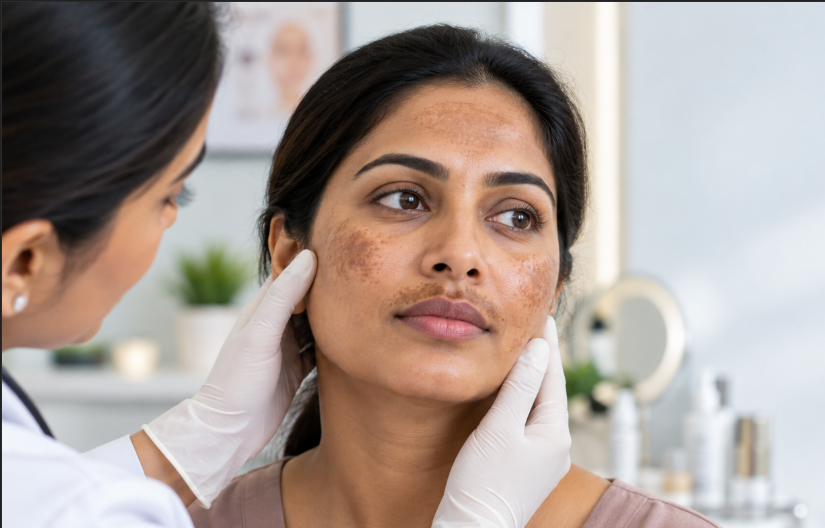
Melasma is a chronic pigmentation disorder that causes brown, grey-brown or occasionally bluish-grey patches, most commonly on sun-exposed areas of the face.
Typical sites include:
- cheeks
- forehead
- nose
- area above the upper lip
- chin.
The patches are often symmetrical and usually do not itch or hurt.
In Nepal, many people refer to melasma as chaya poto or poto.
Melasma develops when pigment-producing cells called melanocytes become overactive. Sun exposure, visible light, hormonal factors, genetic susceptibility and certain medications can contribute. Pregnancy and hormonal contraception are recognised triggers in some people.
It is not infectious and it is not cancer.
It can, however, become persistent and emotionally frustrating.
Are Your Dark Patches Actually Melasma?
This is the first question treatment should answer.
Not every dark mark on the face is melasma.
Post-acne pigmentation, sun spots, post-inflammatory hyperpigmentation, certain drug-related pigmentation and other pigment disorders can resemble it. The AAD notes that dermatologists can often diagnose melasma clinically and may use dermoscopy or a Wood’s lamp to examine the pigmentation more closely.
Dr. Parash Shrestha’s existing guide explains the distinction between melasma and other facial pigmentation patterns.
This distinction matters because treating the wrong diagnosis with strong bleaching products, acids or procedures can irritate the skin and potentially worsen pigmentation.
When the diagnosis deserves particular attention
See a dermatologist rather than assuming that pigmentation is melasma when a patch is:
- strongly one-sided rather than symmetrical
- rapidly changing
- raised rather than flat
- inflamed, painful or itchy
- associated with another skin condition
- appearing after a new medicine
- becoming worse despite repeated treatment.
A clinician may also evaluate pigmentation depth and skin characteristics when that information would affect treatment planning.
Why Is Melasma Relevant in Nepal?
Melasma is a genuine clinical and quality-of-life issue in Nepal rather than merely an international cosmetic topic.
A peer-reviewed study published in February 2026 evaluated 174 adults with melasma attending Nepal Skin Hospital in Kathmandu. The study found a mean Melasma Quality of Life score of 51.89 and documented substantial emotional and social impact within that clinic population. Sunscreen was the most commonly prescribed intervention, followed by tranexamic acid, hydroquinone and other treatments.
The study is valuable because it provides recent Nepal-specific evidence.
It should not, however, be interpreted as the prevalence of melasma across all of Nepal: it was a hospital-based study of people who had already sought care.
Read the peer-reviewed 2026 Nepal melasma study
What Causes or Worsens Melasma?
Melasma does not have one single cause.
Several factors can work together.
Sunlight
Ultraviolet exposure stimulates melanin production and is one of the best-established triggers.
That is why melasma commonly becomes darker after significant sun exposure and why photoprotection remains part of treatment even when prescription medicines or procedures are used.
Visible light
Visible light from the sun can also contribute to pigmentation, particularly in darker skin types.
A randomized trial found better improvement when patients receiving hydroquinone used sunscreen that also protected against visible light through iron oxide compared with UV-only sunscreen.
Hormonal factors
Melasma can start or worsen during pregnancy and may be associated with hormonal contraceptives in some patients.
Genetics
A family tendency is common, although genes do not determine exactly how severe the condition will become.
Skin irritation
Irritating skincare can make pigmentation more difficult to manage. The AAD specifically recommends gentle products because burning or stinging can worsen dark patches.
This is one reason aggressively combining several acids, fairness creams and home treatments can backfire.
What Is the Best Melasma Treatment in Nepal?
There is no single best treatment for every patient.
The most useful framework is:
1. Confirm the diagnosis
2. Control light exposure
3. Reduce excess pigmentation
4. Add procedures only when useful
5. Continue maintenance to reduce relapse
The 2025 international expert Delphi consensus identified broad-spectrum photoprotection as essential, hydroquinone-based triple-combination therapy as one of the best-established medical approaches under supervision, and procedures such as peels or microneedling as possible adjuncts. Laser treatment was generally reserved for selected refractory cases.
That is a very different strategy from immediately starting with the strongest laser or peel.
1. Sunscreen Is Treatment, Not Just Prevention
Daily light protection is one of the most important parts of melasma care.
The AAD recommends a broad-spectrum SPF 30 or higher sunscreen and, for melasma, often recommends tinted sunscreen containing iron oxide because iron oxide adds protection against visible light.
Useful habits include:
- applying sunscreen before outdoor exposure
- reapplying approximately every two hours when outdoors, and sooner after sweating or swimming
- wearing a broad-brimmed hat
- seeking shade
- avoiding unnecessary tanning.
See the American Academy of Dermatology’s melasma self-care guidance
The important principle is consistency.
An expensive procedure cannot fully compensate for repeated unprotected light exposure.
2. Which Melasma Treatment Cream Works?
There is no single cream that is safest and most effective for everyone.
Dermatologists may use several pigment-control medicines depending on skin type, previous treatment, irritation risk and pregnancy status.
Hydroquinone
Hydroquinone remains one of the best-established topical treatments for melasma.
It reduces pigment production and may be used alone or as part of combination therapy. Because prolonged or inappropriate use can cause complications including irritation and, rarely, exogenous ochronosis after excessive long-term exposure it should not be treated as an indefinite fairness cream.
Triple-combination cream
A commonly studied melasma treatment combines:
hydroquinone + a retinoid + a corticosteroid
International consensus continues to regard supervised hydroquinone-based triple therapy as an important treatment option.
The word supervised matters.
A corticosteroid-containing pigmentation cream should not be used indefinitely or purchased simply because it produces quick brightening.
Azelaic acid, kojic acid and other alternatives
Depending on the patient, dermatologists may consider alternatives such as:
- azelaic acid
- kojic acid
- vitamin C
- cysteamine
- selected tranexamic-acid formulations.
A systematic review and meta-analysis found meaningful efficacy across several non-hydroquinone topical agents, while also showing differences in irritation and tolerability.
The appropriate choice depends on the individual rather than the popularity of a particular cream online.
3. What About Tranexamic Acid for Melasma?
Tranexamic acid has become an important option for selected patients with difficult or recurrent melasma.
It has been studied in topical, intradermal and oral forms. A 2024 systematic review and meta-analysis of 22 randomized studies found improvement in melasma severity across different delivery methods, although study protocols varied substantially.
Oral tranexamic acid requires greater caution.
Because it affects blood clotting pathways, a dermatologist must assess relevant medical history before considering it. Consensus recommendations emphasise screening for thromboembolic and cardiovascular risk.
Do not start oral tranexamic acid after seeing a social-media melasma routine.
It is a medical treatment, not a routine cosmetic supplement.
4. Do Chemical Peels Help Melasma?
Chemical peels can help selected patients, usually as an adjunct rather than a replacement for sun protection and topical control.
A controlled chemical solution removes part of the outer skin layer and can improve superficial pigmentation and penetration of other treatments.
Possible peel agents include glycolic, mandelic and other acids, depending on skin type and treatment goals.
However, stronger is not automatically better.
Overly aggressive peeling can irritate pigmentation-prone skin and lead to post-inflammatory hyperpigmentation.
The website’s detailed dermatologist-guided chemical peeling guide explains the importance of peel selection, skin type, aftercare and pigmentation risk.
5. Can Microneedling Treat Melasma?
Microneedling is sometimes added to medical treatment, partly because it may improve transdermal delivery of selected topical agents.
The evidence is encouraging but should not be overstated.
A 2025 systematic review and meta-analysis found that microneedling plus tranexamic acid performed better than microneedling alone, but did not demonstrate significant superiority over all other treatments overall. The authors called for larger, more standardized trials.
So microneedling can be an option—not a universal solution.
6. Is Laser Treatment Good for Melasma?
Laser and light treatments may help selected patients, particularly when melasma remains difficult despite appropriate medical therapy.
They should not automatically be the first treatment.
The international 2025 consensus recommends reserving laser approaches mainly for refractory cases.
Why the caution?
Melasma-prone skin is also pigmentation-prone skin. Excessive inflammation or unsuitable energy settings can lead to post-inflammatory hyperpigmentation or recurrence.
Research suggests some laser combinations can improve melasma severity, but treatment response and recurrence vary substantially.
A patient should therefore ask:
- Why is laser being recommended now?
- Which problem is it expected to improve?
- What is the risk of rebound pigmentation?
- Is medical treatment continuing alongside it?
- What maintenance plan follows the procedure?
Dr. Shrestha’s verifies experience with dermatological lasers and pigmentation treatment, but the exact laser device currently used specifically for melasma should be confirmed during consultation.
Melasma Treatment Comparison
| Treatment | Main role | Important limitation |
|---|---|---|
| Tinted broad-spectrum sunscreen | Foundation + relapse prevention | Requires daily consistency |
| Prescription topical treatment | Core pigment control | Irritation and suitability vary |
| Triple-combination cream | Established medical option | Requires supervision |
| Tranexamic acid | Selected resistant/recurrent cases | Oral use requires medical risk screening |
| Chemical peel | Adjunct for selected pigmentation | Irritation/PIH possible |
| Microneedling | Selected adjunct | Evidence varies by protocol |
| Laser/light treatment | Selected refractory cases | Recurrence and pigmentation risk |
| Maintenance skincare | Preserving improvement | Must continue after visible fading |
The central lesson is that melasma is usually managed through combinations, not by escalating automatically toward the most expensive procedure.
Can Melasma Be Permanently Cured?
Melasma can improve substantially, but a permanent cure cannot be guaranteed.
It is generally considered a chronic, relapsing condition. Sun exposure, hormones and other triggers can reactivate pigmentation after successful treatment.
A realistic treatment goal is therefore:
fade active pigmentation, improve skin-tone uniformity and develop a maintenance plan that reduces recurrence.
Anyone promising permanent melasma removal after one cream, peel or laser session should be approached cautiously.
How Long Does Melasma Treatment Take?
Melasma treatment is gradual.
The AAD notes that patients following an appropriate treatment plan may require approximately 3 to 12 months to see results, with longstanding disease sometimes taking longer.
That does not mean nobody improves earlier.
It means a realistic plan should not be judged after several days.
Melasma often requires:
initial control → improvement phase → maintenance
Stopping all treatment as soon as the skin improves can allow triggers to re-establish pigmentation.
Melasma Treatment During Pregnancy
Pregnancy deserves a separate treatment discussion.
Melasma commonly develops during pregnancy because of hormonal changes, and ACOG notes that pregnancy-related melasma may fade after childbirth in some people. Sun protection is an important first step.
Medication choices change during pregnancy.
Topical retinoids such as tretinoin are generally avoided during pregnancy, and the safety of hydroquinone has not been sufficiently established; because hydroquinone has relatively high systemic absorption compared with many topical products, conservative pregnancy guidance generally recommends avoiding or minimizing it.
Anyone who is:
- pregnant
- breastfeeding
- planning pregnancy
should tell the dermatologist before using a pigmentation cream or undergoing a procedure.
Do not assume that a product is safe during pregnancy simply because it is applied to the skin.
How Much Does Melasma Treatment Cost in Nepal?
There is no single standard melasma treatment cost in Nepal because melasma treatment is not one procedure.
Cost can depend on:
| Cost component | Why it varies |
|---|---|
| Dermatologist consultation | Provider and facility |
| Prescription treatment | Medicines selected |
| Sunscreen/skincare | Product and maintenance duration |
| Chemical peels | Peel type and number of sessions |
| Microneedling | Technique and adjunctive treatment |
| Laser/light procedure | Device, treatment area and sessions |
| Follow-up | Duration and treatment changes |
7 Common Melasma Treatment Mistakes
1. Treating every dark mark as melasma
Different pigmentation disorders need different management.
2. Using strong fairness or pigmentation creams without checking ingredients
Fast lightening does not necessarily mean safe long-term treatment.
3. Treating sunscreen as optional
Light exposure can undermine otherwise appropriate medical treatment.
4. Choosing laser simply because it sounds more advanced
Procedures should solve a specific treatment problem.
5. Constantly changing products
Repeated irritation may make pigmentation harder to control.
6. Stopping everything after initial improvement
Maintenance matters because recurrence is common.
7. Expecting one session to permanently remove pigmentation
Melasma is usually a long-term management problem, not a one-day cosmetic correction.
When Should You See a Dermatologist for Melasma?
A dermatologist assessment is particularly useful when:
- you are not sure whether the patches are melasma
- pigmentation persists despite consistent sunscreen
- OTC products have irritated or worsened your skin
- melasma keeps returning
- you are considering hydroquinone or combination prescription therapy
- you want chemical peeling, microneedling or laser treatment
- you are pregnant or planning pregnancy
- tranexamic acid is being considered
- the pigmentation is changing or atypical.
Dr. Parash Shrestha is a Consultant Dermatologist with MBBS, MD and FAM qualifications and NMC registration No. 7527. His website lists clinical dermatology, pigmentation care, cosmetic dermatology, chemical peels and dermatological laser procedures among his scope of practice.
Patients looking for a dermatologist in Kathmandu for pigmentation assessment can start with diagnosis before deciding which treatment is appropriate.
Key Takeaways
Effective melasma treatment in Nepal is usually built around four principles:
Correct diagnosis. Not every facial dark patch is melasma.
Consistent light protection. Broad-spectrum sunscreen—and often tinted sunscreen containing iron oxide—is part of treatment, not just aftercare.
Evidence-based pigment control. Prescription creams remain important; selected patients may also benefit from tranexamic acid, chemical peels, microneedling or laser treatment.
Maintenance. Melasma can return even after substantial improvement.
The best plan is therefore not necessarily the strongest cream or most advanced machine. It is the plan that fits the patient’s skin type, triggers, previous treatments, medical history and risk of recurrence.
For persistent or recurring facial pigmentation, consider a consultation with Dr. Parash Shrestha, Consultant Dermatologist in Nepal to confirm the diagnosis and discuss appropriate treatment options.
Medical disclaimer: This article provides general educational information about melasma. It does not diagnose individual pigmentation or prescribe a treatment plan. Prescription medicines, oral tranexamic acid, chemical peels and laser procedures require individual medical assessment.
FAQs
Which cream is best for melasma?
There is no one best cream for everyone. Hydroquinone and hydroquinone-based combination therapy have strong clinical evidence, while alternatives can include azelaic acid, kojic acid and other pigment-control agents. Skin type, irritation risk, pregnancy status and previous treatment determine which option is appropriate.
Is melasma permanently curable?
Melasma can fade substantially, but it is a chronic condition that may recur. Sun exposure, hormonal changes and interruption of maintenance treatment can bring pigmentation back. Long-term control and relapse prevention are more realistic goals than a guaranteed permanent cure.
Is laser the best melasma treatment?
Not automatically. Current international expert consensus generally positions laser/light therapy for selected or treatment-resistant cases rather than as universal first-line care. Photoprotection and medical topical therapy usually form the foundation.
Can sunscreen alone improve melasma?
Photoprotection can reduce worsening and supports improvement, but established melasma often needs additional pigment-control treatment. Tinted sunscreen containing iron oxide can provide useful visible-light protection in addition to UV protection.
Does melasma come back after treatment?
Yes, recurrence is common. Continued sun/visible-light protection and maintenance treatment can help preserve improvement.
What is melasma called in Nepali?
Melasma is commonly described as chaya poto or poto in Nepal. Local search results and Nepali dermatology content use these terms alongside “melasma.”
How much does melasma treatment cost in Nepal?
Cost depends on whether management involves consultation, prescription creams, sunscreen, chemical peels, microneedling, laser treatment or a combination. There is no universal Nepal-wide price. Dr. Parash Shrestha’s current melasma-specific fees were not published on the verified pages reviewed, so patients should confirm current pricing directly.
Can men get melasma?
Yes. Melasma is more common in women, but men can develop it as well. Sun exposure, genetics and other contributing factors can be relevant.