
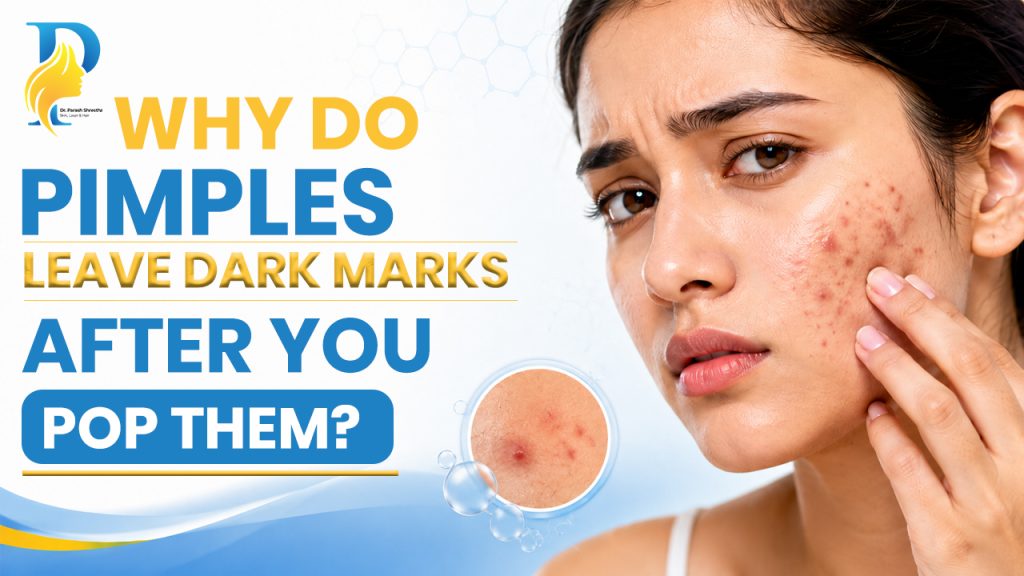
Quick answer: Pimples can leave dark marks after you pop them because squeezing adds extra inflammation and minor skin injury to an already inflamed acne lesion. In response, the skin may make more melanin, the pigment that gives skin its colour. The result is often a flat brown, grey-brown, purple, or darker spot called post-inflammatory hyperpigmentation (PIH). It is usually not a permanent acne scar, but repeated picking, sun exposure, and untreated acne can make the mark darker and longer-lasting.
If you are wondering why pimples leave dark marks after you pop them, the most helpful step is not to “dry out” the mark with harsh products. It is to stop new breakouts, protect the skin from sunlight, and avoid further irritation. This is particularly important for people with medium to deep skin tones, who may be more prone to visible post-acne pigmentation.
Acne is extremely common: epidemiological research estimates that it affects about 9.4% of the global population. Yet the dark marks that remain after acne can be the part people notice most.
Key Takeaways
- A flat dark spot after a pimple is often PIH, not a true scar.
- Popping, squeezing, scraping, or repeatedly touching a pimple can increase inflammation and raise the risk of dark marks and scarring.
- Sunlight can deepen pigment, so daily broad-spectrum sunscreen is a core part of fading post-acne marks.
- A gentle routine and early acne treatment are usually more useful than harsh DIY pimple remedies.
- Deep, painful, frequent, or scar-forming acne should be assessed by a qualified dermatologist.
Why Does a Popped Pimple Turn Into a Dark Mark?
A pimple begins when oil, dead skin cells, and inflammation affect a hair follicle. When it is squeezed, extra pressure and friction can damage the surrounding skin.
That added trauma tells the skin to repair itself. During healing, pigment-producing cells can become more active and leave excess melanin behind. This is why the spot may appear brown, dark brown, grey-brown, red-brown, purple, or almost black depending on your natural skin tone and the depth of inflammation.
Dermatologists call this response post-inflammatory hyperpigmentation. “Post-inflammatory” means it happens after irritation or inflammation; “hyperpigmentation” means extra pigment becomes visible in the affected area.
The important distinction is that a flat, smooth dark spot is often not a permanent scar. The American Academy of Dermatology notes that flat pigmented marks left after acne are commonly PIH rather than acne scars.
What Happens Under the Skin When You Pop a Pimple?
Pimple popping may feel like a quick solution, but the skin often experiences it as a small injury.
- The pore is already inflamed. Acne may involve excess oil, clogged follicles, inflammation, and hormonal influences.
- Squeezing adds pressure and friction. This can damage delicate skin and irritate nearby tissue.
- Healing signals increase. The body sends inflammatory cells to repair the area.
- Melanin production increases. In some skin types, this pigment response is stronger and more visible.
- A dark mark remains after the bump has healed. The active pimple may disappear, while the pigment fades more slowly.
Picking also increases the possibility of a true acne scar, especially when acne is deep or when the skin is repeatedly injured. NHS guidance specifically warns that squeezing or picking spots can lead to scarring.
Is a Dark Pimple Mark the Same as an Acne Scar?
No. Both can appear after a breakout, but they are different concerns and often need different management.
| Feature | Dark Pimple Mark / PIH | True Acne Scar |
|---|---|---|
| What it is | Extra pigment after inflammation | A change in skin texture caused by collagen damage or abnormal healing |
| Surface | Usually flat and smooth | May be indented, pitted, raised, or uneven |
| Colour | Brown, grey-brown, purple, red-brown, or darker than nearby skin | May be skin-coloured, red, brown, or pigmented |
| Natural course | Often fades gradually | Texture changes may persist without treatment |
| Main focus of care | Prevent inflammation, use sun protection, fade pigment safely | Control active acne and consider scar-specific procedures when appropriate |
It is possible to have both at the same time. For example, a person can have a shallow pitted scar with brown pigmentation over it.
This is why diagnosis matters. The guide on acne scars and treatment options in Kathmandu explains that active acne, post-inflammatory pigmentation, and textural scars can look similar but are treated differently.
Who Is More Likely to Get Dark Marks After Acne?
Anyone can develop post-acne marks. However, several factors can increase the likelihood that they become darker or linger longer.
Richly Pigmented Skin
People with medium, brown, and deep skin tones may develop more noticeable PIH after acne because the skin has more active melanin production. Research reviews consistently note that PIH disproportionately affects skin of colour.
Repeated Squeezing or Picking
The more often a spot is touched, picked, or squeezed, the more inflammation and healing injury the skin has to manage. This can deepen pigment and increase scar risk.
Sun and Visible Light Exposure
Ultraviolet radiation can make existing pigmentation darker. Outdoor exposure also makes it harder to judge whether marks are improving because the contrast with surrounding skin becomes stronger.
Daily broad-spectrum sunscreen helps limit this darkening.
Deep or Painful Acne
Nodules, cysts, and deeply inflamed pimples are more likely to leave marks or scars than small, superficial whiteheads. Acne should be treated early rather than waiting for repeated flare-ups.
Irritating Skincare or “Quick Fixes”
Over-scrubbing, frequent exfoliation, strong home peels, toothpaste, undiluted lemon juice, or mixing multiple active products can irritate the skin barrier. Irritation itself can trigger or worsen hyperpigmentation.
What Causes Pimples in the First Place?
Understanding the pimple cause helps prevent the next mark. Acne is not simply a hygiene problem, and washing the face too aggressively can make irritation worse.
Most acne develops through a combination of four factors:
- Excess sebum or oil production
- Clogging of hair follicles by dead skin cells
- Inflammation within the follicle
- Changes in skin microorganisms, including Cutibacterium acnes
Hormonal shifts, genetics, certain cosmetics or hair products, friction from helmets or masks, stress, some medications, and individual lifestyle factors may contribute. Acne can affect teenagers and adults alike.
For a fuller explanation of triggers and evidence-based management, readers can explore what acne is, its causes, symptoms, and treatment options.
What Should You Do After You Have Popped a Pimple?
The goal is to reduce additional trauma, not to attack the area with more products.
- Wash your hands and leave the area alone. Avoid pressing out more material or checking it repeatedly.
- Cleanse gently. Use a mild cleanser and lukewarm water. Scrubbing can worsen redness and pigment.
- Support the skin barrier. A simple non-comedogenic moisturiser can reduce dryness and irritation.
- Protect it from sunlight. Use a broad-spectrum sunscreen suitable for your skin type during the day.
- Avoid strong acids, bleaching creams, and steroid creams without medical advice. These may cause burns, rebound irritation, or more pigmentation.
- Focus on preventing the next breakout. Treating active acne early is one of the best ways to reduce future marks.
If the spot becomes increasingly painful, hot, swollen, or develops spreading redness, seek medical advice promptly rather than continuing to handle it at home.
How to Get Rid of Black Marks After Popping Pimples
There is no safe overnight eraser for black marks after popping pimples. The most effective approach is usually steady and layered: prevent new acne, minimise irritation, protect against sunlight, and choose pigment-targeted treatment only when appropriate.
1. Control Active Acne First
Treating the marks without addressing new pimples creates a cycle: one mark begins fading while another appears.
Depending on acne type and severity, a dermatologist may recommend topical retinoids, benzoyl peroxide, azelaic acid, prescription anti-inflammatory treatment, hormonal assessment, oral medicines, or a combination plan.
Topical retinoids can help acne and may also support improvement in PIH, but they must be introduced carefully because irritation can worsen pigmentation. They are not appropriate for everyone, including people who are pregnant or trying to conceive without medical guidance.
2. Use Daily Photoprotection
A broad-spectrum sunscreen with SPF 30 or higher is a practical foundation for post-acne pigmentation care. In exposed areas, DermNet recommends broad-spectrum SPF 50+ to reduce UV-related darkening of PIH.
Choose a formula you can use consistently, ideally labelled non-comedogenic if you are acne-prone.
3. Keep the Routine Simple and Consistent
A useful pimple remedy at home should reduce irritation, not create it.
For many people, that means a gentle cleanser, suitable acne treatment, a non-comedogenic moisturiser, and sunscreen. Avoid starting several new products in the same week.
If burning, stinging, flaking, or increased redness occurs, the routine may be too strong.
4. Consider Dermatologist-Guided Pigment Treatment
For persistent dark marks, a dermatologist may consider ingredients or treatments based on acne activity, skin tone, sensitivity, and pregnancy status.
Options may include prescription pigment-modulating creams, topical retinoids, azelaic acid, or carefully selected procedures.
Not every dark mark needs a procedure. When procedures are suitable, the plan may include superficial chemical peels or other treatments performed with an understanding of pigmentation risk.
The best option is not the strongest one; it is the one matched to the diagnosis and skin type. Learn more about dermatologist-guided chemical peeling for acne in Nepal.
Which Treatments Help Dark Marks?
| Approach | May Help With | Important Limitation |
| Gentle, non-comedogenic routine | Minimising irritation and supporting acne treatment | Does not remove deep scars |
| Sunscreen | Preventing marks from becoming darker and supporting fade | Works best with consistent use |
| Acne treatment | Preventing new pimples and new marks | Results take time; does not instantly erase old pigment |
| Dermatologist-selected topical treatment | PIH, acne, or both depending on the ingredient | Needs individual safety review |
| Superficial chemical peel | Selected acne marks, oiliness, comedones, uneven tone | Not a home treatment; can worsen PIH if poorly selected |
| Microneedling, subcision, laser, or scar procedures | Selected textural scars | Not first-line for active inflamed acne |
What Not to Use as a Dark-Spot “Home Remedy”
When people are frustrated by marks, they often try whatever promises fast brightening. However, darker skin can react strongly to irritation, and a reaction may leave more pigmentation than the original pimple.
Avoid using:
- Toothpaste on pimples
- Lemon juice, baking soda, or undiluted essential oils
- Scrubs, harsh brushes, or repeated exfoliation
- Unknown “fairness” creams or unlabelled steroid-containing products
- High-strength chemical peeling solutions at home
- Multiple acne actives layered together without a plan
“Natural” does not automatically mean gentle or safe. A useful home routine should be boringly consistent, not aggressively painful.
How Long Do Dark Pimple Marks Take to Fade?
The answer varies. A superficial mark may slowly lighten over weeks to months, while deeper or repeatedly irritated marks can take longer.
PIH often improves more slowly than active acne, so it is normal for the bump to heal before its colour fully settles.
Progress is influenced by skin tone, sun exposure, ongoing acne, the depth of inflammation, irritation from products, and whether the mark is actually a scar.
Photographing the area in the same lighting once a month can be more useful than judging it daily.
What Do PCOS Pimples Look Like?
PCOS-related acne often appears as persistent or recurring breakouts around the lower face, jawline, chin, and neck. Some people experience deeper, tender pimples that do not respond well to a basic skincare routine.
Acne alone does not confirm PCOS. It becomes more important to consider a hormonal evaluation when acne occurs with irregular menstrual periods, excess facial or body hair, scalp hair thinning, weight changes, or dark, thickened patches of skin on areas such as the neck.
ACOG and the AAD identify severe or persistent acne, especially alongside other signs of androgen excess, as a reason for medical assessment.
A dermatologist can help assess the skin and coordinate care with an appropriate clinician when hormonal factors are suspected.
When Should You See a Dermatologist in Nepal?
Professional advice is worthwhile when:
- Acne is painful, deep, widespread, or leaving scars
- Dark marks continue to appear even after the acne settles
- Over-the-counter products cause burning, peeling, or worsening pigmentation
- You are unsure whether the problem is acne, melasma, PIH, or scarring
- Acne began suddenly in adulthood or is associated with menstrual irregularity or other hormonal symptoms
- You are pregnant, breastfeeding, or planning pregnancy and need safe acne treatment guidance
- Acne is affecting confidence, school, work, or daily wellbeing
A careful consultation can separate active acne from pigmentation and textural scarring, then build a practical treatment sequence.
Readers can also compare acne, melasma, and pigmentation to understand why similar-looking dark areas may need different care.
Frequently Asked Questions
Why Do My Pimples Leave Dark Marks?
Pimples leave dark marks when inflammation triggers extra melanin production. Popping or picking the pimple adds trauma, making post-inflammatory hyperpigmentation more likely.
How to Get Rid of Black Marks After Popping Pimples?
Avoid further picking, use daily sunscreen, control active acne, and follow a gentle routine. Persistent marks may benefit from a dermatologist-selected topical treatment or procedure.
Do Marks From Popping Pimples Go Away?
Many flat marks fade gradually, but the time varies. A mark that is indented, raised, or changes skin texture may be a true scar and may need scar-specific treatment.
Why Does My Skin Turn Dark After Popping a Pimple?
Squeezing causes additional inflammation and skin injury. During healing, excess pigment can be produced, leaving a darker spot where the pimple was.
Do Dark Pimple Marks Go Away?
They often fade, especially when they are flat PIH rather than scars. Sun protection, preventing new pimples, and avoiding irritating products support improvement.
What Do PCOS Pimples Look Like?
They are often persistent, deeper breakouts around the chin, jawline, lower face, and neck. PCOS should be considered only when acne occurs with other hormonal symptoms, such as irregular periods or excess hair growth.
Final Takeaway
Dark marks after popping pimples are usually a sign of inflammation and pigment change, not a sign that the skin is permanently damaged.
The safest strategy is to resist squeezing, treat acne early, protect the skin from sunlight, and avoid harsh home remedies that can make pigmentation worse.
For ongoing acne, post-acne marks, or concerns about scarring, a diagnosis-led plan is safer than trial-and-error skincare. Book a consultation with Dr. Parash Shrestha for evidence-based acne and pigmentation care in Kathmandu and Lalitpur.
Reviewed By
Dr. Parash Shrestha, MBBS, MD, FAM
Consultant Dermatologist & Venereologist | NMC No. 7527
Dr. Parash Shrestha is a licensed dermatologist in Nepal with 15+ years of clinical dermatology experience. His practice includes acne, pigmentation, acne scar management, cosmetic dermatology, and laser procedures. His professional profile emphasises accurate diagnosis, patient education, realistic expectations, and evidence-based treatment planning.