
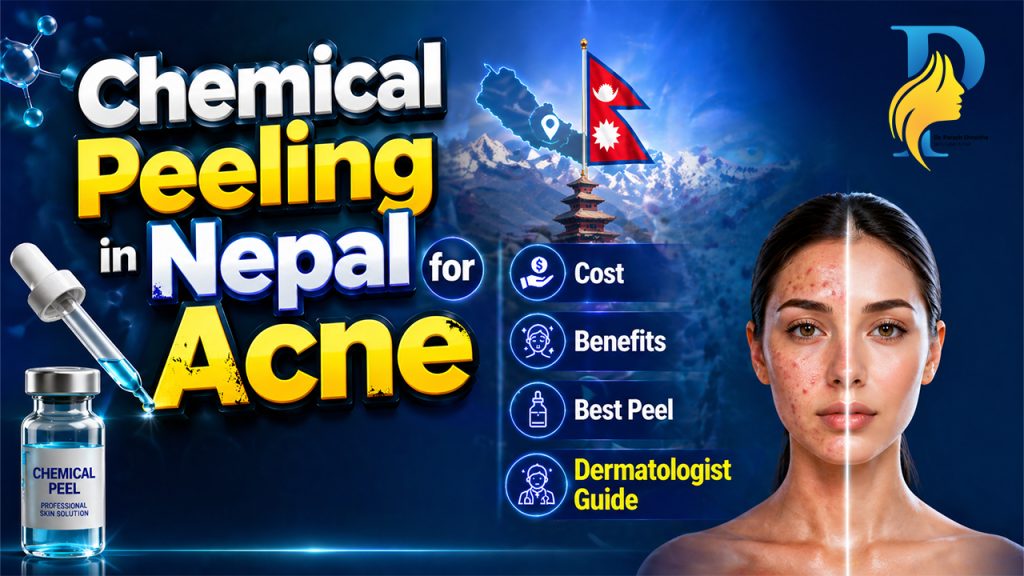
Acne, oily skin, clogged pores, acne marks, and uneven skin tone are common reasons people search for chemical peeling in Nepal. A chemical peel is a dermatologist-guided skin treatment where a safe peeling solution is applied to the skin to exfoliate damaged outer layers, improve texture, reduce comedones, and gradually fade post-acne pigmentation.
For acne prone skin, chemical peel treatment in Nepal is usually done as a series of sessions, not a one time miracle treatment. The best peel depends on your acne type, skin tone, sensitivity, active breakouts, acne marks, and whether you have pigmentation or scarring.
This guide explains how chemical peels work, which peel may be suitable for acne, expected cost, number of sessions, safety, aftercare, and when to consult a dermatologist like Dr Parash Shrestha, a licensed dermatologist in Nepal with MBBS, MD Dermatology, FAM credentials and NMC registration listed on his website.
What Is Chemical Peeling?
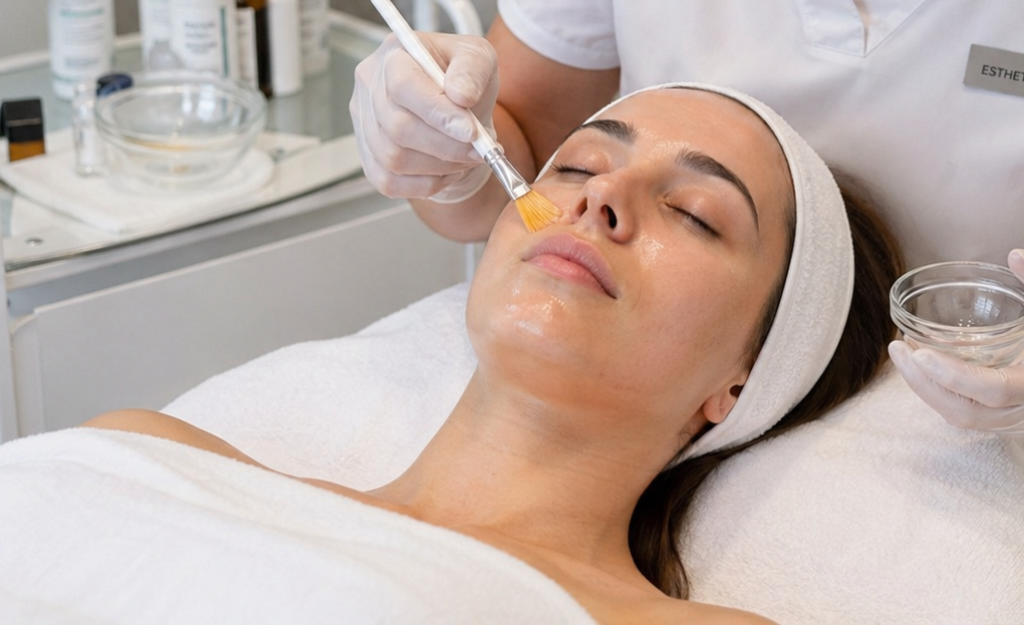
Chemical peeling is a skin resurfacing procedure where a dermatologist applies a controlled chemical solution to the skin. This solution removes dead skin cells, unclogs pores, and encourages skin renewal.
According to the American Academy of Dermatology, dermatologists use chemical peels for some types of acne and skin discoloration. They may also help improve skin texture, fine lines, and uneven tone depending on peel depth and skin condition.
In acne treatment, chemical peels are commonly used for:
- Oily and acne-prone skin
- Blackheads and whiteheads
- Mild inflammatory acne
- Post-acne dark spots
- Uneven texture
- Superficial acne marks
- Enlarged-looking pores
- Dullness caused by dead skin buildup
Chemical peels are not the same as facials. A facial mainly cleanses and refreshes the skin. A chemical peel is a medical or cosmetic dermatology procedure that should be selected according to diagnosis, skin type, peel strength, and risk of pigmentation.
How Does Chemical Peeling Help Acne?
Acne develops when pores become blocked with oil, dead skin cells, and bacteria-related inflammation. Chemical peels can help acne by improving several parts of this process.
They exfoliate the upper layer of the skin, reduce dead cell buildup, and help unclog pores. Some peels, especially salicylic acid peels, are oil-soluble, which means they can penetrate oily pores more effectively.
For acne marks, chemical peels help by speeding up skin turnover. This may gradually fade brown spots or post-inflammatory hyperpigmentation left after pimples.
For acne scars, results depend on scar depth. Chemical peels may improve mild textural irregularity, but deep pitted scars often need combination treatments such as microneedling, subcision, laser, TCA CROSS, or other dermatologist-led procedures.
The American Society for Dermatologic Surgery notes that chemical peels can improve acne scars by removing the outer layer of old skin so that newer skin looks smoother. However, the level of improvement varies by scar type and peel depth.
Chemical Peeling in Nepal: Who Is It Best For?
Chemical peeling in Nepal may be suitable for people who have acne-prone skin and want a medically guided treatment for repeated breakouts, clogged pores, or acne marks.
It may be helpful if you have:
| Skin Concern | Can Chemical Peel Help? | Notes |
| Oily skin | Yes | Salicylic acid peel may be useful |
| Blackheads/whiteheads | Yes | Helps reduce clogged pores |
| Active acne | Sometimes | Depends on severity and inflammation |
| Acne dark spots | Yes | Often improves gradually over sessions |
| Melasma/pigmentation | Sometimes | Needs careful selection and sun protection |
| Deep acne scars | Limited | Usually needs combination treatment |
| Sensitive skin | Caution | Mild peels or alternatives may be safer |
| Recent isotretinoin use | Caution | Must inform dermatologist first |
Chemical peels are not for everyone. Your dermatologist should review your medical history, current medicines, acne severity, skin type, pregnancy status, history of cold sores, keloids, and previous procedures before recommending a peel.
Types of Chemical Peels for Acne
The best chemical peel in Nepal depends on the skin concern. There is no single peel that is best for everyone.
1. Salicylic Acid Peel
Salicylic acid is one of the most commonly used peels for acne-prone and oily skin. It is oil-soluble, so it works well for clogged pores, blackheads, whiteheads, and oily skin.
Best for:
Oily skin, comedonal acne, blackheads, whiteheads, mild acne marks.
Possible downtime:
Mild redness, dryness, peeling for a few days.
2. Glycolic Acid Peel
Glycolic acid is an alpha-hydroxy acid that helps exfoliate the surface layer of the skin. It may improve dullness, uneven texture, mild pigmentation, and post-acne marks.
Best for:
Acne marks, uneven tone, dull skin, mild texture issues.
Possible downtime:
Mild stinging, dryness, flaking, temporary sensitivity.
3. Mandelic Acid Peel
Mandelic acid is gentler than glycolic acid because of its larger molecular size. It may be considered for sensitive or pigmentation-prone skin when a mild approach is preferred.
Best for:
Sensitive acne-prone skin, mild pigmentation, beginner peel plans.
Possible downtime:
Usually minimal, depending on strength.
4. Lactic Acid Peel
Lactic acid is generally used for mild exfoliation, hydration support, and dullness. It may suit people with dry or sensitive skin when stronger peels are not ideal.
Best for:
Mild dullness, dry-sensitive skin, beginner exfoliation.
5. Jessner’s Peel
Jessner’s peel is a combination peel and may be used for acne, pigmentation, and texture. It can be stronger than basic superficial peels and should be performed carefully, especially in darker skin tones.
Best for:
Acne marks, oily skin, pigmentation, mild texture concerns.
6. TCA Peel / TCA CROSS
TCA, or trichloroacetic acid, is stronger and may be used for pigmentation, texture, or specific acne scars. TCA CROSS is a focused technique often used for certain ice-pick acne scars.
Best for:
Selected acne scars and deeper marks under dermatologist guidance.
Important:
TCA has more downtime and higher risk if not done properly. It should not be treated like a casual beauty treatment.
Superficial, Medium, and Deep Chemical Peels
Chemical peels are often grouped by depth.
| Peel Depth | What It Targets | Downtime | Acne Use |
| Superficial peel | Outer skin layer | Low | Common for acne and marks |
| Medium peel | Deeper epidermis/upper dermis | Moderate | Selected pigmentation, texture, scars |
| Deep peel | Deeper dermis | High | Rarely used for acne in routine care |
Most acne patients need superficial or carefully selected medium-depth peels. Deep peels are more intense, require longer recovery, and carry more risk. Cleveland Clinic notes that deeper peels involve longer recovery and are typically considered for more severe concerns such as deep scars, extensive sun damage, or deeper wrinkles.
For Nepalese skin types, pigmentation risk is an important consideration. Aggressive peeling, poor sun protection, or unqualified treatment can worsen dark spots instead of improving them.
Which Chemical Peeling Is Best for Acne?
For acne, the best chemical peel is usually selected after examining the skin.
A simple guide:
| Acne/Skin Type | Common Peel Option | Why It May Help |
| Oily skin with blackheads | Salicylic acid | Penetrates oily pores |
| Acne marks and dullness | Glycolic acid | Improves surface exfoliation |
| Sensitive acne-prone skin | Mandelic acid | Gentler exfoliation |
| Pigmentation with acne marks | Glycolic, mandelic, combination peels | Selected based on skin tone |
| Mild acne scars | TCA-based procedures or combination plan | Helps selected scar types |
| Active inflamed acne | Peel may be delayed or modified | Medical acne control may come first |
A dermatologist may combine peels with acne medicines, sunscreen, topical retinoids, pigmentation creams, or procedures depending on the diagnosis.
The goal is not to peel aggressively. The goal is to improve acne safely while reducing the chance of irritation, burns, or post-inflammatory hyperpigmentation.
Cost of Chemical Peeling in Nepal
The cost of chemical peeling in Nepal depends on the clinic, dermatologist qualification, peel type, strength, treatment area, number of sessions, and whether it is combined with other acne treatments.
In Nepal, chemical peeling often starts around NPR 2,000–5,000 per session for basic or superficial peels, while more advanced or medium-depth peels may cost more. Some clinics list chemical peel prices from NPR 2,000 per session, others list starting prices around NPR 2,500–3,000, and some list chemical peel pricing around NPR 5,000.
Estimated Chemical Peeling Price in Nepal
| Peel Type | Estimated Price Range Per Session | Notes |
| Basic superficial peel | NPR 2,000–5,000 | Common for acne/oily skin |
| Acne-focused peel | NPR 2,500–6,000 | Depends on peel solution |
| Pigmentation peel | NPR 3,000–8,000+ | May need priming creams |
| Medium-depth peel | NPR 6,000–12,000+ | More downtime |
| Advanced scar-focused procedure | Varies | Often part of combination treatment |
For an accurate chemical peeling price in Nepal, patients should consult the clinic directly because the final cost depends on diagnosis, peel choice, session plan, and aftercare needs.
How Many Sessions of Chemical Peeling Are Needed?
Most acne and acne-mark patients need multiple sessions.
A common plan may include 3–6 sessions, spaced around 2–4 weeks apart, depending on the peel type and skin response. Some people need fewer sessions for mild clogged pores, while acne marks or pigmentation may need a longer plan.
Your dermatologist may adjust the interval if you develop irritation, dryness, active infection, sunburn, or increased pigmentation.
Chemical peeling should not be done too frequently just to speed up results. Over-peeling can damage the skin barrier and worsen sensitivity.
What Happens During Chemical Peel Treatment in Nepal?
A dermatologist usually starts with a consultation. This is important because acne can have different causes, including hormonal factors, cosmetics, stress, medications, or underlying skin conditions.
Step 1: Skin Assessment
The dermatologist checks:
- Acne type and severity
- Skin tone and sensitivity
- Acne marks or scars
- Current skincare products
- Past acne medicines
- History of allergies or pigmentation
- Sun exposure habits
- Pregnancy or breastfeeding status, if relevant
Step 2: Pre-Peel Preparation
Some patients need a pre-peel skincare plan for 2–4 weeks. The American Academy of Dermatology notes that pre-peel care may improve results and reduce side effects in selected patients.
This may include sunscreen, gentle cleanser, moisturizer, acne medicines, or pigment-control creams.
Step 3: Peel Application
The skin is cleansed, sensitive areas are protected, and the peel solution is applied for a controlled time. You may feel mild stinging, warmth, or tingling.
Step 4: Neutralization and Aftercare
Some peels are neutralized, while others are self-neutralizing. Your dermatologist will apply soothing care and explain what to avoid after treatment.
Step 5: Recovery
Mild redness, dryness, tightness, or peeling can occur. Peeling may be visible or very subtle. Not everyone peels in sheets, and visible peeling is not required for improvement.
Benefits of Chemical Peeling for Acne
Chemical peeling can offer several benefits when selected properly.
| Benefit | How It Helps |
| Reduces clogged pores | Removes dead skin buildup |
| Improves oily skin | Some peels reduce pore congestion |
| Fades acne marks | Encourages skin turnover |
| Smooths texture | Helps superficial roughness |
| Brightens dull skin | Removes damaged surface cells |
| Supports acne routine | May enhance overall treatment plan |
Chemical peels work best when combined with a proper acne diagnosis and maintenance routine. Without controlling the cause of acne, pimples may return even after peeling.
Risks and Side Effects of Chemical Peels
Chemical peels are generally safe when performed by trained professionals, but side effects can happen.
Possible side effects include:
- Redness
- Dryness
- Stinging
- Peeling
- Temporary darkening or lightening
- Acne flare
- Infection
- Scarring, rarely
- Post-inflammatory hyperpigmentation
The risk is higher when peels are done too strongly, too frequently, without medical evaluation, or without sunscreen aftercare.
Avoid unverified “instant glow” or overly aggressive peel offers. For acne-prone and pigmentation-prone skin, safe treatment planning is more important than strong peeling.
Chemical Peel Aftercare: What to Do After Treatment
Aftercare is one of the biggest factors in safe results.
Do This After a Chemical Peel
Use a gentle cleanser. Apply moisturizer as advised. Use broad-spectrum sunscreen daily. Avoid direct sun exposure. Follow the dermatologist’s medicine and skincare instructions.
Avoid This After a Chemical Peel
Do not scrub the skin. Do not pick peeling skin. Avoid harsh activities unless prescribed. Avoid waxing, bleaching, or threading on treated areas for a few days. Avoid strong retinoids or exfoliating acids until your dermatologist allows them.
Your skin becomes more sensitive after peeling, so sun protection is essential. Poor sunscreen use can increase the risk of pigmentation.
Chemical Peeling vs Facial vs Laser for Acne
| Treatment | Best For | Medical Supervision Needed? | Downtime |
| Facial | Temporary cleansing, relaxation | Not always | Minimal |
| Chemical peel | Acne, clogged pores, marks, texture | Yes, ideally | Low to moderate |
| Laser | Scars, redness, pigmentation, resurfacing | Yes | Varies |
| Microneedling | Acne scars, texture | Yes | Moderate |
| Prescription acne treatment | Active acne control | Yes | Low |
For active acne, prescription treatment may be more important than procedures. For acne marks, chemical peels can help. For deeper scars, combination treatments often give better improvement than peels alone.
Is Chemical Peeling Safe for Nepalese Skin?
Chemical peeling can be safe for Nepalese skin when done with proper peel selection, conservative strength, pre-care, and sun protection.
Many Nepalese patients have medium to deeper skin tones that can develop post-inflammatory hyperpigmentation after irritation. This does not mean peels are unsafe. It means the peel should be chosen carefully.
A dermatologist may start with milder peels, patch testing, priming creams, and strict sunscreen instructions when pigmentation risk is higher.
Avoid deep or aggressive peeling unless clearly indicated and performed under specialist supervision.
When Should You Avoid Chemical Peeling?
Chemical peeling may not be suitable if you have:
- Active skin infection
- Open wounds
- Severe eczema or dermatitis flare
- Recent sunburn
- Recent isotretinoin use without dermatologist clearance
- History of keloids
- Unrealistic expectations
- Poor ability to follow aftercare
- Pregnancy, depending on peel type and doctor advice
Always inform your dermatologist about medicines, allergies, previous procedures, pregnancy status, and history of cold sores.
Why Choose a Dermatologist for Chemical Peeling in Nepal?
A chemical peel may look simple, but the decision behind it is medical.
The dermatologist must decide:
- Which peel is suitable
- What strength is safe
- Whether acne needs medicine first
- Whether pigmentation risk is high
- How many sessions are needed
- What aftercare is required
- When to stop or modify treatment
Dr Parash Shrestha is a licensed dermatologist in Nepal, with MBBS, MD Dermatology, FAM credentials, NMC No. 7527, and experience in clinical dermatology, cosmetic dermatology, laser and aesthetic procedures
For YMYL topics like skin treatment, patients should choose a qualified medical professional rather than relying only on discounts, social media trends, or salon-based procedures.
Who Is the Best Candidate for Chemical Peel Treatment in Nepal?
You may be a good candidate if you have mild to moderate acne, oily skin, clogged pores, acne marks, uneven tone, or superficial texture concerns.
You should also be willing to follow sunscreen and aftercare instructions. Chemical peels are not ideal for someone expecting overnight results or refusing sun protection.
A good candidate understands that acne treatment is a process. Peels can support improvement, but long-term acne control often needs skincare correction, prescription medicines, lifestyle review, and maintenance.
Expected Results: What Can You Realistically Expect?
After one session, some patients notice smoother or fresher-looking skin. However, acne marks and clogged pores usually need repeated sessions.
Realistic results may include:
- Reduced oiliness
- Fewer clogged pores
- Gradual fading of acne marks
- Smoother skin texture
- Brighter-looking skin
- Better response to acne skincare
Chemical peels do not permanently stop acne. They also do not fully remove deep acne scars. Maintenance treatment may be needed.
No ethical dermatologist should promise perfect skin, overnight scar removal, or permanent acne cure from chemical peeling alone.
FAQs About Chemical Peeling in Nepal
1. Which chemical peeling is best?
The best chemical peeling depends on your skin concern. For oily and acne-prone skin, salicylic acid peel is commonly used. For acne marks and dullness, glycolic acid or mandelic acid may be considered. For selected acne scars, TCA-based procedures may help.
There is no single “best chemical peel” for everyone. A dermatologist should examine your acne type, skin tone, sensitivity, pigmentation risk, and current skincare before choosing the peel.
2. How much does chemical peel cost in Nepal?
The cost of chemical peeling in Nepal usually starts around NPR 2,000–5,000 per session for many superficial peels based on publicly listed clinic prices. More advanced, medium-depth, pigmentation-focused, or scar-focused peels may cost more.
The final chemical peeling price in Nepal depends on the peel type, dermatologist consultation, clinic, treatment area, number of sessions, and aftercare plan.
3. How many times can chemical peeling be done?
Chemical peeling can be done multiple times when spaced properly and supervised by a dermatologist. For acne and acne marks, many patients need around 3–6 sessions, often spaced 2–4 weeks apart for superficial peels.
The exact number depends on your skin response, peel strength, acne severity, and whether irritation or pigmentation develops. Overdoing peels can damage the skin barrier, so frequency should be medically planned.
4. Who is the best skin doctor in Nepal?
The best skin doctor in Nepal depends on your condition, location, treatment need, and comfort with the doctor. For acne and chemical peeling, choose a qualified dermatologist with MBBS, MD Dermatology, NMC registration, clinical experience, and transparent treatment guidance.
Dr Parash Shrestha is a licensed dermatologist in Nepal with MBBS, MD Dermatology, FAM credentials and NMC No. 7527. He provides care in clinical dermatology, cosmetic dermatology, laser and aesthetic skin procedures.
5. Is chemical peeling painful?
Most superficial chemical peels cause mild stinging, tingling, or warmth during application. The sensation is usually temporary. Stronger peels may cause more discomfort and downtime.
6. Can chemical peeling remove acne scars permanently?
Chemical peeling may improve mild acne marks and superficial texture, but deep pitted scars usually need combination treatment. Options may include microneedling, laser, subcision, TCA CROSS, or other scar procedures depending on scar type.
7. Can I do chemical peeling at home?
At-home exfoliating products are not the same as medical-grade chemical peels. Strong acids used without supervision can cause burns, pigmentation, and scarring. For acne-prone or pigmentation-prone skin, dermatologist-guided peeling is safer.
8. What should I avoid after chemical peeling?
Avoid harsh scrubs, direct sunlight, picking peeling skin, waxing, bleaching, and unapproved active ingredients. Use sunscreen, moisturizer, and gentle cleanser as advised by your dermatologist.
9. How soon will I see results?
Some patients notice smoother skin within a week, but acne marks and pigmentation usually improve gradually over multiple sessions. Results depend on acne severity, peel type, aftercare, and consistency.
10. Is chemical peeling good for active acne?
Chemical peels can help some types of active acne, especially oily and comedonal acne. However, severe inflamed acne may need prescription medicines first. A dermatologist should decide whether peeling is appropriate or should be delayed.
Final Takeaway
Chemical peeling in Nepal can be a helpful treatment for acne-prone skin, clogged pores, oily skin, acne marks, and uneven texture when done correctly. The key is choosing the right peel, using the right strength, spacing sessions safely, and following aftercare.
For acne, the best chemical peel is not the strongest peel. It is the peel that suits your skin type, acne pattern, pigmentation risk, and long-term treatment plan.
To get a safe and personalized chemical peel treatment in Nepal, consult a qualified dermatologist such as Dr Parash Shrestha, who can examine your skin and recommend a treatment plan based on medical diagnosis rather than guesswork.
Author Bio
Dr Parash Shrestha is a licensed dermatologist in Nepal with MBBS, MD Dermatology, FAM credentials and NMC registration. His clinical focus includes medical dermatology, acne treatment, cosmetic dermatology, laser procedures, pigmentation concerns, hair and scalp disorders, and evidence-based skin care. His approach emphasizes diagnosis-led treatment, patient education, safety, and realistic results.