
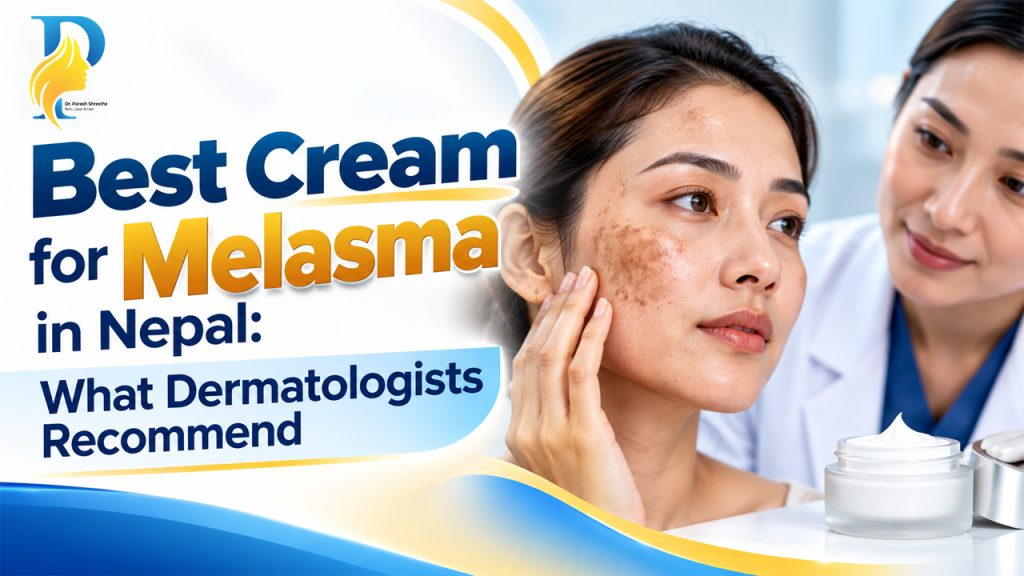
Brown or grey-brown patches on your cheeks, forehead or upper lip can be difficult to manage, especially when they keep returning after treatment. In Nepal, this condition is commonly called chaya poto (चायाँ पोतो). Many people search for the best cream for melasma in Nepal, hoping to find a product that removes the patches quickly.
However, choosing the right cream is not simply about buying the strongest skin-lightening product.
The most established prescription treatments for melasma include hydroquinone and carefully supervised triple-combination creams. Azelaic acid and selected non-hydroquinone ingredients can also help, depending on the patient’s skin sensitivity, pigmentation and treatment needs. Consistent sunscreen use is essential with any treatment.
According to the American Academy of Dermatology (AAD), melasma treatment should be individualized, and most patients use medication applied directly to the skin. Some people may require additional procedures, but creams and sun protection remain important foundations.
This guide explains how different melasma creams work, their potential benefits and limitations, ingredients to avoid misusing, and when to consult a dermatologist in Nepal.
For a broader explanation of treatment options, including procedures and long-term management, read our guide to melasma treatment in Nepal.
Which Cream Is Best for Melasma in Nepal?
There is no single cream that works best for every patient. A dermatologist considers the diagnosis, extent of pigmentation, previous treatments, skin sensitivity, pregnancy status and risk of irritation before selecting treatment.
The following ingredients are commonly considered in melasma management.
| Active ingredient | Potential role in melasma | Important consideration |
|---|---|---|
| Hydroquinone | Established pigment-reducing treatment | Requires appropriate medical supervision |
| Hydroquinone + tretinoin + corticosteroid | Evidence-supported combination for selected patients | Not intended for unrestricted long-term self-use |
| Azelaic acid | Alternative pigment-reducing treatment | May cause temporary stinging or irritation |
| Kojic acid | Supportive treatment for pigmentation | Results and tolerability depend on formulation |
| Topical tranexamic acid | Emerging or adjunctive pigmentation treatment | Evidence varies by formulation |
| Cysteamine | Alternative topical depigmenting treatment | Irritation and odour can limit tolerability |
| Thiamidol | Newer ingredient studied for pigmentation | Product-specific evidence and availability vary |
| Niacinamide and vitamin C | Supportive ingredients for uneven tone | Usually not substitutes for prescription treatment in significant melasma |
An international expert consensus published in 2025 emphasized broad-spectrum sun protection and medically supervised hydroquinone-based combination therapy, while recognizing alternatives such as azelaic acid and kojic acid.
Rather than choosing by brand popularity or advertising claims, it is more useful to understand what each cream contains.
Understanding Melasma Before Choosing a Cream
Melasma is an acquired pigmentation condition that commonly produces irregular brown or grey-brown patches on both sides of the face.
It frequently affects the cheeks, forehead, upper lip and other sun-exposed areas. Unlike acne, melasma typically does not produce raised pimples or inflammatory bumps.
Factors associated with melasma include sunlight, visible light, genetic susceptibility and hormonal changes such as pregnancy or the use of certain hormonal medications.
The condition can occur in men and women, although it is more common in women. People with skin tones that tan easily can be particularly affected.
Is every dark patch on the face melasma?
No. Dark patches can also result from post-inflammatory hyperpigmentation after acne, sunspots, medication-related pigmentation and other skin disorders.
For example, a person who develops dark spots after pimples may need treatment for acne and post-inflammatory pigmentation rather than melasma alone.
If you are uncertain about the cause of your facial pigmentation, read our guide explaining the difference between melasma and acne pigmentation.
A professional diagnosis is especially important if a spot is new, rapidly changing, irregular, bleeding or otherwise unusual.
1. Hydroquinone Cream for Melasma
Hydroquinone is among the most established topical medicines used for melasma.
It reduces excess pigmentation by interfering with melanin production in the skin. Melanin is the natural pigment responsible for skin colour.
Hydroquinone has been used in different prescription formulations and concentrations. Dermatologists may select it for appropriate patients, often alongside other treatments and strict sun protection.
Why do dermatologists use hydroquinone?
Hydroquinone has substantial clinical experience and evidence supporting its ability to reduce melasma pigmentation.
It is particularly useful when the diagnosis is confirmed and the skin can tolerate treatment.
However, it does not eliminate the factors that originally caused melasma. Pigmentation may return after treatment, especially with continued light exposure or hormonal triggers.
What are the risks?
Potential side effects include dryness, burning, irritation, redness and allergic reactions.
Inappropriate, prolonged or excessive use can also cause complications, including a rare form of persistent dark discoloration called exogenous ochronosis.
The DermNet hydroquinone reference discusses its clinical uses, precautions and adverse effects.
Hydroquinone should not be treated as an everyday fairness cream. Its concentration, treatment duration and suitability should be determined by a qualified clinician.
Patients who develop significant irritation or unexpected darkening should seek medical advice instead of continuing or increasing treatment on their own.
2. Triple-Combination Cream for Melasma
A triple-combination cream brings together three types of medication:
- Hydroquinone, which reduces pigment production.
- Tretinoin, a topical retinoid that supports skin-cell turnover.
- A corticosteroid, which helps reduce treatment-related inflammation.
This approach has strong evidence for selected cases of facial melasma.
A systematic review of topical melasma treatments published in the British Journal of Dermatology found that triple-combination therapy performed well compared with several individual topical agents.
Is triple-combination cream better than hydroquinone alone?
It can be more effective in appropriate patients because the ingredients work through different mechanisms.
However, improved effectiveness does not mean it is suitable for everyone. Retinoids can irritate the skin, while prolonged or inappropriate corticosteroid use can cause important adverse effects.
Triple-combination preparations should be prescribed for a defined treatment period with appropriate follow-up.
They should not be used continuously for months or years simply because a patch becomes lighter.
Can I buy a triple-combination cream without consulting a dermatologist?
Self-treatment is not advisable.
Some combination products contain corticosteroids with different strengths. A formulation appropriate for one person may be unsuitable or harmful for another.
The correct approach is to have the pigmentation assessed, understand the treatment duration and follow the dermatologist’s instructions.
3. Azelaic Acid Cream for Melasma
Azelaic acid is another topical ingredient used for pigmentation disorders.
It can reduce excess melanin production and has anti-inflammatory properties. It is also used in the management of acne, which may make it useful when pigmentation and acne-related concerns occur together.
Compared with some stronger prescription regimens, azelaic acid may be a reasonable alternative when skin sensitivity or tolerability is a concern.
However, gentler does not mean completely free from side effects.
What are the benefits of azelaic acid?
Potential benefits include gradual reduction of pigmentation and usefulness in patients with acne or post-inflammatory dark marks.
Azelaic acid is available in different preparations and strengths, which should not be assumed to have identical effectiveness.
The DermNet guide to azelaic acid explains its uses in acne, melasma and other skin conditions.
Can azelaic acid cause irritation?
Yes. Some patients experience temporary burning, tingling, dryness or redness.
Anyone with eczema, rosacea, a damaged skin barrier or very reactive skin should discuss suitable products with a clinician.
Azelaic acid may also be considered in pregnancy-related skincare under professional guidance, but pregnant patients should not independently start a prescription-strength pigmentation treatment.
4. Kojic Acid, Niacinamide and Vitamin C Creams
Not every melasma treatment involves a prescription-strength depigmenting medicine.
Kojic acid, niacinamide and vitamin C are commonly found in cosmetic creams and serums for uneven skin tone.
Kojic acid
Kojic acid interferes with processes involved in melanin formation.
It may help reduce some types of pigmentation, particularly as part of a broader treatment plan. However, its effectiveness depends on the formulation, and it can cause irritation or contact allergy.
A product containing kojic acid is not automatically equivalent to a prescription melasma medicine.
Niacinamide
Niacinamide, a form of vitamin B3, is used in skincare products aimed at improving uneven tone and supporting the skin barrier.
It may be helpful as a supporting ingredient, especially when tolerability is important.
However, patients with established or extensive melasma should not assume that niacinamide alone will provide the same results as medically supervised treatment.
Vitamin C
Topical vitamin C is an antioxidant ingredient used for photodamage and uneven pigmentation.
Its performance depends on the particular formulation, stability, concentration and how well the skin tolerates it.
Some vitamin C products can irritate sensitive skin, so introducing several active products together may be counterproductive.
These ingredients can support a skincare routine, but they are not guaranteed to remove melasma.
5. Tranexamic Acid, Cysteamine and Thiamidol: Are Newer Creams Better?
Melasma research continues to explore alternatives to traditional hydroquinone-based regimens.
Three ingredients that attract particular clinical interest are topical tranexamic acid, cysteamine and thiamidol.
Topical tranexamic acid
Tranexamic acid is used in different forms for selected patients with melasma.
Some topical studies have reported improvements in pigmentation. However, results depend on the formulation and study population, and it should not automatically be considered superior to established treatment.
Topical tranexamic acid should also be distinguished from oral tranexamic acid, which has different systemic safety considerations.
Cysteamine
Cysteamine is another topical option that has demonstrated effectiveness in some clinical studies.
It may be considered when conventional treatments are unsuitable or insufficient. Its drawbacks can include skin irritation, a noticeable odour and inconvenience associated with some formulations.
Thiamidol
Thiamidol is a newer tyrosinase-inhibiting ingredient used in selected pigmentation products.
Research has produced encouraging findings, although individual product formulations and treatment protocols matter.
The British Journal of Dermatology systematic review evaluated several newer topical interventions, including cysteamine, topical tranexamic acid and thiamidol.
These ingredients expand available treatment options, but no newer ingredient should be marketed as a guaranteed or permanent cure.
Availability, formulation authenticity and regulatory status in Nepal should be checked before recommending a specific commercial product.
Which Melasma Cream May Suit Different Skin Concerns?
Choosing a product becomes easier when the underlying clinical problem is understood.
| Situation | Treatment approach a dermatologist may consider |
|---|---|
| Confirmed melasma needing stronger topical treatment | Hydroquinone-based or supervised combination treatment |
| Sensitive or easily irritated skin | A carefully selected alternative such as azelaic acid |
| Melasma with acne-related pigmentation | A regimen addressing both conditions without excessive irritation |
| Recurrent pigmentation after successful treatment | Maintenance skincare and consistent light protection |
| Pregnancy-related melasma | Gentle skincare, photoprotection and pregnancy-appropriate professional advice |
| Poor response to previous creams | Reassessment of the diagnosis, adherence and treatment strategy |
This is a general educational comparison, not a prescribing guide.
For example, a patient whose skin burns from an existing product may require barrier repair and a change of treatment rather than a more powerful cream.
Similarly, someone whose pigmentation becomes darker after repeated peels or aggressive skincare should not automatically try stronger topical medicines.
How to Choose a Melasma Cream in Nepal
When looking for a melasma cream in Kathmandu or elsewhere in Nepal, focus on safety, formulation quality and medical suitability instead of advertising promises.
Check the active ingredient
Look for the full ingredient list rather than relying only on words such as “brightening,” “whitening” or “spot remover.”
Products with similar branding may contain very different active ingredients.
Check whether the medicine requires a prescription
Do not assume that a product is safe for unsupervised use merely because it is available online or in a shop.
Prescription medicines need appropriate medical advice, especially when they contain hydroquinone, tretinoin or corticosteroids.
Verify the manufacturer and product details
Check that the packaging identifies the manufacturer, ingredients, batch details and expiry date.
Avoid products with unclear labelling, altered packaging or exaggerated medical claims.
Consider your skin type and sensitivity
A thick cream may not be comfortable for oily or acne-prone skin, while highly active ingredients may aggravate a sensitive or dry skin barrier.
The vehicle, fragrance and supporting ingredients can matter as much as the main depigmenting agent.
Do not choose a cream solely because it promises fast results
Melasma usually improves gradually.
Claims such as “permanent removal in seven days” should be treated with caution.
Compare the complete treatment cost
The price of the cream is only one part of treatment.
A realistic plan may also include sunscreen, moisturizer, consultation and follow-up appointments.
There is no reliable single market price for all melasma creams in Nepal. Prices vary with brand, formulation, concentration, packaging and supplier.
Rather than publishing an unverified price list, it is more useful to compare verified products and ask a qualified dermatologist whether a prescription treatment is genuinely necessary.
Melasma Creams and Fairness Products You Should Be Careful About
One of the most important safety concerns is inappropriate use of skin-lightening products containing potent corticosteroids or potentially harmful substances.
Some products are promoted as fairness creams, quick-brightening creams or solutions for almost every skin problem.
Repeated or inappropriate use of powerful topical steroids on the face can produce acne-like eruptions, skin thinning, visible blood vessels, redness and other complications.
A clinical study on topical corticosteroid misuse documented inappropriate facial use, including combination products containing a steroid, hydroquinone and tretinoin.
This does not mean all medically prescribed steroid-containing melasma creams are inappropriate. A carefully supervised, time-limited prescription combination is different from prolonged unsupervised use of a potent steroid cream.
The US Food and Drug Administration’s guidance on skin-lightening product safety also highlights the risks of unapproved hydroquinone products and serious adverse effects.
US regulatory rules should not be confused with Nepalese law, but the medical safety warnings are relevant when evaluating skin-lightening products.
Avoid treating melasma with unknown mixtures, unlabeled creams or multiple strong products applied simultaneously.
If your skin has become thin, red, painful, unusually sensitive or more pigmented after using a cream, consult a dermatologist.
Why Sunscreen Is Essential Even When You Use Melasma Cream
An effective cream may produce disappointing results if the skin continues to receive significant ultraviolet or visible-light exposure.
Sunlight can stimulate melanocytes, the skin cells responsible for producing melanin. Visible light can also contribute to melasma worsening, particularly in skin of colour.
For this reason, sunscreen is not simply an optional skincare product. It is an important part of treatment.
The AAD’s melasma self-care recommendations advise broad-spectrum, water-resistant sunscreen with SPF 30 or higher and recommend tinted products containing iron oxides for additional visible-light protection.
What should you look for in a sunscreen?
Choose a sunscreen you can comfortably apply in adequate amounts every day.
Look for broad-spectrum UV protection, an appropriate SPF rating and a formulation suitable for your skin type.
For many patients with melasma, a tinted sunscreen containing iron oxides can provide additional protection against visible light.
Shade, wide-brimmed hats and other sun-protective habits are also beneficial.
Sunscreen generally needs reapplication at least every two hours when outdoors, and sooner after swimming or significant sweating, according to its label instructions.
A practical morning and evening routine
Morning: Cleanse gently, use a moisturizer if needed, apply any morning treatment specifically prescribed by your clinician, and finish with sunscreen. Makeup can be applied afterward.
Evening: Remove makeup and sunscreen, cleanse gently, apply prescribed nighttime treatment according to instructions, and use moisturizer as appropriate.
Do not automatically combine several acids, exfoliants, retinoids and pigmentation creams in the same routine.
If your skin is already irritated, simplifying the routine may be more helpful than introducing another active ingredient.
For additional routine advice, see our skincare guidance from a dermatologist in Kathmandu.
How Long Does Melasma Cream Take to Work?
Melasma treatment requires patience.
Some people may notice gradual changes within several weeks, but substantial improvement often takes longer, and response varies according to pigmentation, triggers, previous treatment and adherence.
The American Academy of Dermatology notes that treatment results commonly take three to twelve months, sometimes longer.
This does not mean every prescription cream should be continued for that entire period. Certain medications, particularly steroid-containing combinations, are intended for shorter supervised courses.
A dermatologist may use different treatments during an initial improvement phase and a maintenance phase.
Why does melasma return after treatment?
Melasma has a tendency to recur because its underlying triggers can continue.
A cream may reduce visible pigment without permanently changing genetic susceptibility, hormonal influences or response to light exposure.
Recurrence does not necessarily mean a medicine never worked.
Long-term maintenance usually involves consistent sun protection, suitable skincare and reassessment when pigmentation changes.
Can Melasma Cream Be Used During Pregnancy?
Melasma may appear or become more noticeable during pregnancy because of hormonal changes.
Pregnant patients should not assume that every cream sold for pigmentation is safe.
The AAD’s pregnancy skincare guidance recommends avoiding hydroquinone and retinoids, including tretinoin, during pregnancy.
Sun protection, gentle cleansing and moisturizing are important first steps.
A dermatologist and obstetrician can discuss whether a particular topical treatment is appropriate. The same individual assessment is important during breastfeeding.
Never begin a combination depigmenting cream during pregnancy without professional advice.
Common Mistakes That Can Make Melasma Worse
A common mistake is changing creams too frequently because noticeable improvement has not appeared within a few days.
Another is using several powerful active ingredients simultaneously. This can create irritation and inflammation, which may worsen pigmentation.
Other mistakes include relying on unverified fairness products, ignoring sunscreen, stopping maintenance care immediately after improvement and copying someone else’s prescription.
Some people also attempt frequent scrubbing, harsh exfoliation or home chemical peels.
These approaches can damage the skin barrier and may lead to post-inflammatory hyperpigmentation.
People with acne marks should also understand that management differs from classic melasma. A treatment such as chemical peeling for acne marks may have a role in selected acne patients, but it should not automatically be used for melasma without assessment.
The safest treatment is not always the strongest treatment. It is the treatment appropriate for the diagnosed condition and the person’s skin.
When Should You Consult a Dermatologist in Nepal?
Consider consulting a dermatologist if facial pigmentation persists, spreads, recurs or fails to improve despite sensible skincare and sunscreen use.
A consultation is particularly helpful if:
- You are uncertain whether the patches are melasma.
- You have used several creams without satisfactory improvement.
- Your skin becomes red, irritated or darker after treatment.
- You are pregnant, breastfeeding or planning pregnancy.
- You have been using a steroid-containing cream without supervision.
- You are considering prescription medication, a chemical peel or laser treatment.
Dr. Parash Shrestha is a consultant dermatologist in Nepal whose website provides information on medical and aesthetic dermatology, including facial pigmentation.
A consultation can help establish the diagnosis and determine whether topical medication, maintenance skincare or another approach is appropriate.
For an overview of the available options, visit the melasma treatment in Nepal service page.
Frequently Asked Questions About Melasma Creams in Nepal
1. Which is the most effective cream for melasma?
Hydroquinone-based treatments and medically supervised triple-combination creams have substantial evidence supporting their effectiveness. However, they are not suitable for everyone. Azelaic acid and other topical ingredients may be alternatives depending on skin sensitivity, contraindications and treatment history.
2. Which cream is best for chaya poto in Nepal?
Chaya poto is the common Nepali term for melasma. The most suitable cream depends on whether the dark patches are actually melasma, their severity and the patient’s medical history. Prescription-strength products should be selected under professional guidance.
3. Can melasma be removed permanently with cream?
Creams may substantially reduce pigmentation, but melasma commonly recurs. Long-term light protection and maintenance are important even after successful treatment.
4. Is hydroquinone better than kojic acid?
Hydroquinone has a stronger established clinical role for many cases of melasma. Kojic acid may help as an alternative or supporting ingredient, but the products cannot be compared fairly without considering their formulations, study evidence and individual suitability.
5. Can I use melasma cream every day?
Some treatments are designed for regular use, while others require a limited course or an adjusted schedule. Follow the specific product instructions and medical advice rather than assuming every pigmentation cream is suitable for indefinite daily use.
6. What is the best cream for melasma on sensitive skin?
A dermatologist may consider options such as azelaic acid or a gentler treatment regimen, depending on the diagnosis. Even products described as gentle can cause irritation, so suitability must be assessed individually.
7. Is sunscreen enough to treat melasma?
Sun protection is essential and may prevent worsening, but established melasma may also benefit from targeted topical treatment. A dermatologist can determine whether sunscreen and basic skincare are sufficient.
8. What if my melasma gets darker after using a cream?
Stop using any suspected irritating cosmetic product and seek professional advice. If the product is a prescribed medication, contact the prescribing clinician promptly before changing the treatment plan. Worsening pigmentation may reflect irritation, inadequate sun protection or an incorrect diagnosis.
Final Thoughts: Choose the Right Cream, Not Just the Strongest One
Finding the best cream for melasma in Nepal requires more than comparing brands or prices.
Hydroquinone and supervised combination creams are established treatment options, while azelaic acid, selected newer ingredients and supportive skincare may also be useful.
The most important principles are correct diagnosis, appropriate treatment selection, prevention of irritation, consistent sunscreen use and long-term maintenance.
If you have persistent chaya poto, recurring facial pigmentation or concerns about a cream you are already using, consider seeking guidance from a qualified dermatologist rather than experimenting with increasingly strong products.
Explore dermatologist-guided melasma treatment in Nepal with Dr. Parash Shrestha to learn about diagnosis, available treatments and a suitable long-term care approach.
Medical information notice: This article is for general education and does not replace individualized diagnosis or medical treatment. Prescription treatment decisions should be made with a qualified healthcare professional.