
PRP therapy in Nepal is becoming a commonly discussed option for people with hair thinning, early pattern hair loss, and increased hair shedding. PRP, or platelet-rich plasma, uses a small amount of your own blood, processes it to concentrate platelets, and injects the prepared plasma into thinning areas of the scalp.
It is not a guaranteed cure for baldness. It works best when hair follicles are still active, especially in early to moderate androgenetic alopecia, also called male or female pattern hair loss. The American Academy of Dermatology states that studies show PRP can be a safe and effective hair loss treatment, usually requiring repeat sessions.
This guide explains how PRP treatment for hair loss works, who may benefit, expected PRP cost in Nepal, how many sessions are usually needed, and when to consult a qualified dermatologist in Nepal.
What Is PRP Therapy in Nepal for Hair Loss?
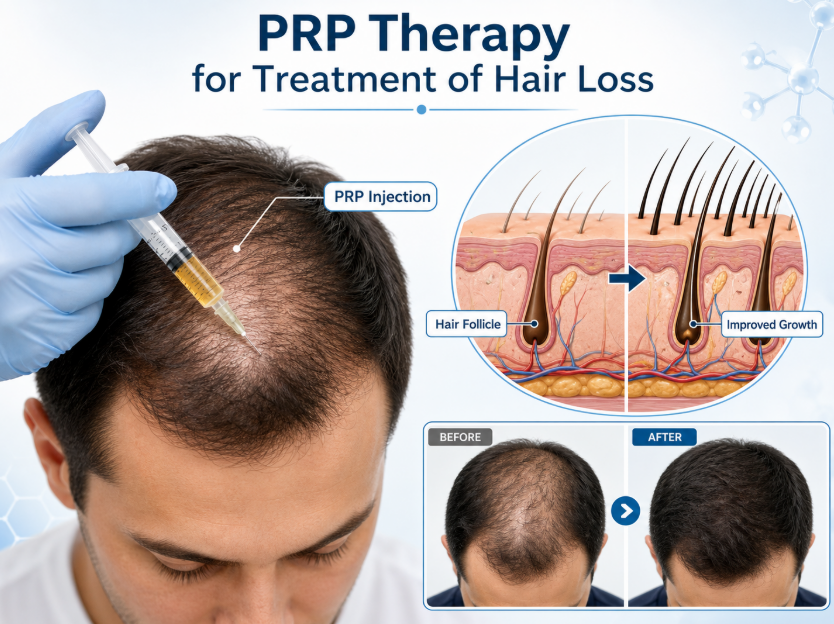
PRP stands for platelet-rich plasma. Platelets are blood cells that contain growth factors and signaling proteins involved in healing and tissue repair.
During PRP therapy, a small blood sample is taken from the patient. The blood is placed in a centrifuge machine, which separates the blood into different parts. The platelet-rich portion is then prepared and injected into the scalp.
For hair loss, PRP is used with the goal of supporting weak hair follicles, reducing shedding, improving hair thickness, and slowing further thinning in suitable patients.
Quick Answer: Does PRP Work for Hair Loss?
PRP may help some people with hair loss, especially early male or female pattern hair loss. It may improve hair density, reduce shedding, and thicken existing hair strands.
However, results vary. PRP does not create new follicles in completely bald areas. It also does not replace medical diagnosis, hormonal evaluation, treatment for nutritional deficiency, or hair transplant when those are needed.
A 2023 meta-analysis reported that PRP increased hair density at 3 and 6 months compared with placebo in androgenetic alopecia. Another review noted that most studies showed improvement in hair density and thickness, though treatment protocols vary.
The most realistic expectation is gradual improvement, not overnight regrowth.
Why Do People Choose PRP Treatment for Hair Loss?
Many people look for PRP because they want a non-surgical treatment for thinning hair. It may be considered when hair loss is still in the early or moderate stage.
Common reasons include:
| Patient concern | How PRP may help |
| Hair thinning at the crown | May improve density where follicles are still active |
| Receding hairline in early stage | May support weak follicles, but results vary |
| Female pattern hair loss | May reduce shedding and improve thickness in some patients |
| Increased shedding | May help if the cause is suitable for PRP |
| Post-hair transplant support | Sometimes used as an add-on treatment |
| Avoiding surgery | PRP is non-surgical, but it still involves injections |
PRP should be selected only after proper scalp evaluation. Hair fall can happen due to many causes, including thyroid disease, anemia, vitamin deficiency, stress, postpartum changes, autoimmune disease, scalp infection, medication, or genetics.
A dermatologist can help identify the cause before recommending PRP.
How Does PRP Help Hair Growth?
PRP is believed to work through growth factors found in platelets. These may support follicle activity, improve local healing signals, and help maintain hair in the growth phase.
DermNet notes that PRP has a higher platelet concentration than normal blood and is prepared from the patient’s own body. Cleveland Clinic also states that PRP can contain five to ten times as many platelets as a normal blood sample, depending on preparation.
In simple terms, PRP does not “plant” hair. It attempts to improve the scalp environment around existing follicles.
That is why it is more useful for thinning hair than for areas where follicles have been inactive for many years.
Who Is a Good Candidate for PRP Therapy in Nepal?
PRP may be suitable for people with:
| Suitable candidate | Why PRP may be considered |
| Early male pattern hair loss | Follicles may still respond |
| Female pattern hair thinning | May improve density and reduce shedding |
| Mild to moderate thinning | Better response than completely bald areas |
| Hair shedding with active follicles | May support recovery when cause is addressed |
| Post-transplant support | May be used as an adjunct in selected patients |
| Patients who cannot tolerate some medicines | May be discussed as an alternative or add-on |
PRP is usually less helpful when hair loss is very advanced, the scalp is shiny and scarred, or follicles are no longer active.
It may also be unsuitable for people with certain blood disorders, active scalp infection, uncontrolled medical illness, or unrealistic expectations.
Who Should Avoid PRP Treatment for Hair Loss?
PRP may not be advised if you have:
Active scalp infection
Severe dandruff or uncontrolled scalp inflammation
Low platelet count or bleeding disorder
Recent fever or severe illness
Uncontrolled diabetes or systemic disease
History of keloid tendency in some cases
Use of blood thinners without medical clearance
Pregnancy-related concerns requiring individualized advice
Complete baldness with no active follicles
This does not mean PRP is unsafe for everyone with these issues. It means a dermatologist should assess the risk and timing.
A proper diagnosis is important before starting any hair loss procedure.
PRP Therapy in Nepal: Step-by-Step Process
A typical PRP session for hair loss includes several steps.
| Step | What happens |
| 1. Consultation | Hair loss pattern, scalp condition, medical history, and expectations are reviewed |
| 2. Scalp assessment | The dermatologist checks thinning pattern, dandruff, inflammation, and follicle activity |
| 3. Blood draw | A small amount of blood is collected |
| 4. Centrifuge processing | Blood is spun to separate platelet-rich plasma |
| 5. PRP preparation | The platelet-rich layer is collected |
| 6. Scalp injections | PRP is injected into thinning areas |
| 7. Aftercare | Patient receives instructions about washing, exercise, medicines, and follow-up |
The full visit may take longer than the injection time because of preparation, consultation, numbing, and aftercare.
How Much Blood Is Used for PRP?
For hair PRP, many clinics draw approximately 10–30 ml of blood, depending on the PRP kit, centrifuge system, treatment area, and doctor’s protocol.
Some systems may require one or more small tubes of blood.
The amount is usually small and similar to a routine blood test sample. Patients who feel dizzy during blood draws should inform the doctor before the procedure.
PRP Cost in Nepal: What Is the Usual Price?
The PRP cost in Nepal commonly ranges from around NPR 4,000 to NPR 10,000 per session, depending on clinic setup, location, equipment, doctor qualification, PRP kit quality, and whether microneedling or other treatments are included.
PRP hair treatment costs around NPR 4,000 per session, while average ranges of NPR 6,000–10,000 per session or package pricing for multiple sessions.
PRP Cost in Nepal: Estimated Table
| PRP option | Estimated cost range in Nepal |
| Single PRP hair session | NPR 4,000–10,000 |
| 3-session package | Often around NPR 10,000–30,000 |
| PRP with microneedling | Varies by clinic and protocol |
| PRP with additional medicines | Cost depends on prescription |
| Maintenance PRP | Usually charged per session or package |
Prices change over time. Patients should confirm the current cost directly before starting treatment.
Cost should not be the only deciding factor. Sterility, doctor qualification, diagnosis, platelet preparation method, and follow-up matter more than choosing the cheapest session.
How Many Sessions of PRP Are Needed for Hair Loss?
Most patients need multiple sessions. A common schedule is one session every month for 3 months, followed by maintenance every 3–6 months, depending on response and severity.
Typical PRP Session Plan
| Stage | Common schedule | Purpose |
| Initial phase | 3 sessions, about 4 weeks apart | Reduce shedding and stimulate weak follicles |
| Assessment phase | Review after 3–4 months | Check response and adjust plan |
| Maintenance phase | Every 3–6 months, if needed | Maintain improvement |
| Combination phase | PRP plus medicines if suitable | Improve long-term control |
Some patients may need 4–6 sessions initially. Others may stop if there is no meaningful improvement after a fair trial.
How Long Does PRP Last for Hair Loss?
PRP results are not permanent. Hair loss conditions like androgenetic alopecia are chronic, which means they often need ongoing management.
For hair loss, many dermatologists advise maintenance sessions every few months if the patient responds well. Without maintenance, shedding may slowly return, especially in genetic hair loss.
A practical way to understand PRP is this: it may help control hair thinning, but it does not remove the underlying genetic tendency.
When Will You See PRP Results?
PRP results usually appear gradually.
| Time after starting PRP | What some patients may notice |
| 1 month | Usually too early for visible regrowth |
| 2–3 months | Reduced shedding in some patients |
| 3–6 months | Possible improvement in hair thickness and density |
| 6–12 months | Maintenance may be needed to sustain results |
Not everyone responds. If hair loss continues despite PRP, the diagnosis should be reviewed.
Is PRP Worth It for Hair Loss?
PRP may be worth considering if you have early to moderate thinning, active follicles, realistic expectations, and a proper diagnosis.
It may be less worthwhile if you expect a full head of hair from one session, have complete baldness, or are not willing to continue maintenance.
PRP May Be Worth It When
| Situation | Why |
| Early pattern hair loss | Better chance of follicle response |
| Thinning, not complete baldness | Follicles may still be active |
| Patient wants non-surgical support | PRP is minimally invasive |
| Combined with medical treatment | May support a broader plan |
| Diagnosis is clear | Treatment is better targeted |
PRP May Not Be Worth It When
| Situation | Why |
| Long-standing bald area | Follicles may no longer respond |
| Untreated thyroid/anemia/nutritional issue | Hair loss cause remains active |
| Severe scalp inflammation | Needs treatment first |
| Unrealistic expectation | PRP cannot guarantee regrowth |
| No plan for maintenance | Results may fade |
PRP vs Minoxidil vs Hair Transplant: What Is the Difference?
PRP is one option among several hair loss treatments. The right choice depends on diagnosis, severity, budget, age, medical history, and goals.
| Treatment | Best for | Advantages | Limitations |
| PRP | Early to moderate thinning | Non-surgical, uses own blood, minimal downtime | Needs repeat sessions, variable response |
| Minoxidil | Pattern hair loss, some shedding types | Widely used, non-invasive | Must be used regularly; shedding may return if stopped |
| Finasteride | Male pattern hair loss in suitable patients | Can slow hormonal hair loss | Prescription needed; side effects must be discussed |
| Hair transplant | Stable bald areas with donor hair | Moves follicles to bald areas | Surgical, higher cost, not for every patient |
| Treating deficiency | Hair loss due to anemia, vitamin deficiency, thyroid issues | Addresses root cause | Requires testing and medical follow-up |
PRP is often used as part of a plan, not always as a standalone solution.
Is PRP Treatment Painful?
PRP involves multiple small injections into the scalp, so mild pain or discomfort is possible. Some clinics use topical numbing, cooling, or vibration devices to improve comfort.
Pain tolerance varies. The scalp may feel sore for one or two days after treatment.
Most people return to normal activities soon after the session, but aftercare instructions should be followed.
Side Effects and Safety of PRP Hair Treatment
PRP is generally considered low-risk when performed in a medical setting using sterile technique. Because it uses your own blood, allergic reaction risk is low.
Possible side effects include:
Mild scalp pain
Temporary swelling
Redness
Bruising
Headache
Itching
Temporary shedding
Rare infection if sterility is poor
A dermatology review reported no major side effects such as scarring, infection, hematoma, panniculitis, or allergic reaction in the reviewed PRP hair treatment literature.
However, safety depends strongly on sterile handling. PRP should not be treated like a casual cosmetic service. It involves blood collection, processing, and injections.
Why Consult a Dermatologist in Nepal Before PRP?
Hair loss is not one disease. It is a symptom with many possible causes.
A qualified dermatologist in Nepal can assess whether PRP is appropriate or whether another diagnosis needs treatment first.
Common causes of hair loss include:
Androgenetic alopecia
Telogen effluvium after stress or illness
Postpartum hair shedding
Alopecia areata
Seborrheic dermatitis
Scalp psoriasis
Fungal infection
Iron deficiency
Vitamin D or B12 deficiency
Thyroid disorders
Medication-related shedding
Traction from tight hairstyles
Starting PRP without diagnosis may waste time and money. For example, if hair fall is mainly due to iron deficiency or thyroid disease, PRP alone may not solve the problem.
About Dr. Parash Shrestha
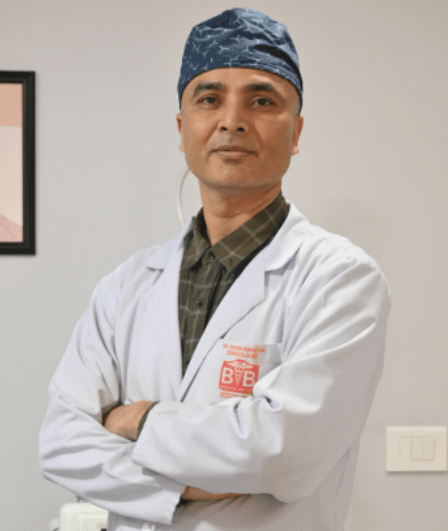
Dr. Parash Shrestha is a Consultant Dermatologist in Nepal, listed with NMC No. 7527 and qualifications MBBS, MD, FAM. His professional profile describes experience in clinical dermatology, cosmetic dermatology, laser treatments, hair loss management, and hair transplant care, with more than 15 years of dermatology experience.
For patients considering PRP therapy in Kathmandu, Nepal, consultation with a dermatologist helps ensure the treatment is selected based on diagnosis, not only on visible thinning.
Questions to Ask Before PRP Treatment
Before starting PRP, ask:
What type of hair loss do I have?
Is PRP suitable for my stage of hair loss?
How many sessions do I need?
What is the total estimated cost?
Will I need medicines like minoxidil or other treatments?
How will progress be measured?
What results are realistic after 3–6 months?
What happens if I do not respond?
What aftercare should I follow?
How is sterility maintained during the procedure?
A good consultation should include both benefits and limitations.
What Is PRP Therapy for Hair Loss?
PRP therapy for hair loss is a non-surgical treatment where a small amount of the patient’s blood is drawn, processed to concentrate platelets, and injected into thinning areas of the scalp. It may help reduce shedding and improve hair thickness in early to moderate hair loss, but results vary and multiple sessions are usually needed.
FAQ: PRP Therapy in Nepal for Hair Loss
1. What is the cost of PRP?
The cost of PRP in Nepal commonly ranges from NPR 4,000 to NPR 10,000 per session. Some clinics offer packages for 3 or more sessions. Price depends on clinic location, doctor qualification, PRP kit, equipment, and whether other treatments are included.
2. How much blood is used for PRP?
For hair PRP, doctors commonly draw around 10–30 ml of blood, depending on the system and treatment area. Some PRP systems use one or several small vials.
3. How long does PRP last for hair loss?
PRP results may last several months, but they are not permanent. Many patients need maintenance sessions every 3–6 months if they respond well.
4. How many sessions of PRP for hair loss?
Most patients start with 3 sessions, usually one session per month. Some may need 4–6 sessions depending on severity and response.
5. Is PRP worth it for hair loss?
PRP can be worth it for early to moderate hair thinning when follicles are still active and the diagnosis is clear. It may not be worth it for complete baldness, untreated medical causes of hair fall, or unrealistic expectations. Evidence suggests PRP can improve hair density in androgenetic alopecia, but results vary.
6. Is PRP a permanent cure for hair loss?
No. PRP is not a permanent cure. Genetic hair loss often needs long-term management. PRP may reduce shedding and improve thickness, but maintenance treatment may be needed.
7. Can PRP regrow hair on a bald scalp?
PRP works best where hair follicles are still present. It is less likely to regrow hair in areas that have been completely bald for many years. In advanced baldness, hair transplant may be discussed.
8. Is PRP better than minoxidil?
Not always. PRP and minoxidil work differently. Minoxidil is a regular topical or oral medication prescribed in selected cases, while PRP is an in-clinic injection procedure. Some patients may benefit from a combination plan.
9. Is PRP safe?
PRP is generally safe when performed by trained medical professionals using sterile techniques. Temporary pain, swelling, redness, bruising, or itching may occur. Infection is rare but possible if sterility is poor.
10. Who is the right doctor for PRP hair treatment?
A dermatologist is the right specialist to diagnose hair loss and decide whether PRP is suitable. A dermatologist in Nepal can also check for scalp disease, hormonal causes, nutritional deficiency, and other reasons for hair fall.
Final Takeaway
PRP therapy can be a useful option for selected people with early to moderate hair loss. It uses the patient’s own blood, requires multiple sessions, and may help reduce shedding or improve hair thickness.
It is not a magic cure, and it does not work equally for everyone. The best results usually come from correct diagnosis, realistic expectations, sterile technique, and a complete hair loss plan.
For anyone considering PRP treatment for hair loss, the first step should be a proper consultation with a qualified dermatologist in Nepal.Medical note: This article is for educational purposes only and should not replace personal consultation with a qualified medical professional. Hair loss treatment should be based on diagnosis, medical history, scalp examination, and individual suitability.