
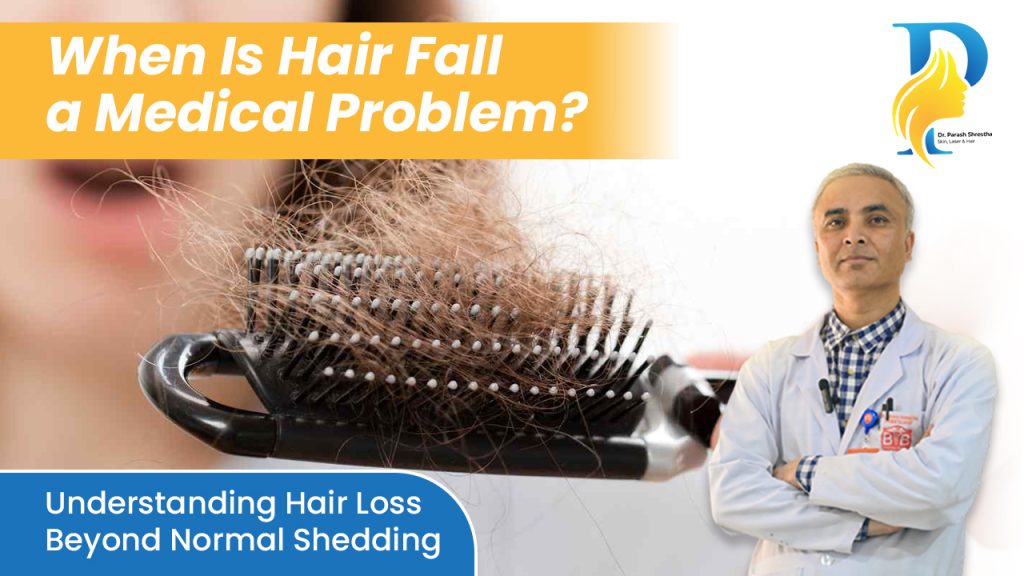
Hair fall becomes a medical problem when it is excessive, persistent, sudden, or associated with visible thinning, patchy hair loss, scalp symptoms, or lack of regrowth. While mild daily shedding is part of the normal hair cycle, ongoing or progressive hair loss often signals an underlying medical or scalp condition that requires evaluation by a qualified hair specialist.
In Nepal, people searching for terms such as best hair doctor or hair loss specialist are usually experiencing hair fall that goes beyond cosmetic concern. This guide explains when hair fall should be medically evaluated, what causes pathological hair loss, and how experienced specialists such as Dr. Parash Shrestha, with 15 years of dermatology and hair-care experience, approaches diagnosis and treatment.
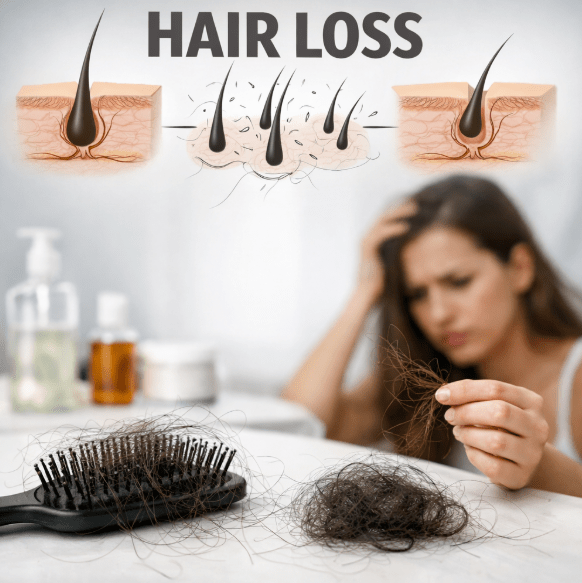
Why Does This Topic Matters ?
Hair fall has become one of the most common health concerns among adults in Nepal, particularly in urban areas such as Kathmandu and Lalitpur.
Current dermatology trends show that:
- A large proportion of adults experience noticeable hair thinning at some point
- Stress-related hair loss has increased significantly since 2020
- Early-onset hair loss is more common due to lifestyle factors, pollution, and hormonal imbalance
Despite this, many individuals delay medical consultation, assuming hair fall is always temporary. Knowing when hair fall becomes a medical issue helps prevent delayed diagnosis and irreversible loss.
Understanding Normal Hair Fall vs Medical Hair Loss
What Is Normal Hair Fall?
A healthy individual typically sheds:
- 50–100 hairs per day
- Without visible thinning, bald patches, or scalp changes
This occurs as part of the natural hair growth cycle and does not require treatment.
When Hair Fall Becomes Abnormal
Hair fall is considered medical when:
- Shedding exceeds normal limits for several weeks or months
- Hair density visibly decreases
- Scalp symptoms appear
- Hair does not regrow over time
At this stage, evaluation by a trained hair specialist or dermatologist is recommended.
Common Medical Causes of Hair Fall
Hair loss is rarely “just a hair problem.” It often reflects internal, hormonal, autoimmune, or scalp-related conditions.
Medical Causes Commonly Include:
- Androgenetic alopecia (male or female pattern hair loss)
- Telogen effluvium (stress, illness, surgery, childbirth)
- Alopecia areata (autoimmune hair loss)
- Thyroid disorders
- Iron or vitamin deficiencies
- Scalp infections or inflammatory conditions
Accurate diagnosis focuses on identifying the root cause, not just reducing shedding.
Warning Signs That Hair Fall Is a Medical Problem
Medical evaluation is advised if you notice:
- Sudden or excessive hair shedding
- Widening hair part or receding hairline
- Patchy or circular bald areas
- Itching, redness, pain, or scaling of the scalp
- Hair loss associated with fatigue, weight changes, or hormonal symptoms
These signs suggest that hair fall is no longer cosmetic and needs professional assessment.
The Role of a Hair Specialist in Diagnosis
A qualified hair specialist does more than recommend products. Medical evaluation typically includes:
- Detailed history (stress, illness, medications, nutrition)
- Scalp and hair shaft examination
- Dermoscopy when required
- Blood tests to identify internal causes
- Diagnosis-based treatment planning
This structured approach distinguishes medical care from non-medical or cosmetic advice.
When Is Hair Transplant Considered?
Hair transplant is not the first-line treatment for most hair-loss conditions.
A medically trained hair transplant doctor considers surgery only when:
- The hair loss pattern is stable
- Medical treatment has been optimized
- Adequate donor hair is available
- Expectations are realistic
Ethical specialists emphasize medical stabilization before surgical options.
Medical Hair Loss vs Cosmetic Hair Concerns
| Aspect | Medical Hair Loss | Cosmetic Hair Concern |
| Cause | Internal or scalp disease | Styling or appearance |
| Progression | Worsens if untreated | Usually stable |
| Symptoms | Thinning, patches, scalp changes | No scalp disease |
| Treatment | Medical ± procedural | Cosmetic care |
| Care Provider | Dermatologist / hair specialist | Salon-based |
Understanding this distinction prevents delayed or inappropriate treatment.
Why Experience Matters in Hair Loss Treatment

Many hair-loss conditions look similar but require very different treatments.
With 15 years of clinical experience, Dr. Parash Shrestha has:
- Managed a wide range of hair-loss patterns
- Identified reversible vs permanent hair loss early
- Prevented unnecessary or premature procedures
- Guided patients through long-term medical care
This level of experience reflects what patients usually mean when searching for a trusted hair-loss specialist in Nepal.
Common Myths About Hair Fall
❌ Hair fall is always genetic
✅ Many causes are treatable
❌ Oils and shampoos cure hair loss
✅ Diagnosis determines treatment
❌ Hair transplant works for everyone
✅ Medical suitability matters
❌ Waiting makes no difference
✅ Early care improves outcomes
Frequently Asked Questions (FAQ)
How long should hair fall last before seeing a doctor?
If excessive hair fall continues for more than 4–6 weeks, medical evaluation is recommended.
Is hair fall reversible?
Many forms are reversible when diagnosed and treated early.
Do I need a hair transplant immediately?
No. Most patients require medical management first.
Who should I consult for hair fall in Nepal?
A dermatologist or medically trained hair specialist.
Does stress really cause hair loss?
Yes. Stress-related telogen effluvium is well documented.
Key Takeaways
- Hair fall becomes medical when it is excessive, persistent, or progressive
- Early diagnosis prevents permanent hair loss
- Medical evaluation should come before cosmetic solutions
- Effective treatment focuses on cause, not quick fixes
Conclusion: Knowing When to Act Matters
Hair fall is common but not always normal. Recognizing when hair fall becomes a medical problem empowers individuals to seek timely, appropriate care. With increasing lifestyle-related hair disorders in Nepal, professional evaluation is more important than ever.
Experienced specialists such as Dr. Parash Shrestha emphasizes evidence-based diagnosis, ethical treatment, and long-term hair health, the principles that truly define quality care in hair-loss management.