
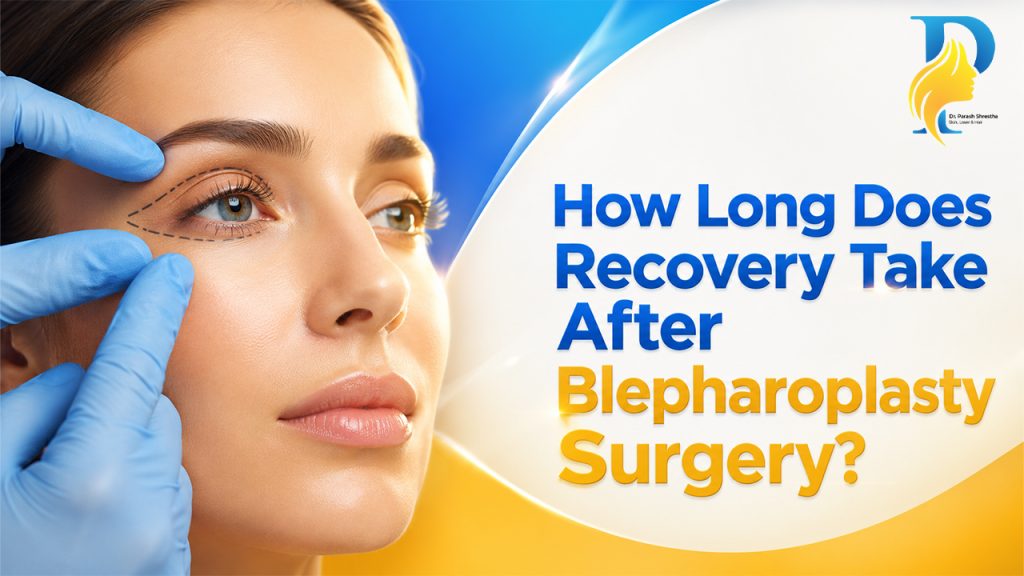
Recovery after blepharoplasty surgery usually takes 10 to 14 days for most people to look socially presentable, while complete healing can continue for several months. Swelling, bruising, tightness, watery eyes, and mild discomfort are common in the first few days. Most patients gradually return to light daily activities within the first week, depending on their healing and their doctor’s instructions. Cleveland Clinic notes that many people feel comfortable going out in public after 10–14 days, but full healing may take a few months.
For people considering eye lid surgery in Nepal, the most important point is this: recovery is a process, not a single day. The final result depends on your skin quality, age, lifestyle, surgical technique, aftercare, and whether you had upper eyelid surgery, lower eyelid surgery, or both.
Dr. Parash Shrestha is a licensed dermatologist in Nepal, with NMC No. 7527 and qualifications listed as MBBS, MD, FAM on his official profile. His practice focuses on clinical dermatology, cosmetic dermatology, laser treatments, and aesthetic procedures.
Blepharoplasty Recovery Timeline
| Recovery Stage | Typical Timeframe | What Usually Happens |
| First 24 hours | Day 0–1 | Blurry vision from ointment, swelling, tightness, mild discomfort |
| Early swelling phase | Days 1–3 | Bruising and puffiness are usually more noticeable |
| Visible healing phase | Days 4–7 | Swelling begins to reduce; stitches may be removed if non-dissolvable |
| Social recovery | Days 10–14 | Many people feel comfortable appearing in public |
| Functional recovery | Weeks 2–4 | Most routine activities feel easier; bruising fades |
| Deeper healing | 1–3 months+ | Residual swelling settles; scars continue to mature |
This timeline is general. Your surgeon’s instructions should always come first, especially if you have dry eyes, thyroid eye disease, diabetes, high blood pressure, a bleeding tendency, or a history of eye surgery.
What Is Blepharoplasty Surgery?
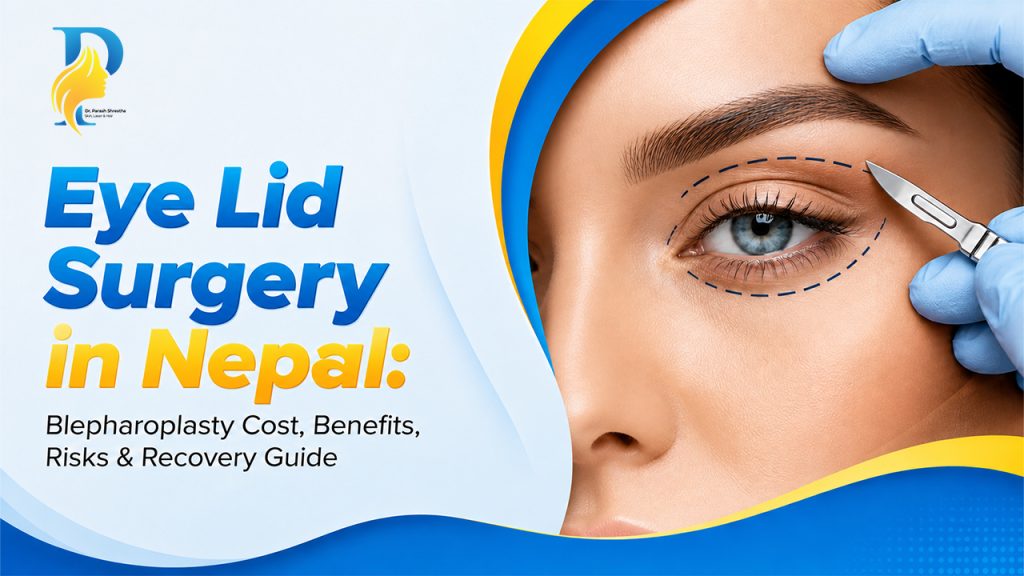
Blepharoplasty is eyelid surgery performed to remove or adjust excess eyelid skin, fat, or tissue around the eyes. It may be done for cosmetic reasons, such as tired-looking eyes or under-eye puffiness, or for functional reasons when sagging upper eyelid skin affects vision. Eyelid lift surgery may repair drooping upper eyelids and remove excess eyelid skin; it can include ptosis repair or blepharoplasty.
There are two common types:
Upper blepharoplasty: focuses on loose skin, heaviness, or hooding of the upper eyelids.
Lower blepharoplasty: focuses on under-eye bags, puffiness, or skin laxity below the eyes.
Some patients need only one area corrected, while others may need both upper and lower eyelid correction. The recovery time may be slightly longer when both eyelids are treated together.
How Long Until You Look Normal After Eyelid Surgery?
Most patients look much more presentable after 10 to 14 days, but “normal” can mean different things.
For some people, normal means going back to work or school without attracting attention. For others, it means no visible swelling, no bruising, and fully settled eyelid shape. The first type of normal may happen in about two weeks. The second may take several weeks to a few months.
Temporary swelling, bruising, puffy or numb eyelids, watery eyes, light sensitivity, blurred vision from ointment, and mild discomfort are common after surgery .
A realistic recovery expectation is:
- 7 days: still swollen but improving
- 10–14 days: socially presentable for many people
- 3–6 weeks: much more natural appearance
- 2–3 months: finer swelling and scar changes continue improving
This is why patients planning eyelid surgery in Nepal should avoid scheduling the procedure immediately before weddings, travel, major photo events, or public functions.
Week-by-Week Blepharoplasty Recovery
Day 0: Right After Surgery
Blepharoplasty is often done as an outpatient procedure, meaning many patients return home the same day after monitoring. Mayo Clinic notes that after surgery, patients spend time in a recovery room where staff monitor for complications before going home.
You may notice:
- Heavy or tight eyelids
- Mild pain or discomfort
- Blurry vision from ointment
- Watery eyes
- Light sensitivity
- Swelling around the eyelids
You should not drive yourself home. Arrange someone to take you home and stay with you during the early recovery period.
Days 1–3: Swelling and Bruising Peak
The first three days are usually when swelling and bruising are most noticeable. Your eyes may look puffy, uneven, or bruised. This is expected and does not mean the final result will look that way.
During this stage, most surgeons recommend rest, head elevation, prescribed ointments or drops, and cold compresses. Ice packs for short intervals after surgery, prescribed eye drops or ointments, sleeping with the head raised, and wearing sunglasses to protect the eyelids from sun and wind.
Avoid rubbing your eyes, bending forward for long periods, lifting heavy items, smoking, or doing strenuous activity.
Days 4–7: Early Improvement
By the end of the first week, swelling may start to reduce. Bruising may change color as it heals. You may still feel tightness, dryness, itching, or mild irritation.
Some patients have stitches removed during this period, depending on the surgical technique and type of sutures used. The sutures may be removed at appointments between 2 and 7 days after blepharoplasty.
You may feel better, but the eyelids are still healing. This is not the time to restart gym workouts, swimming, or heavy lifting unless your doctor clears you.
Days 8–14: Social Recovery
This is the stage where many people begin to look more normal. Bruising often fades, swelling becomes less obvious, and patients may feel more comfortable going outside or returning to desk work.
Many people feel comfortable going out in public after 10 to 14 days after blepharoplasty.
Makeup should only be used when your doctor confirms that the incision lines are closed and safe. It is recommended to avoid creams or makeup on surgical sites for two weeks after surgery.
Weeks 3–6: More Natural-Looking Results
At this stage, most visible bruising has improved. Swelling is usually much less noticeable, although small changes may continue.
You may still notice:
- Slight eyelid tightness
- Mild asymmetry while healing
- Sensitivity to wind or sunlight
- Dryness or irritation
- Fine swelling in the morning
This period is important because many patients start judging their result too early. The eyelids are delicate, and small swelling can change how the crease or under-eye area looks.
Months 2–3 and Beyond: Final Refinement
By two to three months, the eyelids usually look more settled. Scars continue to mature and fade gradually. Some patients heal faster, while others may need more time, especially after lower eyelid surgery or combined procedures.
Complete healing is not only about the outside appearance. It also includes soft tissue settling, scar remodeling, and comfort returning to normal.
Upper vs Lower Blepharoplasty Recovery
| Type of Eyelid Surgery | Common Concerns | Recovery Notes |
| Upper eyelid surgery | Hooded eyelids, excess skin, heavy eyelids | Often heals faster; incision is usually hidden in the eyelid crease |
| Lower eyelid surgery | Under-eye bags, puffiness, skin laxity | Swelling may last longer because the lower eyelid area is delicate |
| Combined upper and lower eyelid surgery | Aging around both eyelids | More swelling and bruising may occur; social recovery may take longer |
Upper eyelid surgery is often more straightforward, while lower blepharoplasty may involve fat repositioning, skin tightening, or deeper structural correction. Your recovery timeline depends on the exact technique used.
What Symptoms Are Normal During Recovery?
Some symptoms are expected after eyelid correction surgery. These usually improve gradually.
| Usually Normal | Needs Medical Attention |
| Mild swelling | Sudden severe swelling |
| Bruising | Increasing redness and worsening pain |
| Watery eyes | Continuous drainage from incision lines |
| Temporary blurry vision from ointment | Sudden vision changes |
| Mild tightness | Difficulty breathing or unexpected severe symptoms |
| Light sensitivity | Fever or chills |
What Helps Blepharoplasty Recovery Go Smoothly?
1. Keep Your Head Elevated
Sleeping with your head raised helps reduce fluid buildup around the eyelids. MSKCC recommends resting and sleeping with the head raised on 2 to 3 pillows for two weeks or as directed by the surgeon.
This is especially helpful in the first few days when swelling is most noticeable.
2. Use Cold Compresses Correctly
Cold compresses can reduce early swelling and discomfort. Do not press hard on the eyelids. Gentle cooling is enough.
Use ice packs after surgery and cool compresses to reduce swelling.
Use only clean materials around the eyes. Hygiene matters because incision lines are still healing.
3. Take Prescribed Medicines as Directed
Your doctor may prescribe ointments, drops, antibiotics, or pain medicine depending on your case. Do not add over-the-counter medicines without asking your doctor, especially medicines that may increase bleeding risk.
4. Protect Your Eyes From Sun, Dust, and Wind
After eyelid surgery in Nepal, patients should be careful with outdoor exposure, especially in dusty roads, bright sunlight, wind, and pollution. Sunglasses are useful not only for appearance but also for protection.
5. Avoid Rubbing Your Eyes
Itching or tightness can happen as healing begins. Still, rubbing can irritate the incision, increase swelling, or affect healing.
Use prescribed lubricating drops if dryness is part of your recovery plan. Always ask your doctor before using new eye drops.
6. Eat for Healing, Not Swelling
A balanced diet supports tissue repair. Focus on protein, fruits, vegetables, fluids, and regular meals.
Too much salty food may worsen puffiness in some people. Alcohol and smoking can interfere with healing and should be avoided as advised by your doctor.
When Can You Return to Normal Activities?
| Activity | General Timeline | Notes |
| Gentle walking | Often after 24–48 hours | Keep it slow and light |
| Desk work | Around 7–10 days | Depends on swelling, screen comfort, and job type |
| Driving | Often 5–10 days | Only when vision is clear and you are off sedating pain medicine |
| Contact lenses | About 2 weeks | Use glasses until cleared |
| Eye makeup | Around 2 weeks | Only after incision safety is confirmed |
| Strenuous exercise | Usually after 1–2+ weeks | Follow surgeon’s advice |
| Heavy lifting | Several weeks | MSKCC advises avoiding heavy lifting for 4–6 weeks unless cleared |
How Painful Is Blepharoplasty Recovery?
Blepharoplasty recovery is usually described as mild to moderate discomfort rather than severe pain. Many people feel tightness, soreness, dryness, or pressure around the eyelids.
Pain that is severe, worsening, or associated with sudden swelling or vision changes is not typical and should be checked urgently.
Why Recovery Time Varies From Person to Person
No two patients heal exactly the same. Recovery after eyelid surgery depends on:
- Age and skin elasticity
- Upper vs lower eyelid surgery
- Amount of excess skin or fat corrected
- Surgical technique
- Bruising tendency
- Smoking history
- Diabetes or high blood pressure
- Blood-thinning medicines
- Sleep quality
- Aftercare discipline
- Sun and dust exposure
This is why a consultation is important before choosing blepharoplasty surgery. A qualified doctor should assess eyelid anatomy, eye health, skin quality, facial balance, and expectations.
Blepharoplasty Recovery in Nepal: Practical Tips
Patients in Nepal often need to plan recovery around work, travel, climate, and family responsibilities.
If you live in Kathmandu, Lalitpur, Bhaktapur, or travel from outside the valley, plan your follow-up visits before surgery. Do not schedule long travel immediately after the procedure unless your doctor approves it.
Bring sunglasses and a clean scarf or cap when going outside. Avoid dusty roads, smoke exposure, and crowded environments during the early healing phase.
During festival seasons or wedding months, schedule surgery early enough to allow at least two weeks before major social events. For important photography or ceremonies, allowing four to six weeks is more realistic.
Will Blepharoplasty Make You Look Younger?
Blepharoplasty can make the eyes look fresher, less tired, and more open when excess eyelid skin or puffiness is corrected. However, it does not stop aging, remove all wrinkles, lift sagging eyebrows, or erase dark circles.
A natural result should make you look rested, not overdone. The goal is improvement, not changing your identity.
What to Avoid After Blepharoplasty
Avoid these until your doctor clears you:
- Rubbing or pulling the eyelids
- Heavy lifting
- Strenuous exercise
- Swimming
- Smoking
- Contact lenses
- Eye makeup on incision areas
- Dusty or smoky environments
- Bending forward for long periods
- Taking blood-thinning medicines without approval
- Skipping follow-up appointments
It is advised avoiding strenuous activities for a week, smoking, rubbing the eyes, contact lenses for about two weeks, and certain medicines or supplements that may increase bleeding.
When Should You Call Your Doctor?
Contact your doctor if you notice:
- Worsening pain
- Increasing redness or swelling
- Fever or chills
- Continuous discharge from incision lines
- Opening of stitches
- Sudden vision changes
- Severe headache with eye symptoms
- Unexpected breathing difficulty
- One-sided swelling that appears suddenly
These symptoms are not something to “wait out.” Early medical advice can prevent complications.
Choosing the Right Doctor for Eyelid Surgery in Nepal
Because blepharoplasty involves the delicate eyelid area, surgeon selection matters. Look for a qualified medical professional who understands eyelid anatomy, skin healing, facial aesthetics, and complication management.
When choosing a dermatologist in Nepal or an aesthetic surgery provider, ask:
- Are you licensed and registered?
- How many eyelid procedures have you performed?
- Am I a good candidate for upper, lower, or combined blepharoplasty?
- What results are realistic for my eyelid shape?
- What are the risks in my case?
- How many follow-up visits are needed?
- What should I do if swelling or pain increases?
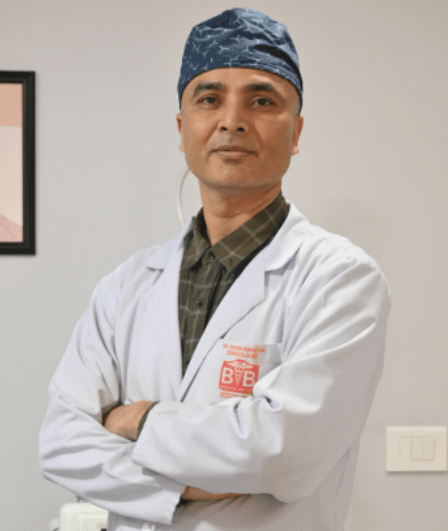
Dr. Parash Shrestha is a consultant dermatologist in Nepal with NMC No. 7527, MBBS, MD, FAM, and experience in clinical dermatology, cosmetic dermatology, laser treatments, and aesthetic care.
FAQ: Blepharoplasty Recovery
How long does it take to look normal after blepharoplasty?
Most people look socially presentable in 10 to 14 days. Fine swelling, scar softening, and final eyelid settling may continue for several months.
What is the fastest way to recover from a blepharoplasty?
Follow your doctor’s aftercare plan, use cold compresses as advised, sleep with your head elevated, avoid smoking, avoid rubbing your eyes, and attend follow-up visits. Do not rush exercise or makeup too early.
How painful is blepharoplasty recovery?
Recovery is usually not very painful. Most patients report mild soreness, tightness, swelling, or dryness rather than severe pain. Worsening or severe pain should be checked by a doctor.
How soon can I go for a walk after blepharoplasty?
Gentle walking is often possible within 24 to 48 hours, but keep it slow and avoid heat, bending, heavy lifting, or sweating. Follow your surgeon’s specific advice.
Will I look younger after blepharoplasty?
You may look fresher, more rested, and less tired if excess eyelid skin or puffiness was making your eyes look aged. Blepharoplasty does not stop aging or remove all wrinkles.
What to avoid after blepharoplasty?
Avoid rubbing your eyes, smoking, heavy lifting, strenuous exercise, swimming, contact lenses, eye makeup on healing incisions, dusty environments, and blood-thinning medicines unless your doctor approves them.
Conclusion
Blepharoplasty surgery recovery is usually most noticeable in the first week, improves significantly by 10 to 14 days, and continues refining over the next few months. Swelling, bruising, tightness, and mild discomfort are expected early, but they should gradually improve.
For patients considering eye lid surgery in Nepal, proper planning matters. Choose a qualified medical professional, understand your personal recovery timeline, follow aftercare instructions carefully, and allow enough time before social events or travel.
A natural, safe outcome depends not only on the surgery itself but also on realistic expectations, careful aftercare, and regular follow-up.
Reviewed by Dr. Parash Shrestha
Dr. Parash Shrestha is a licensed dermatologist in Nepal, NMC No. 7527, with qualifications listed as MBBS, MD, FAM. His clinical interests include dermatology, cosmetic dermatology, laser treatments, hair restoration, and aesthetic procedures.