
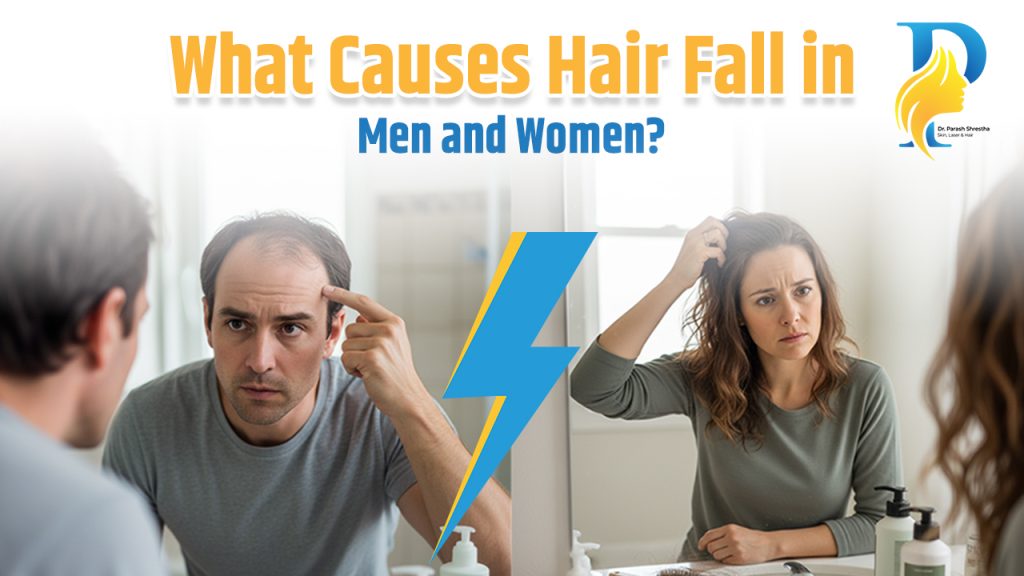
Hair fall is one of the most common concerns seen in dermatology clinics today. Men and women across all age groups experience hair thinning, excessive shedding, or visible bald patches at some point in their lives. While losing a few strands daily is normal, persistent or progressive hair loss often indicates an underlying medical, hormonal, or lifestyle related cause.
Understanding what causes hair fall in men and women is the first step toward effective treatment. In Nepal, increasing awareness, urban lifestyle changes, stress, and environmental factors have led to a noticeable rise in patients seeking professional help from a hair doctor in Nepal rather than relying on home remedies or unverified treatments.
This article explains hair fall in a clear, evidence based manner covering causes, patterns, diagnostic approaches, and treatment options based on clinical dermatology practice.
What Is Hair Fall, What causes hair fall in men and women and When Is It a Problem?
Hair fall refers to the shedding of hair from the scalp or body. On average, a healthy individual may lose 50–100 hairs per day as part of the normal hair growth cycle. This process involves three phases:
- Anagen (growth phase) – lasts 2–6 years
- Catagen (transition phase) – lasts a few weeks
- Telogen (resting/shedding phase) – lasts 2–3 months
Hair fall becomes a concern when:
- Shedding exceeds normal daily limits
- Hair does not regrow after shedding
- Scalp visibility increases
- Hairline or crown thinning progresses
Early evaluation by a qualified dermatologist helps identify reversible causes before permanent hair loss occurs.
Common Causes of Hair Fall in Men and Women
Hair fall is rarely due to a single reason. In clinical practice, it is often multifactorial.
1. Genetic Hair Loss (Androgenetic Alopecia)
The most common cause of hair fall in both men and women.
- In men: recession at temples and thinning at the crown
- In women: diffuse thinning over the crown with preserved hairline
Genetic hair loss is progressive but manageable when diagnosed early. Advanced cases may later require hair transplant in Nepal for restoration.
2. Hormonal Imbalance
Hormonal changes significantly affect hair growth.
Common triggers include:
- Thyroid disorders (hypothyroidism or hyperthyroidism)
- Polycystic ovary syndrome (PCOS)
- Pregnancy and postpartum hormonal shifts
- Menopause
Women are particularly vulnerable to hormone related hair fall, which often presents as sudden or diffuse shedding.
3. Nutritional Deficiencies
Hair follicles are highly sensitive to nutrient shortages.
Deficiencies commonly linked to hair fall:
- Iron deficiency
- Vitamin D deficiency
- Vitamin B12 deficiency
- Protein deficiency
In Nepal, dietary gaps and digestive absorption issues contribute significantly to nutrition-related hair loss.
4. Stress and Telogen Effluvium
Physical or emotional stress can push hair follicles prematurely into the shedding phase.
Common stress triggers:
- Illness or surgery
- High fever
- Emotional trauma
- Chronic anxiety or sleep deprivation
This condition is usually reversible once the underlying stressor is addressed.
5. Scalp Conditions
Healthy scalp = healthy hair growth.
Scalp disorders causing hair fall include:
- Dandruff and seborrheic dermatitis
- Fungal infections
- Psoriasis
- Chronic scalp inflammation
Timely treatment by a dermatologist prevents long-term follicle damage.
6. Hair Styling and Chemical Damage
Frequent use of:
- Heat styling tools
- Chemical straightening or coloring
- Tight hairstyles (traction alopecia)
These practices weaken hair shafts and damage follicles over time.
Hair Fall Differences Between Men and Women
| Aspect | Men | Women |
|---|---|---|
| Most common cause | Genetic hair loss | Hormonal + nutritional |
| Pattern | Receding hairline, crown | Diffuse thinning |
| Onset age | Early adulthood | Any age |
| Emotional impact | Moderate | High |
Understanding gender-specific patterns helps guide targeted treatment.
When Should You See a Hair Doctor in Nepal?
You should consult a dermatologist if:
- Hair fall lasts more than 6–8 weeks
- Hair density visibly reduces
- Bald patches appear
- Hair fall occurs with itching or scaling
- Family history of baldness exists
Self-treatment often delays proper diagnosis and worsens outcomes.
Diagnostic Evaluation of Hair Fall
A qualified hair doctor in Nepal follows a structured approach:
- Detailed medical history
- Scalp and hair examination
- Blood tests (iron, thyroid, vitamins)
- Dermoscopy or trichoscopy
- Hair pull test
Diagnosis determines whether hair loss is temporary, progressive, or permanent.
Treatment Options for Hair Fall
Treatment depends entirely on the cause.
Medical Management
- Topical therapies
- Oral medications (when required)
- Nutritional supplementation
- Hormonal correction
Lifestyle and Scalp Care
- Stress management
- Diet optimization
- Gentle hair practices
Advanced Procedures
For advanced or permanent hair loss:
- Platelet-rich plasma (PRP) therapy
- Hair transplant in Nepal (for selected cases)
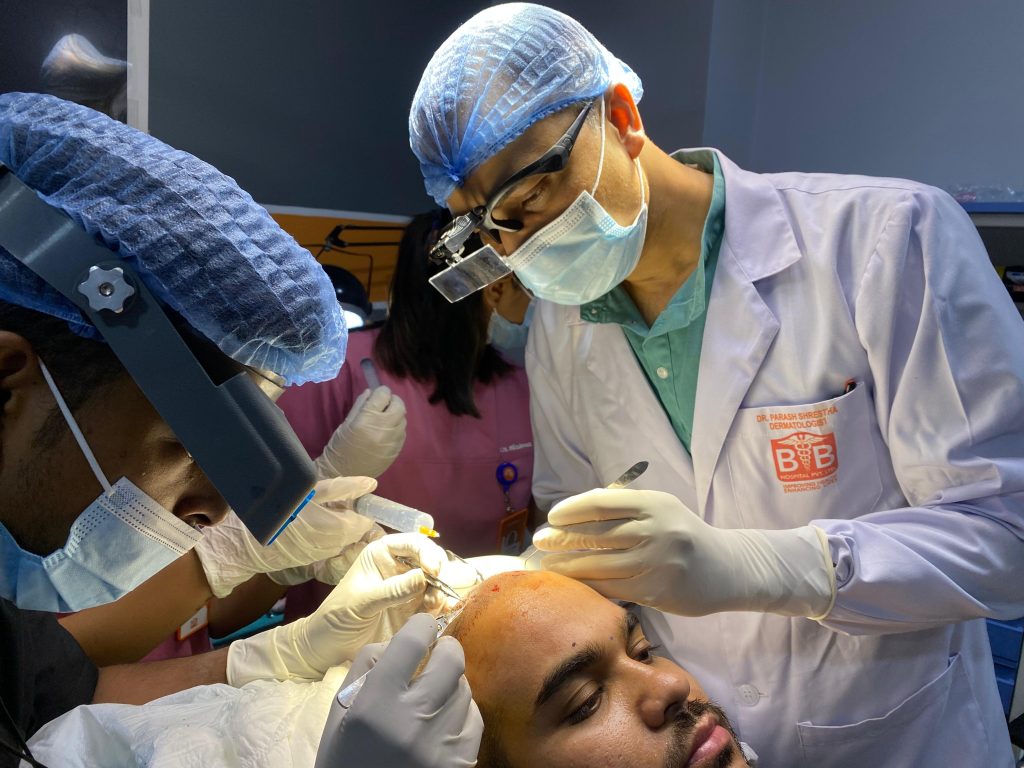
A hair transplant doctor in Nepal evaluates candidacy carefully, ensuring realistic expectations and long-term planning.
Hair Transplant: When Is It Considered?
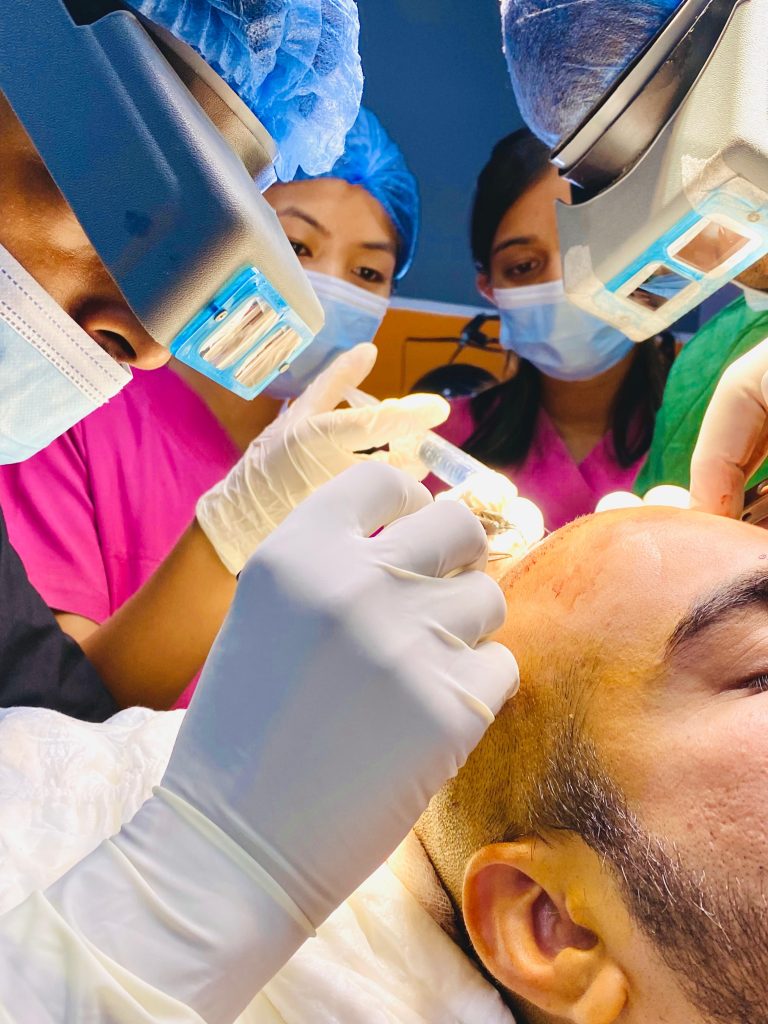
Hair transplant is not the first-line treatment.
It is considered when:
- Hair loss is stable
- Medical therapy has been optimized
- Donor hair density is adequate
- Patient understands long-term maintenance
Surgical restoration complements medical treatment—it does not replace it.
Myths About Hair Fall
- ❌ Hair oil alone can stop hair fall
- ❌ Shaving increases hair thickness
- ❌ All hair loss is permanent
- ❌ Home remedies cure genetic baldness
Scientific diagnosis matters more than assumptions.
Evidence-Based Hair Fall Statistics
| Data Point | Finding |
|---|---|
| Men with genetic hair loss by age 50 | ~50% |
| Women with noticeable thinning by menopause | ~40% |
| Hair loss linked to iron deficiency | ~30–35% |
| Stress-related hair fall recovery | 3–6 months |
Why Early Diagnosis Matters
Early evaluation:
- Prevents irreversible follicle loss
- Reduces need for surgical intervention
- Improves treatment success
- Saves long-term cost and distress
About Dr. Parash Shrestha

Dr. Parash Shrestha is a Consultant Dermatologist & Venereologist (NMC No: 7527) with over 10 years of clinical experience in diagnosing and managing hair, skin, and scalp disorders.
With qualifications including MBBS, MD, and FAM, Dr. Shrestha has extensive experience treating hair fall conditions ranging from nutritional deficiencies and hormonal hair loss to advanced androgenetic alopecia. His clinical approach emphasizes accurate diagnosis, evidence-based treatment, and long-term scalp health rather than short-term cosmetic solutions.
Patients seeking professional guidance for hair loss often consult Dr. Shrestha for personalized care, medical management, and expert evaluation for advanced procedures such as hair restoration when appropriate.
Frequently Asked Questions (FAQs)
Is hair fall always permanent?
No. Many causes are temporary and reversible if treated early.
Can stress cause severe hair fall?
Yes. Stress can trigger telogen effluvium, leading to sudden shedding.
Is hair transplant suitable for everyone?
No. Proper evaluation by a hair transplant doctor is essential.
Do women benefit from hair transplant?
Selected women with stable hair loss may benefit after medical optimization.
When should I see a dermatologist for hair fall?
If hair fall persists beyond a few weeks or worsens progressively.
Conclusion
Hair fall in men and women is common, but it should never be ignored. The causes range from genetics and hormones to nutrition and lifestyle factors. Early diagnosis by a qualified dermatologist helps prevent permanent hair loss and ensures appropriate treatment.
Whether managing early hair thinning or evaluating advanced options like hair transplant in Nepal, professional guidance from an experienced hair doctor in Nepal ensures safe, effective, and long-term results.