Blog

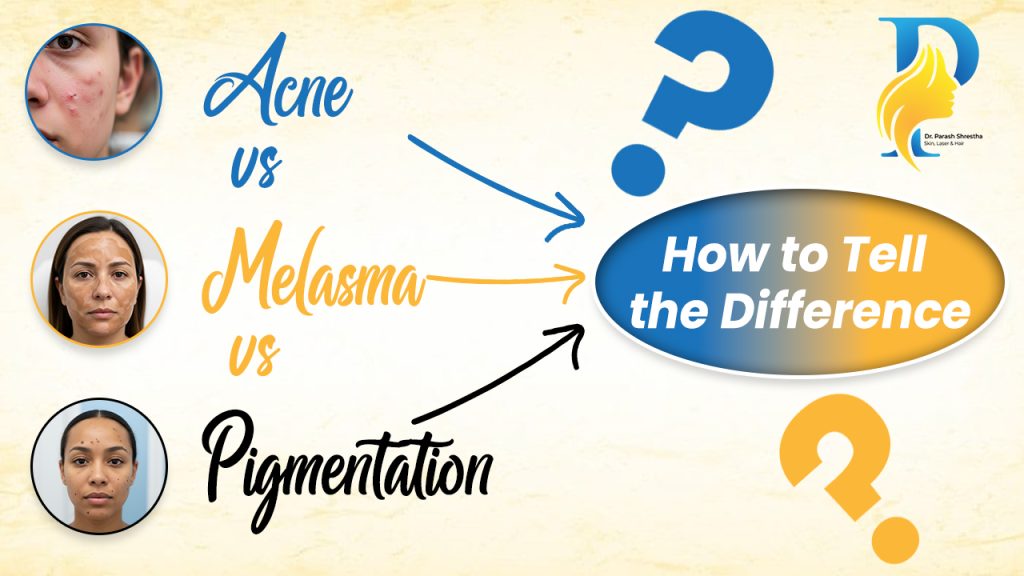
Acne vs Melasma vs Pigmentation

Acne vs Melasma vs Pigmentation: How to Tell the Difference

Skin concerns such as acne, melasma, and pigmentation are extremely common, yet they are often misidentified or grouped together. While these conditions may appear similar on the surface, they differ significantly in cause, appearance, and management. Understanding the difference between Acne vs Melasma vs Pigmentation is essential for choosing the right care approach and knowing when to consult a qualified dermatologist in Nepal. This article explains each condition clearly, using evidence-based dermatology knowledge and clinical insights to help readers make informed decisions about their skin health. Why Skin Conditions Are Often Confused Many people describe any dark spot, mark, or breakout as “pigmentation.”Clinically, however, acne, melasma, and pigmentation are distinct dermatological conditions with different triggers. Misidentification can lead to: Accurate understanding is the first step toward appropriate care. What Is Acne? Acne is an inflammatory skin condition involving hair follicles and oil glands. It commonly affects adolescents and young adults but can persist into adulthood. Common Features of Acne Acne is often influenced by: According to dermatology studies, over 80% of people experience acne at some point in their lives, making it one of the most common skin conditions worldwide. What Is Melasma? Melasma is a chronic pigmentation disorder characterized by symmetrical dark patches, most commonly on the face. Key Characteristics of Melasma Melasma is strongly linked to: Melasma is more common in women and in individuals with darker skin tones, including South Asian populations. What Is Pigmentation (Hyperpigmentation)? Pigmentation, medically referred to as hyperpigmentation, occurs when excess melanin is produced in certain areas of the skin. Types of Pigmentation Pigmentation usually appears as: Unlike acne, pigmentation does not involve active lesions. Acne vs Melasma vs Pigmentation: Key Differences Feature Acne Melasma Pigmentation Primary Cause Inflammation & oil Hormones & sun Excess melanin Appearance Pimples, bumps Symmetrical patches Flat dark spots Inflammation Present Absent Absent Pain Sometimes No No Common Age Teens–30s Adults (mostly women) All ages This comparison highlights why treatment approaches vary and why evaluation by a skin doctor is often necessary. Why Professional Evaluation Matters Self-treatment without diagnosis can worsen skin conditions, especially melasma and pigmentation, which can darken with improper products or procedures. Clinical assessment by a dermatologist helps: Clinical Insight from Dermatology Practice According to clinical observations shared by Dr Parash Shrestha, Dermatologist, Aesthetic Surgery, and Venereologist in Nepal with over 7+ years of experience, many patients present with mixed conditions such as acne with post-inflammatory pigmentation or melasma mistaken for acne marks. Accurate diagnosis is essential because: When to Consult a Dermatologist in Nepal You should consider professional consultation if: A qualified dermatologist in Nepal can guide evidence-based care suited to individual skin types common in South Asia. Medical Review & Professional Disclaimer This article is intended for educational and awareness purposes only.Diagnosis and treatment decisions should always be made in consultation with a qualified skin doctor or dermatologist. Frequently Asked Questions (FAQ) Is melasma the same as pigmentation? No. Melasma is a specific type of pigmentation influenced by hormones and sun exposure. Can acne cause pigmentation? Yes. Acne can leave post-inflammatory hyperpigmentation after healing. Does pigmentation always need treatment? Not always. Some pigmentation fades over time, but persistent cases benefit from dermatological guidance. Can men get melasma? Yes, though it is more common in women. Who should evaluate skin conditions like these? A qualified skin doctor or dermatologist is best suited to differentiate and manage these conditions. Final Thoughts Understanding the difference between Acne vs Melasma vs Pigmentation helps prevent mismanagement and unnecessary frustration. While these conditions may look similar, their causes and care approaches differ significantly. Early recognition and professional evaluation support healthier skin outcomes and informed decision-making.

Acne vs Melasma vs Pigmentation: How to Tell the Difference Read More »

Dermatologist in Kathmandu

Transform Your Skin with a Trusted Dermatologist in Kathmandu – Expert Guide by Dr. Parash Shrestha

If you’re searching for a trusted dermatologist in Kathmandu, you’ve come to the right place. I’m Dr. Parash Shrestha, a dermatologist practising in Kathmandu, Nepal. Every day I meet people who say, “My skin just doesn’t feel like “me” anymore” or “I wish I knew what my skin really needs.” That’s what this blog is for: to help you understand your skin, to empower you with practical routines and lifestyle habits, and to guide you when professional care is the best answer. I also wrote this especially for readers searching online in Nepal so if you’ve typed “skin specialist Nepal”, “dermatologist Kathmandu” or “acne treatment Nepal”, you’re in the right place. Let’s dive into how you can write the next, healthier chapter of your skin’s story. 1. Why It All Begins with Your Skin Type When I first meet a patient, the first thing we talk about is skin type. Get this right and everything else starts to fall into place. Common skin types: Normal skin: Balanced oil and moisture, neither too dry nor too oily. A bit of luck here, many are closer to “normal +” or “normal –”. Dry skin: You’ll feel tightness, perhaps rough patches, maybe fine lines more visible, especially in cooler months or indoor heating. Oily skin: Shine, larger pores, more breakouts. If you wake up and notice oil in your T‑zone, that’s a hint. Combination skin: Often oily in the T‑zone (forehead, nose, chin) and normal/dry elsewhere. Sensitive skin: Reacts or “blows up” easily—redness, stinging, irritation when you try a new product or get sun/pollution exposure. Why this matters: The routine you build, the ingredients you use, the way you deal with “problem skin” all depend on knowing your skin type. For example, using a heavy cream on oily skin can make breakouts worse. Or using a harsh cleanser on dry/sensitive skin can strip the barrier and cause irritation. In Kathmandu’s climate, with dust, UV, changing seasons, this matters even more and your skin’s behaviour can change with the weather, pollution and even altitude. 2. Your Daily Skin Routine: Practical, Local & Sustainable Here is a simple but effective daily routine, written with the local context in mind (sun exposure in Kathmandu, humid/monsoon seasons, indoor‑heating in winter, pollution, etc). Morning: Start with a gentle, soap‑free cleanser. Pick one that doesn’t leave your skin feeling tight or squeaky. Follow with a broad‑spectrum sunscreen (SPF 30 or higher). Even on cloudy days in the Kathmandu valley, UV rays can affect your skin. If your skin is dry or feels rough: apply a lightweight, non‑comedogenic moisturizer. If your skin is oily or acne‑prone: skip heavy creams, choose a gel or light lotion, and ensure your sunscreen is non‑comedogenic. Evening: Remove the day’s grime and sunscreen with a gentle cleanse. A double cleanse (rinse then cleanse) can help on high‑pollution days. If you have specific concerns (acne, pigmentation, fine lines), this is your time for targeted treatment (for example: serums with vitamin C/niacinamide, retinoids, etc under supervision). Then apply a moisturizer suited to your skin type. At night your skin regenerates; help it rather than block it. Weekly & Seasonal Tips: Once or twice a week: mild exfoliation (chemical or gentle physical) if your skin tolerates it. This helps to remove dead cells and smooth texture. During high UV/pollution months: after being outdoors for a while, consider washing sooner rather than later, and follow with antioxidant‑rich serums (vitamin C, green tea extracts). In the dry months: consider a richer night cream or add a humidifier in your room. Dry indoor air can make your skin tight, flaky, or accelerate fine lines. 3. Tackling Key Skin Concerns. Real Advice From Clinic Reality Here are common issues I see at the clinic and how you can realistically begin addressing them. Acne & breakouts Acne is one of the most common reasons people visit. The thing is: it’s not just a “teenage thing”. Adults in their 20s, 30s, 40s experience it too. Triggers include: hormonal changes, stress, diet, pollution, occlusive skincare, picking/popping lesions.   What you can do now: use non‑comedogenic products, avoid squeezing pimples (scarring risk), keep a consistent routine (don’t jump from one brand to another every week).   When to seek help: If you have deeper nodules/cysts, if scarring is forming, or if the breakouts affect your confidence and daily life. Early treatment helps reduce long‐term marks.   Pigmentation, dark spots & uneven skin tone In Kathmandu’s sun and environment, pigmentation issues are very common.As a dermatologist in Kathmandu, I often see patients struggling with acne and pigmentation due to the valley’s unique climate. Sun exposure is the major contributor. Even with ethnic darker skin types, UV still causes pigment deposition under the surface.   A solid sunscreen routine + pigment‑fading ingredients (vitamin C, niacinamide) + professional treatments when needed = good approach.   Patience is essential: pigments fade slowly. Don’t expect overnight results.   If you notice sudden large patches, or uneven moles, get them checked. Some changes require medical evaluation.   Dryness, rough texture & early signs of ageing Dry, rough, dull skin is often the “hidden” issue beneath most complaints. People say “my skin is fine” but it looks tired or textured. It often happens in cooler/dryer seasons, or due to indoor heating, or after using strong cleansers.   Fix? Repair the skin barrier: Humectants (hyaluronic acid, glycerin), occlusives (light oils, night creams), gentle cleansers can be used. Consider mild exfoliation to smooth texture but only when your skin barrier is strong.   Lifestyle matters: Good sleep, hydration, and less sun exposure helps .   Sensitive skin, redness & allergic reactions For some, the skin isn’t just “dry” or “oily” it’s reactive. Signs: stinging, burning, redness after applying something new, swelling, patchiness.   What to do: simplify your routine. Use fragrance‑free, minimal‑ingredient products. Patch‑test new ones. Avoid exfoliating during flare‑ups.   If you have chronic redness (rosacea, eczema), or persistent dermatitis, you’ll benefit from a dermatologist’s supervision rather than self‑treating. 4. Lifestyle Matters: What You Eat, Do & Feel

Transform Your Skin with a Trusted Dermatologist in Kathmandu – Expert Guide by Dr. Parash Shrestha Read More »

Scroll to Top