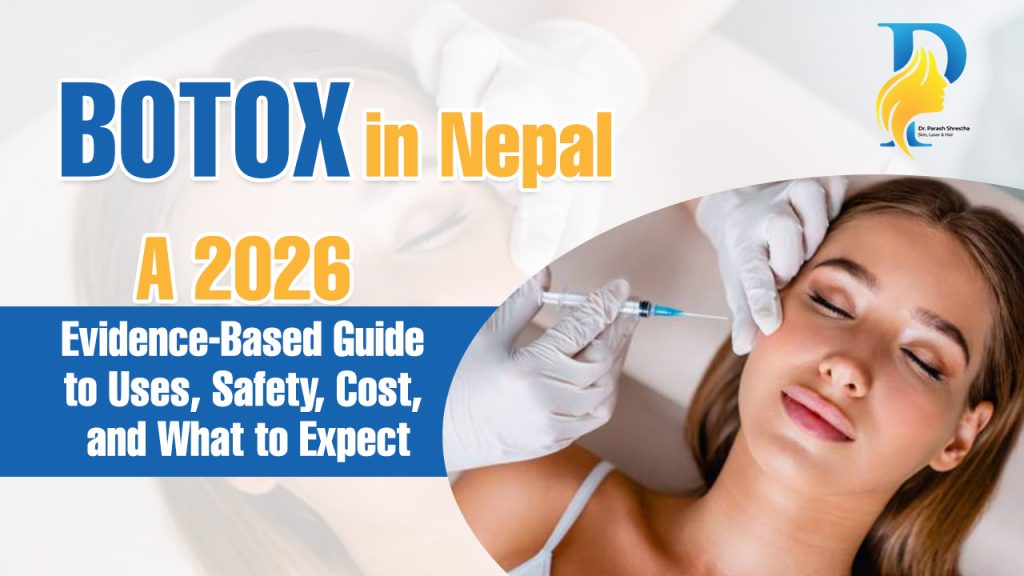
Botox in Nepal: A 2026 Evidence-Based Guide to Uses, Safety, Cost, and What to Expect
Botox in Nepal has become one of the most talked about aesthetic and medical treatments because it’s quick, minimally invasive, and widely used for concerns ranging from facial expression lines to excessive sweating. But “Botox” is also one of the most misunderstood terms especially online where misinformation about safety, pricing, and “hair Botox” spreads fast. This blog breaks down the facts in a clear, practical way so you can make informed decisions and know when to consult a qualified clinician. Important note: This article is for public education and does not replace an in-person medical consultation. Botox is a prescription medicine and should be administered only by trained medical professionals. What is Botox (and what it is not)? Botox is a brand name commonly used to describe botulinum toxin injections (a purified protein) that temporarily relax targeted muscles. In dermatology, it’s often called a neuromodulator because it reduces muscle activity that contributes to expression lines (like frown lines). It’s also used for certain medical conditions such as excessive sweating. Botox is not the same as fillers People often mix up Botox with dermal fillers, but they work differently: Treatment What it does Best for Botox / botulinum toxin Relaxes specific muscles Expression lines, some jaw clenching cases, excessive sweating Dermal fillers (e.g., HA fillers) Adds volume / contour Cheek volume, lips, under-eye hollows (case-dependent) Why Botox is so common worldwide If you’re wondering whether Botox is “just a trend,” global procedure data shows it’s one of the most widely performed non-surgical aesthetic treatments. A note for teens (under 18) Global survey data also notes some botulinum toxin procedures occur in those 17 years or younger. However, cosmetic Botox for teens is typically approached very cautiously and may not be appropriate unless there’s a clear medical indication and proper consent processes. Top uses of Botox in Nepal: cosmetic and medical When people search “Botox in Nepal,” they usually mean cosmetic Botox but the same medicine is also used clinically for certain health conditions. Cosmetic uses (most common) Cosmetic botulinum toxin is typically used to soften expression-related lines by relaxing small, targeted facial muscles: The American Academy of Dermatology (AAD) explains that botulinum toxin is injected in very small amounts to targeted muscles to reduce the appearance of wrinkles, with effects commonly lasting about 3–4 months (sometimes longer). Medical uses (common internationally; offered selectively by specialists) Depending on the patient and local clinical services, botulinum toxin may also be used for: Botox results timeline: when it starts, peak, and how long it lasts A common question in every “Botox doctor in Nepal” consultation is: When will I see results? Typical timeline (what reputable sources agree on) Why results vary Results and longevity can vary based on: Safety, side effects, and real risks (fact-based) Most patients experience mild, short-term effects but Botox is still a medical drug, and safety depends heavily on correct dosing, technique, and product authenticity. Common short-term side effects A medical review notes common issues can include headache, temporary discomfort, and localized effects that usually resolve. Less common but important risks Who should be extra cautious? You should disclose to your clinician if you: (Your clinician will decide suitability; never self-diagnose suitability based on internet lists.) Botox cost in Nepal: price ranges, unit logic, and a realistic budget table Searches like “botox cost in Nepal” are common but pricing can be confusing because some clinics price per unit, while others quote per area. What published price listings in Nepal show (per unit) Across publicly posted clinic pages in Nepal, you’ll see a wide range, such as: Safety-first tip: If the price is dramatically below the market range, ask why product source, storage, dilution practices, and injector qualification matter more than discounts. What affects Botox cost in Nepal? Typical budgeting examples (illustrative) Clinics commonly talk in “units,” but the number of units is individualized. Still, you can estimate a ballpark by combining a typical unit range with the per-unit price range above. Treatment area (example) Illustrative unit range* Estimated cost at NPR 500/unit Estimated cost at NPR 1500/unit One small area 10–20 units NPR 5,000–10,000 NPR 15,000–30,000 Two areas 20–40 units NPR 10,000–20,000 NPR 30,000–60,000 Three areas 30–60 units NPR 15,000–30,000 NPR 45,000–90,000 *Unit ranges are illustrative for budgeting only; actual dosing is decided by a qualified clinician after assessment. “Per area” packages Some clinics publish “area packages,” for example stating complete treatment areas may range around NPR 5,000 to 20,000 depending on need (clinic-reported). How to choose a Botox doctor in Nepal (safety checklist) If you’re searching for a Botox doctor in Nepal, prioritize safety and qualifications over social media popularity. Step 1: Verify medical credentials Botox injections should be done by a trained, licensed medical professional (commonly dermatologists or plastic surgeons for cosmetic indications). Dr. Parash Shrestha’s official website, for example, lists him as a licensed dermatologist in Nepal with NMC registration details. Step 2: Ask the right safety questions (print this checklist) A safe clinic should be comfortable answering: Step 3: Understand regulation and avoid grey-market products Nepal has a national drug regulator, the Department of Drug Administration (DDA), responsible for regulating medicines and controlling misuse and misleading promotion. Nepal’s legal framework for regulating drugs and cosmetics also exists in national legislation. What that means for patients: avoid “at-home Botox,” “party Botox,” or injections offered in non-medical settings. Hair Botox in Nepal: what it actually is + botox hair treatment price in Nepal This is where confusion peaks: “hair Botox” is not botulinum toxin. What “hair Botox” usually means Hair Botox is typically a marketing term used for deep conditioning/smoothing treatments that may contain proteins, amino acids, keratin-like ingredients, and coatings that make hair feel softer and look shinier. It does not involve botulinum toxin injections. botox hair treatment price in Nepal (examples you may see) Prices vary widely depending on whether you’re buying a product or paying for a salon service. Hair Botox option Example Nepal price signals Salon “Hair Botox” offer (package) Around NPR 8,999 in
Botox in Nepal: A 2026 Evidence-Based Guide to Uses, Safety, Cost, and What to Expect Read More »