
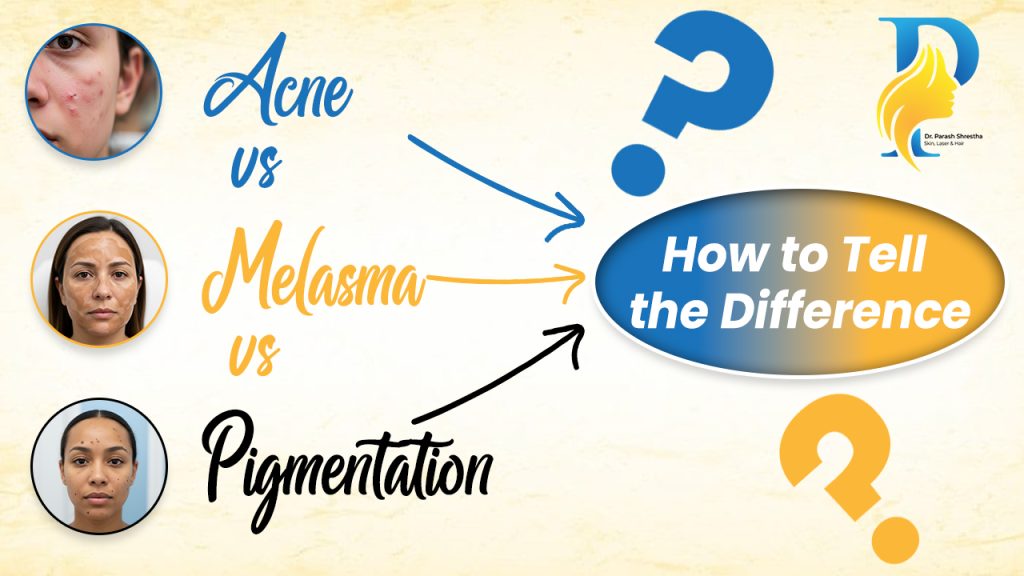
Skin concerns such as acne, melasma, and pigmentation are extremely common, yet they are often misidentified or grouped together. While these conditions may appear similar on the surface, they differ significantly in cause, appearance, and management.
Understanding the difference between Acne vs Melasma vs Pigmentation is essential for choosing the right care approach and knowing when to consult a qualified dermatologist in Nepal.
This article explains each condition clearly, using evidence-based dermatology knowledge and clinical insights to help readers make informed decisions about their skin health.
Why Skin Conditions Are Often Confused
Many people describe any dark spot, mark, or breakout as “pigmentation.”
Clinically, however, acne, melasma, and pigmentation are distinct dermatological conditions with different triggers.
Misidentification can lead to:
- Ineffective home remedies
- Delayed professional evaluation
- Worsening of the skin condition
Accurate understanding is the first step toward appropriate care.
What Is Acne?
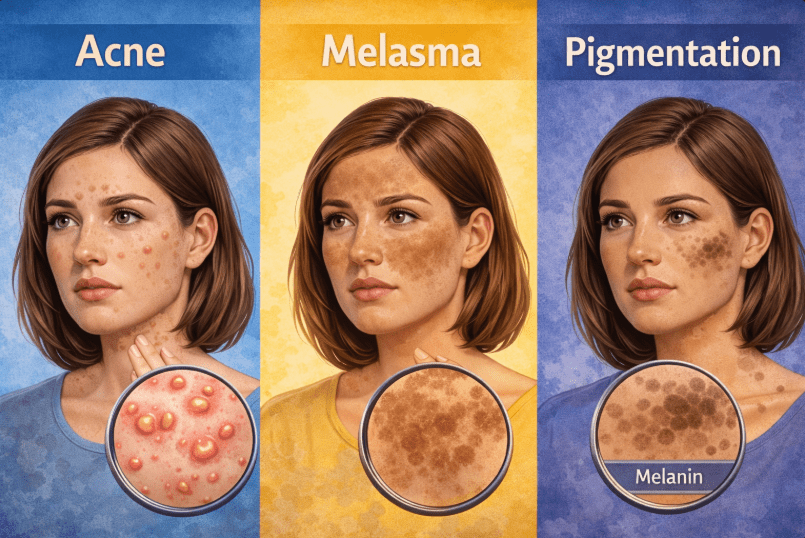
Acne is an inflammatory skin condition involving hair follicles and oil glands. It commonly affects adolescents and young adults but can persist into adulthood.
Common Features of Acne
- Pimples, blackheads, whiteheads
- Red or inflamed bumps
- Pus-filled lesions in moderate to severe cases
- May leave post-acne marks or scars
Acne is often influenced by:
- Hormonal changes
- Excess oil production
- Bacterial activity
- Genetics
According to dermatology studies, over 80% of people experience acne at some point in their lives, making it one of the most common skin conditions worldwide.
What Is Melasma?
Melasma is a chronic pigmentation disorder characterized by symmetrical dark patches, most commonly on the face.
Key Characteristics of Melasma
- Brown or gray-brown patches
- Commonly affects cheeks, forehead, upper lip
- Symmetrical distribution
- Not associated with pain or inflammation
Melasma is strongly linked to:
- Hormonal changes (pregnancy, oral contraceptives)
- Sun exposure
- Genetic predisposition
Melasma is more common in women and in individuals with darker skin tones, including South Asian populations.
What Is Pigmentation (Hyperpigmentation)?
Pigmentation, medically referred to as hyperpigmentation, occurs when excess melanin is produced in certain areas of the skin.
Types of Pigmentation
- Post-inflammatory hyperpigmentation (PIH) – marks left after acne or injury
- Sun-induced pigmentation – caused by UV exposure
- Age spots
Pigmentation usually appears as:
- Flat dark spots
- Uneven skin tone
- No active inflammation
Unlike acne, pigmentation does not involve active lesions.
Acne vs Melasma vs Pigmentation: Key Differences
| Feature | Acne | Melasma | Pigmentation |
| Primary Cause | Inflammation & oil | Hormones & sun | Excess melanin |
| Appearance | Pimples, bumps | Symmetrical patches | Flat dark spots |
| Inflammation | Present | Absent | Absent |
| Pain | Sometimes | No | No |
| Common Age | Teens–30s | Adults (mostly women) | All ages |
This comparison highlights why treatment approaches vary and why evaluation by a skin doctor is often necessary.
Why Professional Evaluation Matters
Self-treatment without diagnosis can worsen skin conditions, especially melasma and pigmentation, which can darken with improper products or procedures.
Clinical assessment by a dermatologist helps:
- Identify the exact condition
- Determine contributing factors
- Avoid treatments that may aggravate the skin
Clinical Insight from Dermatology Practice

According to clinical observations shared by Dr Parash Shrestha, Dermatologist, Aesthetic Surgery, and Venereologist in Nepal with over 7+ years of experience, many patients present with mixed conditions such as acne with post-inflammatory pigmentation or melasma mistaken for acne marks.
Accurate diagnosis is essential because:
- Acne treatments may irritate melasma
- Pigmentation requires sun protection and targeted therapy
- Aesthetic procedures must be selected carefully based on skin type
When to Consult a Dermatologist in Nepal
You should consider professional consultation if:
- Dark patches persist despite basic care
- Acne leaves recurring marks or scars
- Skin tone becomes uneven or worsens with sun exposure
A qualified dermatologist in Nepal can guide evidence-based care suited to individual skin types common in South Asia.
Medical Review & Professional Disclaimer
This article is intended for educational and awareness purposes only.
Diagnosis and treatment decisions should always be made in consultation with a qualified skin doctor or dermatologist.
Frequently Asked Questions (FAQ)
Is melasma the same as pigmentation?
No. Melasma is a specific type of pigmentation influenced by hormones and sun exposure.
Can acne cause pigmentation?
Yes. Acne can leave post-inflammatory hyperpigmentation after healing.
Does pigmentation always need treatment?
Not always. Some pigmentation fades over time, but persistent cases benefit from dermatological guidance.
Can men get melasma?
Yes, though it is more common in women.
Who should evaluate skin conditions like these?
A qualified skin doctor or dermatologist is best suited to differentiate and manage these conditions.
Final Thoughts
Understanding the difference between Acne vs Melasma vs Pigmentation helps prevent mismanagement and unnecessary frustration. While these conditions may look similar, their causes and care approaches differ significantly.
Early recognition and professional evaluation support healthier skin outcomes and informed decision-making.